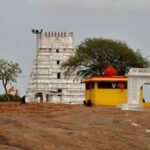
Standing quietly at the foot of Hanamkonda Hill in Warangal, the Thousand Pillar Temple is not merely a religious site. It is a living, breathing testament to the genius of an empire that shaped medieval South India’s cultural identity. Built over 860 years ago, this temple draws scholars, pilgrims, photographers, and travelers from across the country and the world. If you plan to explore Telangana’s heritage, this iconic landmark should be at the very top of your itinerary.
Thousand Pillar Temple History
The Thousand Pillar Temple, officially known as Sri Rudreshwara Swamy Temple, was constructed in 1163 AD by Rudra Deva, the founder king of the Kakatiya dynasty. The Kakatiyas were a powerful Telugu ruling clan who chose Warangal (then called Orugallu) as their capital, transforming it into a thriving center of trade, art, religion, and military power.
King Rudra Deva built this temple not just as an act of devotion but also as a bold declaration of political authority. Naming the presiding deity “Rudreshwara” after himself was a common royal tradition of the era, and it reflected the deep bond between Kakatiya kingship and Shaivism.
The temple took approximately 72 years to complete, a testament to the enormous effort, craftsmanship, and vision poured into every stone. It was constructed by master craftsmen known as “Vishwakarma Sthapathis” of the Kakatiya kingdom, whose skills were unmatched across Deccan India at that time.
The temple enshrines three deities: Lord Shiva, Lord Vishnu, and Lord Surya (the Sun God). This unusual trinity, referred to as Trikutalayam, set it apart from most Hindu temples of the period, which typically honored a single presiding deity.
Why Is It Called the Thousand Pillar Temple?
The name comes directly from the extraordinary number of intricately carved pillars that fill the temple complex. Locally, it is known as Veyyi Stambhala Gudi, with “Veyyi” meaning thousand in Telugu.
While the exact count of pillars falls slightly short of one thousand, the stunning visual impact of row upon row of perfectly aligned, ornately decorated pillars makes the name entirely fitting. These pillars fill the mandapas (pillared halls) and corridors of the temple, creating a breathtaking forest of stone art.
What makes the name even more powerful is not just the quantity but the quality. Each pillar is unique in its carvings, symbolism, and finish, making the collective effect deeply immersive.
Architectural Brilliance of the Kakatiyas
The Thousand Pillar Temple is a supreme example of Chalukyan-influenced Kakatiya architecture, blending the earlier Chalukya style with distinct Kakatiya innovations to create something entirely original.
Key architectural features include:
- Star-shaped platform (Trikutalaya): The entire temple rests on a raised star-shaped base approximately one meter above ground level. This stellate design is a hallmark of Kakatiya temple planning and serves both aesthetic and structural purposes.
- Triple shrine layout: Three separate sanctums for Lord Shiva, Lord Vishnu, and Lord Surya are connected through a central square-shaped mandapam. The Shiva shrine faces east, while the Vishnu and Surya shrines face south and west respectively.
- Natya Mandapam: A beautifully crafted dance hall sits within the complex where classical performances were once held in honor of the deities.
- Perforated stone screens (Jali work): Delicate lattice screens allow light to filter in softly, creating an ethereal glow inside the halls.
- Rock-cut elephants: Large stone elephants are placed on either side of the main shrine, adding grandeur to the entry experience.
The exterior walls are decorated with finely chiseled sculptures depicting scenes from Hindu mythology, floral motifs, geometric patterns, and celestial figures. The ceiling slabs and the four central pillars of the mandapam are considered masterpieces of stone carving.
One remarkable engineering curiosity: when the Archaeological Survey of India (ASI) dismantled the Natya Mandapam for restoration, workers reportedly discovered nearly 30 feet of sand and three ancient wells buried beneath it, hinting at far older construction layers beneath the current structure.
The Magnificent Nandi Statue
Among all the visual highlights inside the temple complex, the monolithic Nandi statue commands the most attention and reverence.
Carved from a single block of black basalt stone, this massive Nandi stands approximately 6 feet tall at the entrance of the main shrine. What sets it apart is its extraordinary polish. The basalt surface has been smoothed and finished to such a degree that it reflects light with a near-mirror quality, even centuries after its creation.
Unlike most Nandi statues in Indian temples that face west (looking toward the Shivalinga), the Nandi at the Thousand Pillar Temple faces east, which aligns with the temple’s unique south-facing orientation. This design allowed the first rays of the morning sun to fall directly onto the Shivalinga inside, a deliberate and spiritually significant choice by the Kakatiya builders.
This Nandi is widely considered one of the finest examples of Kakatiya sculpture and is frequently cited in art history references and competitive exam study materials.
Pillars That Speak Art and Science
The pillars of the Thousand Pillar Temple are far more than structural supports. They are encyclopedic narratives carved in stone, each column telling its own story through sculpture, geometry, and symbolism.
These pillars are crafted from black basalt, and many feature three-quarter relief carvings of extraordinary precision. The hairbreadth cuts in the stone show a level of tool mastery that continues to astonish modern engineers and archaeologists.
The pillars are arranged with mathematical precision. Standing at one end of a row and looking down the line creates a near-perfect illusion of endless symmetry, a calculated optical effect achieved through careful spatial planning.
Sculptural Excellence and Iconography
The carvings on the pillars and walls draw from a rich pool of religious and cultural iconography:
- Scenes from the Ramayana and Mahabharata depicted in sequential narrative panels
- Episodes from the Puranas showing divine stories of Shiva, Vishnu, and Surya
- Madanika brackets (celestial female figures) reflecting classical dance poses from traditions like Bharatanatyam
- Musical instrument motifs celebrating the role of music in Kakatiya court culture
- Figures of Lord Indra, Lord Narasimha, and Garuda positioned across the complex
- Intricate floral, geometric, and vegetal patterns filling every available surface
The roof of the Natya Mandapam alone is considered a masterpiece, featuring carvings of Gayatri (goddess of learning) and Chaturmukha (four-faced protector), with three such four-faced figures totaling 12 guardian faces across the ceiling.
Religious and Spiritual Significance
The Thousand Pillar Temple continues to function as an active place of worship, with daily rituals and pujas still performed for Lord Shiva (Rudreshwara). The temple’s unique Trikutalayam setup, housing three deities under one roof, was a conscious effort by the Kakatiyas to bridge Shaivism and Vaishnavism, promoting religious harmony across their kingdom.
The choice of Lord Surya as the third deity instead of Lord Brahma (the usual trinity companion) reflects the Kakatiya rulers’ personal solar devotion and their intent to make the temple an all-inclusive spiritual destination.
Major festivals celebrated here include:
- Maha Shivaratri: Draws thousands of devotees for overnight prayers and rituals
- Kunkuma Pooja: A deeply traditional ceremony celebrated with color and devotion
- Ugadi and other Telugu festivals: Observed with cultural programs and special darshans
The spiritual aura of the complex, reinforced by its grand architecture and lush surroundings, creates an experience that stays with visitors long after they leave.
Destruction, Decline, and Restoration
The Thousand Pillar Temple faced severe damage during the invasions of the Tughlaq dynasty in the 14th century. As Delhi Sultanate forces swept through the Deccan, many Kakatiya monuments were deliberately vandalized, looted, or partially destroyed.
Despite the devastation, enough of the original structure survived to preserve the temple’s core grandeur. In later centuries, the temple fell into neglect, with encroaching vegetation and the passage of time taking their toll.
The turnaround came when the Archaeological Survey of India (ASI) took over the conservation of the site, declaring it a Monument of National Importance. A major government-funded restoration was carried out in 2004, which involved cleaning, structural reinforcement, and the creation of better visitor pathways. The surrounding lawn, drinking water facilities, and informative signage were also added during this period.
Today, the thousand-pillar hall located behind the Nandi statue within the complex remains partially closed for ongoing ASI renovation work.
Thousand Pillar Temple Timings
Planning your visit around the correct timings ensures a smooth and spiritually fulfilling experience.
| Detail | Information |
| Opening Time | 5:00 AM |
| Closing Time | 9:00 PM |
| Days Open | All days of the week |
| Best Darshan Time | Early morning (6–8 AM) or evening (5–7 PM) |
Morning visits are especially recommended for the peaceful ambiance, cooler temperatures, and the chance to witness the aarti rituals. Avoid midday hours during summer as the open-air complex can get extremely hot.
Location and How to Reach
Address: Hyderabad–Warangal Highway, Brahmanawada, Hanamkonda, Telangana – 506001
The temple is situated in Hanamkonda, which now forms part of the greater Warangal urban district.
By Road:
- From Hyderabad, the temple is approximately 150 km away, about a 3-hour drive via NH-163.
- Regular state buses and private cabs connect Hyderabad to Warangal throughout the day.
- The Hanamkonda Bus Stop is just 1.5 km from the temple.
By Train:
- Warangal Railway Junction is the nearest major station, located about 6 km away.
- Auto-rickshaws and taxis are easily available from the station to the temple.
By Air:
- The nearest airport is Rajiv Gandhi International Airport, Hyderabad, approximately 150 km away.
- From the airport, hire a taxi or take a train from Hyderabad to Warangal.
Best Time to Visit
The ideal window to visit the Thousand Pillar Temple is October to March, when Warangal’s weather is cool and pleasant. This period coincides with major festivals and makes outdoor sightseeing comfortable.
- October to February: Best weather, cool mornings and evenings
- March to May: Summer heat sets in; early morning visits are advisable
- June to September: Monsoon season; the greenery is lush but occasional rains may affect outdoor exploration
Warangal is also one of the eleven cities selected under the Heritage City Development and Augmentation Yojana (HRIDAY) scheme by the Government of India, which means the city’s tourism infrastructure continues to improve year after year.
Importance for Exams (UPSC & State PSC)
The Thousand Pillar Temple is a frequently tested topic in competitive examinations. Here is a quick reference for aspirants:
- Built by: Rudra Deva (Kakatiya dynasty)
- Year: 1163 AD
- Location: Hanamkonda, Warangal, Telangana
- Architectural style: Chalukyan with Kakatiya modifications
- Deities: Lord Shiva (Rudreshwara), Lord Vishnu, Lord Surya
- Also known as: Rudreshwara Swamy Temple, Veyyi Stambhala Gudi, Trikutalayam
- Protected by: Archaeological Survey of India (ASI)
- Heritage status: Monument of National Importance; recognized as a UNESCO Heritage Site
Key themes for UPSC and TSPSC exams include Kakatiya dynasty contributions to art and architecture, Deccan temple styles, and medieval South Indian history.
Cultural Legacy of the Thousand Pillar Temple
The Thousand Pillar Temple is far more than a historical monument. It represents the cultural soul of Telangana. The temple served as a center for classical dance, music, and learning during the Kakatiya period. Its walls document the social, religious, and artistic life of 12th-century Deccan India better than any written text could.
The Kakatiya dynasty used this temple to demonstrate that political power and cultural refinement could coexist. They funded artists, sculptors, and scholars who produced work that still inspires awe nearly a millennium later.
Today, the temple serves as an anchor for Telangana’s tourism identity. It is often visited alongside Warangal Fort, Ramappa Temple (a UNESCO World Heritage Site), Bhadrakali Temple, and Pakhal Lake, making Warangal one of the richest heritage circuits in southern India.
Thousand Pillar Temple Tickets
Good news for all visitors: entry to the Thousand Pillar Temple is completely free. There is no ticket price for darshan or general access to the temple complex.
Regarding photography and videography:
- Photography is generally permitted across the open areas of the complex without any additional charge.
- Videography may be restricted in certain sections; always check with on-site staff before filming.
- For professional shoots or documentary filming, prior permission from the ASI or the temple office is required.
Thousand Pillar Temple Reviews
Visitor feedback collected from platforms like Google Maps, TripAdvisor, and travel blogs paints a consistently positive picture:
- “A breathtaking example of Kakatiya architecture. Every pillar tells a different story.”
- “The Nandi statue is phenomenal. I have never seen such fine craftsmanship anywhere else.”
- “One of the best-preserved ancient temples in South India. The early morning darshan is serene.”
- “Perfect for history lovers and architecture enthusiasts. The lush garden surrounding the temple adds to its beauty.”
- “Great accessibility from Hyderabad. Well-maintained by ASI. A must-visit in Telangana.”
Some visitors do note that the temple can get moderately crowded during weekends and festivals, making early morning visits especially worthwhile for a peaceful experience.
FAQ’s
What is the Thousand Pillar Temple famous for?
It is famous for its stunning Kakatiya architecture, star-shaped design, intricately carved pillars, and a massive monolithic Nandi statue crafted from black basalt.
Who built the Thousand Pillar Temple?
King Rudra Deva of the Kakatiya dynasty built this temple in 1163 AD.
What are the Thousand Pillar Temple timings?
The temple opens at 5:00 AM and closes at 9:00 PM, seven days a week.
Is there an entry fee for the Thousand Pillar Temple?
No, entry to the Thousand Pillar Temple is completely free for all visitors.
Which deities are worshipped at the Thousand Pillar Temple?
Three deities are enshrined here: Lord Shiva (Rudreshwara), Lord Vishnu, and Lord Surya (the Sun God).
How far is the Thousand Pillar Temple from Hyderabad?
It is approximately 150 km from Hyderabad, roughly a 3-hour drive.
What is the best time to visit the Thousand Pillar Temple?
October to March is the best time, when the weather is cool and pleasant for outdoor sightseeing.
Is the Thousand Pillar Temple a UNESCO World Heritage Site?
Yes, it has been recognized as a UNESCO Heritage Site and is maintained by the Archaeological Survey of India.
Is photography allowed inside the Thousand Pillar Temple?
General photography is allowed in most areas. Check with temple staff for specific zones and restrictions on videography.
What is the Trikutalayam at the Thousand Pillar Temple?
Trikutalayam refers to the three-shrine layout of the temple, housing separate sanctums for Lord Shiva, Lord Vishnu, and Lord Surya under one complex.
Final Thoughts
The Thousand Pillar Temple in Warangal is not just a monument from the past. It is a conversation between the present and history, an invitation to understand what human creativity can achieve when fueled by faith, skill, and ambition. Whether you are a devotee seeking spiritual solace, a student researching Kakatiya heritage, or a traveler chasing authentic cultural experiences, this temple will exceed your expectations.
Plan your visit during the cooler months, arrive early for the best experience, and take time to really look at each pillar, each carving, and each shrine. The Thousand Pillar Temple does not reveal itself in a hurry, and that is precisely what makes it worth every moment you spend inside its timeless walls.