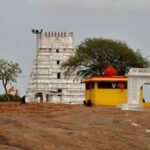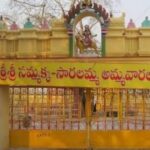
Kaleshwaram Temple, formally known as Sri Kaleshwara Mukteswara Swamy Temple, is one of the most philosophically rich Shiva shrines in South India. Tucked away in a small village in Telangana’s Jayashankar Bhupalpally district, it sits at the sacred confluence of the Godavari and Pranahita rivers, a spot pilgrims often call the Dakshina Triveni Sangamam.
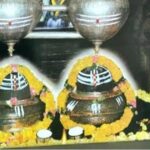
What draws thousands of devotees, historians, and curious travelers here every year is not grandeur or scale. It is a single, rare idea carved in stone: two Shiva lingas resting on one pedestal, representing both Lord Shiva and Lord Yama. This guide covers everything you need, from mythology and architecture to temple timings, distances, and travel routes, so your visit is well planned and deeply informed.
Geographical and Spiritual Significance
Kaleshwaram village lies in Mahadevpur mandal, right on the border of Telangana and Maharashtra, barely 10 to 11 km from Sironcha. Its location at the meeting point of the Godavari and Pranahita rivers gives the town its spiritual weight. Locals and scriptures alike refer to this sangam as the Dakshina Kashi, or the “Kashi of the South,” since bathing here is believed to carry the same merit as a holy dip in Varanasi.
The town’s geography and theology are inseparable. Every ritual, from Pitru Tarpanam to Kartika Masam bathing, revolves around this river confluence, making Kaleshwaram both a pilgrimage center and a natural landmark of religious importance in Telangana.
Mythological Importance of Kaleshwaram Temple
According to local legend, a Vaishya devotee once performed an elaborate Abhishekam to Lord Shiva using hundreds of pots of milk right at the river sangam. The devotion pleased Shiva so deeply that the milk itself is said to have merged into the confluence, sanctifying the waters forever.
Another popular story explains the twin lingas. Lord Yama, the deity who governs death and time, worshipped Shiva here to correct an imbalance in the natural life cycle, since too many souls were attaining moksha and disrupting the order of birth and death. Pleased by Yama’s devotion, Shiva allowed a linga in Yama’s name (Kaleshwara) to be installed beside his own (Mukteshwara) on the same pedestal.
A related tale involves Sage Markandeya, who was destined to die young. Through unwavering devotion to Shiva at this very spot, he is believed to have conquered death and attained immortality. Together, these legends carry one consistent message: death is not the end but a passage, and devotion has the power to transform even fate.
Architectural Brilliance
The temple’s architecture reflects strong Kakatiya and early Dravidian influences, with later renovations layered in over the centuries. Historical evidence points to patronage from Kakatiya rulers, who helped spread Shaivism across Telugu-speaking regions.
Key architectural features include:
- A towering Rajagopuram (entrance tower) that welcomes devotees from a distance
- A Garbhagriha (sanctum) housing the twin lingas on a single Panavattam or pedestal
- Spacious mandapas used for gatherings and seva rituals
- Intricately carved sculptures of Surya, Brahma, and Matsya (fish) on the temple walls
- Four gateways facing different directions, an uncommon layout for temples of this era
While the temple is modest compared to grander South Indian shrines, its sculptural detailing and symbolic layout make it a compelling site for architecture enthusiasts and Shaiva scholars alike.
Unique Feature: Two Lingas on One Pedestal
This is the single most distinctive element of Kaleshwaram Temple, and the reason it draws pilgrims from across India.
The Kaleshwara Linga (Lord Yama)
Representing time and mortality, this linga symbolizes the inevitability of death and the discipline it brings to the cosmic order.
The Mukteshwara Linga (Lord Shiva)
Standing beside it, this linga represents liberation, or moksha, the ultimate release from the cycle of birth and death.
The Mysterious Hole
One of the linga’s surfaces has a small hollow that, according to devotees and priests, never fills completely with water no matter how much is poured in. Popular belief attributes this to an underground channel connecting to the Godavari River, though no formal scientific study has confirmed it. This unresolved mystery only adds to the temple’s mystique.
Kaleshwaram Temple Timings
Darshan timings can shift slightly during festivals, but the temple generally follows this daily schedule:
| Timing Slot | Hours |
| Morning Darshan | 4:30 AM to 1:00 PM |
| Temple Closed | 1:00 PM to 3:30 PM / 4:00 PM |
| Evening Darshan | 3:30 PM or 4:00 PM to 8:00 PM |
There is no entry fee for general darshan. However, specific sevas and Abhishekams may carry a nominal ticket cost, payable only at the temple counter, since online booking is currently not available.
Major Sevas
Devotees can participate in several daily rituals, including:
- Suprabhata Seva, the early morning wake-up ritual for the deity
- Abhishekam, performed with milk, water, and sacred substances on the lingas
- Ashwatha Shiva Kalyanam, a symbolic divine wedding ceremony
- Anna Puja and Maha Nivedana, the offering of food to the deity
- Pradoshakala Puja, an evening ritual considered highly auspicious for Shiva worship
Devotees performing Abhishekam are generally expected to follow a modest dress code inside the Garbhagriha, so it helps to check current guidelines before entering.
Maha Shivaratri at Kaleshwaram
Maha Shivaratri is, without question, the biggest event on the temple calendar. Thousands of devotees travel to Kaleshwaram for night-long vigils, continuous chanting, and grand Rudrabhishekams performed on both lingas simultaneously. The atmosphere during this festival captures the temple’s core philosophy: confronting mortality through unwavering devotion.
Karthika Masam and the Godavari Pushkaralu, which occurs once every twelve years, are the other major occasions that bring massive crowds to the riverbanks for holy baths and special poojas.
Kaleshwaram Lift Irrigation Project – Modern Marvel
Right beside the temple stands one of the most ambitious infrastructure projects in the world: the Kaleshwaram Lift Irrigation Project (KLIP). Built on the Godavari River, it is recognized as the world’s largest multi-stage lift irrigation scheme, spanning over 500 km across 13 districts of Telangana with a canal network exceeding 1,800 km.
KLIP uses a reverse pumping mechanism to lift Godavari water uphill through massive pump houses at Medigadda, Annaram, and Sundilla, eventually irrigating lakhs of acres and supplying drinking water to Hyderabad. It is a striking example of modern engineering rising right beside centuries-old faith, and many visitors combine a temple darshan with a short visit to the Medigadda Barrage to witness the scale of the project firsthand.
Importance of Kaleshwaram in Hindu Philosophy
Beyond its physical form, Kaleshwaram is treated as a living lesson in Shaiva Siddhanta philosophy. The coexistence of Yama and Shiva on one pedestal illustrates a core Hindu belief: death and liberation are not opposites but two sides of the same spiritual journey. Time (kala) governed by Yama eventually leads the soul toward liberation (mukti) granted through devotion to Shiva.
This philosophical duality has made Kaleshwaram a frequent reference point in Telugu folk literature, Harikathas, and regional Shaiva discourse, elevating it from a pilgrimage stop to a genuine center of theological thought.
How to Reach Kaleshwaram Temple
By Air: The nearest airport is Rajiv Gandhi International Airport, Hyderabad, roughly 270 to 290 km away.
By Rail: Kaleshwaram has no station of its own, so most travelers get down at Ramagundam, Peddapalli, or Warangal/Kazipet and continue by road.
By Road: TSRTC operates around 60 daily buses connecting Kaleshwaram with Hyderabad, Warangal, Karimnagar, Vijayawada, and Guntur. Self-drive routes via Siddipet-Karimnagar-Peddapalli or Warangal-Parkal are both well maintained.
Kaleshwaram Temple Distance
Approximate road distances to Kaleshwaram Temple from major cities:
- Hyderabad: 270 to 290 km
- Warangal: 110 to 140 km
- Karimnagar: 125 km
- Manthani: 40 to 60 km
- Sironcha (Maharashtra): 10 to 11 km
These figures vary slightly by route, so confirm live distances on a map app before starting your journey.
Kaleshwaram Temple River
The temple sits precisely where the Pranahita River merges into the Godavari, India’s second-longest river after the Ganga. Local tradition also holds that an invisible, underground Saraswati joins this confluence, making it a Triveni Sangamam. This union of waters symbolizes the individual soul merging with the divine, which is why ritual baths here are considered spiritually powerful.
Nearest Railway Station to Kaleshwaram Temple
Depending on the source and exact route, the closest rail-heads are:
- Ramagundam (RDM): Approximately 70 to 95 km away, a major stop for express and superfast trains from Hyderabad and Chennai
- Peddapalli: Around 80 to 96 km away, well connected to Secunderabad and Warangal
- Mancherial (MCI): About 70 km away, convenient for travelers from Nagpur
- Warangal/Kazipet: Roughly 110 to 130 km away, useful if combining this trip with Warangal’s heritage sites
Local buses and taxis are readily available from any of these stations to complete the journey.
Kaleshwaram Temple Contact Number
For darshan timing updates, seva bookings, or general enquiries, devotees can reach out to the temple administration through the numbers listed on official Telangana temple directories and tourism portals. Since contact numbers for smaller temples occasionally change, it is best to reconfirm the latest number through the Telangana Tourism website or a recent local directory listing before your visit.
Accommodation and Facilities
Kaleshwaram offers modest but sufficient stay options:
- Haritha Hotel Kaleshwaram, run by Telangana Tourism, offering clean and affordable rooms
- Temple-run cottages and Satrams, some free of cost for devotees
- Private lodges and guest houses for budget travelers
- Local Haritha restaurants for basic vegetarian meals
Book in advance during Maha Shivaratri and Karthika Masam, when accommodation fills up quickly.
Best Time to Visit
The ideal window to visit Kaleshwaram Temple is between October and February, when the weather is pleasant and river levels are calm for holy baths. If you want to experience the temple at its most vibrant, plan your trip around:
- Maha Shivaratri, for grand night-long celebrations
- Karthika Masam, for daily lamp lighting and special poojas
- Godavari Pushkaralu, held once every 12 years for a truly rare spiritual experience
Summer months can be uncomfortably hot for river-side rituals, so early morning visits are advisable if traveling between March and June.
Nearby Places to Visit
Extend your trip with these nearby spots:
- Medigadda Barrage, the starting point of KLIP
- Sri Veerabhadra Swamy Temple, dedicated to a fierce form of Shiva
- Sri Vasavi Kanyaka Parameshwari Temple, opened in 2018 near the main shrine
- Sironcha, a Maharashtra border town reached in under 20 minutes
Spiritual Practices Performed by Devotees
Pilgrims visiting Kaleshwaram typically observe a few specific rituals tied to the temple’s death-and-liberation theme:
- Pitru Tarpanam, performed at the river confluence to honor ancestors
- Holy dip in the Sangam, believed to cleanse sins and grant merit similar to Kashi
- Fasting and night-long vigils during Maha Shivaratri
- Sequential worship, where devotees first visit Lord Ganesha, then Lord Yama, and finally Lord Shiva, following a traditional order believed to maximize spiritual benefit
Role of Kaleshwaram in Telangana Culture
Kaleshwaram is far more than a religious destination for the people of Telangana. It appears repeatedly in folk songs, Harikatha storytelling traditions, and regional festivals, functioning as a cultural anchor for Telangana Shaivism. Its recent association with the Kaleshwaram Lift Irrigation Project has also made it a symbol of the state’s modern identity, linking ancient faith with contemporary engineering ambition in the popular imagination.
Frequently Asked Questions
Where is Kaleshwaram Temple located?
Kaleshwaram Temple is located in Kaleshwaram village, Jayashankar Bhupalpally district, Telangana, at the confluence of the Godavari and Pranahita rivers.
Which deity is worshipped at Kaleshwaram Temple?
The temple is dedicated to Lord Shiva, worshipped here as Sri Kaleshwara Mukteswara Swamy, alongside a representation of Lord Yama.
Why does Kaleshwaram Temple have two lingas?
The twin lingas represent Lord Shiva and Lord Yama, symbolizing the balance between death and liberation, or moksha.
What are the temple’s darshan timings?
The temple is generally open from 4:30 AM to 1:00 PM and again from 3:30 PM or 4:00 PM to 8:00 PM daily.
Is there an entry fee for darshan?
No, general darshan at Kaleshwaram Temple is free of cost for all devotees.
What is the best time to visit Kaleshwaram Temple?
October to February is ideal, along with special visits during Maha Shivaratri and Karthika Masam.
How far is Kaleshwaram Temple from Hyderabad?
It is approximately 270 to 290 km from Hyderabad, taking roughly 6 to 7 hours by road.
What is the nearest railway station to Kaleshwaram Temple?
Ramagundam and Peddapalli are the closest major railway stations, both roughly 70 to 96 km away.
Can I book seva tickets online?
Currently, most sevas and Abhishekam tickets must be purchased in person at the temple counter on the day of the visit.
Final Thoughts
Kaleshwaram Temple is proof that spiritual significance is not always measured in scale or grandeur. Its twin lingas, riverine setting, and layered mythology offer something rare: a place where devotees are invited to think seriously about mortality, discipline, and liberation, all within a single sanctum. Add to this the striking presence of the Kaleshwaram Lift Irrigation Project just outside its gates, and the town becomes a fascinating study in how ancient faith and modern ambition can coexist along the same riverbank.
Whether you are visiting for darshan, research, or simple curiosity, Kaleshwaram rewards those willing to look beyond its modest structure and into the philosophy it quietly holds.