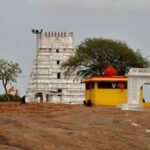
Tucked along the serene banks of the Krishna River in Telangana, the Beechupally Hanuman Temple is one of the most revered Anjaneya shrines in South India. Known locally as “Beechupally Rayudu,” this ancient temple carries centuries of devotion, mythology, and miraculous lore that continue to draw pilgrims from Telangana, Andhra Pradesh, and Karnataka.
What makes Beechupally stand apart from ordinary pilgrimage spots is its layered spiritual identity. It serves as a sacred checkpoint on the Srisailam yatra route, a powerful Sankat Mochan kshetra, and a Pushkara ghat on the Krishna River, all rolled into one destination. Whether you are seeking divine blessings, fulfilling a vow, or immersing yourself in the deep spirituality of South Indian temple culture, Beechupally offers an experience that touches the soul.
Beechupally Hanuman Temple Location
The Beechupally Anjaneya Swamy Temple is located in Beechupally village, Itikyala Mandal, Jogulamba Gadwal District, Telangana. The full temple address is:
Sri Abhaya Anjaneya Swamy Devalayam, NH-44, Beechupally, Itikyala Mandal, Jogulamba Gadwal District, Telangana – 509125
The temple sits right beside National Highway 44 (formerly NH-7), placing it conveniently on the Hyderabad to Kurnool/Bangalore highway corridor. It is approximately 30 kilometres downstream from the Jurala Hydro Electric Project. The temple’s riverside position, combined with its highway accessibility, has made it one of the most visited pilgrimage destinations in the Gadwal region.
Mythological Significance of Beechupally
The mythological roots of this temple are deeply tied to the Vijayanagara Empire. According to historical records and temple inscriptions, it was Sri Vyasaraya (also spelled Vyasaraja), the illustrious royal guru of Emperor Sri Krishna Devaraya, who is credited with installing the idol of Lord Hanuman here. Vyasaraya lived between 1457 and 1539 AD and was known for establishing Hanuman idols across South India.
The story goes that Vyasaraya and his disciples camped at the confluence site along the Krishna River, immediately sensing the spiritual potency of this land. He crafted a beautiful idol of Sri Anjaneya Swamy and installed it at this spot. However, before departing, a question troubled him deeply: who would perform daily puja to the deity once he left?
That very night, Lord Hanuman appeared in Vyasaraya’s dream and gave him the answer. When the sage woke up the next morning, he found a young tribal boy from the Boya community already offering heartfelt prayers to the idol. This boy’s name was “Beechupally.” Moved by this divine arrangement, Vyasaraya appointed the boy as the first archaka (priest) of the temple. From that day, the village took on the boy’s name, and the presiding deity came to be lovingly called “Beechupally Rayudu.”
Beechupally Hanuman Temple History
The current mandapam (hall) inside the temple sanctum was constructed approximately 200 years ago by the Gadwal kings, rulers who were deeply devoted to Lord Anjaneya. The temple faces south, while the idol itself faces east, which is considered auspicious in Vaishnavite tradition.
A few key historical milestones of the temple include:
- 15th century: Sri Vyasaraya installs the original Hanuman idol.
- Approximately 200 years ago: Gadwal kings construct the temple’s main mandapam and provide royal patronage.
- 1950s: A road bridge is constructed nearby, boosting the temple’s connectivity and pilgrim flow.
- 1992: A Lord Rama temple is built within the temple complex.
- 2004: Additional facilities are added to the shrine complex.
- 2016: Telangana State Government constructs multiple permanent ghats at Beechupally for the Krishna Pushkaralu.
Even today, the royal family descendants of the Gadwal kings actively participate in the annual chariot festival (Ther Utsav), maintaining the centuries-old tradition started by their ancestors. Originally, only members of the Valmiki community served as priests. Over time, Madhwa Brahmins were also permitted to conduct daily rituals.
Architecture of Beechupally Hanuman Temple
The Beechupally Anjaneya Swamy Temple is built in classic South Indian Dravidian architectural style. The temple structure is compact yet spiritually commanding, with a well-maintained sanctum sanctorum housing the main idol of Lord Hanuman.
Key architectural features include:
- Temple orientation: The main entrance faces south, and the presiding deity faces east.
- Mandapam: A spacious pillared hall built by the Gadwal kings stands in front of the sanctum.
- Dwaja Stambham: A tall, majestic flag post stands at the entrance, where women light lamps during sacred months like Karthika.
- Kamili Tree: A sacred tree located on a termite mound within the temple premises, always adorned with buds, flowers, and fruits throughout the year. During the chariot festival, the procession circumambulates up to this tree, making it a spiritually significant feature.
- Shiva Temple: A Shivalingam temple stands closer to the Krishna riverbanks, about 200 metres from the main Hanuman shrine.
- Rama Temple: Built in 1992, a separate temple for Lord Sri Rama stands within the complex.
Lord Hanuman Idol – Spiritual Power
The idol of Sri Anjaneya Swamy at Beechupally is believed to be one of the most powerful and miraculous Hanuman idols in all of Telangana. What sets this idol apart from other Hanuman shrines is a rare detail mentioned on the temple walls: Lord Hanuman here is said to bear the Shankha (conch) and Chakra (discus) markings, an extraordinarily rare feature not commonly found in Hanuman temples.
The idol is presently covered with a silver kavach (armour) that protects it and adds a majestic appearance during darshan. Devotees firmly believe that a sincere prayer at Beechupally Rayudu removes all life’s obstacles, heals illness, and grants strength and courage. Pilgrims performing pradakshina (circumambulation) around the temple are said to find relief from diseases and chronic ailments. Lockets carrying the image of Beechupally Anjaneya Swamy, sold at the temple, are considered sacred protective talismans by devotees.
Religious Importance for Srisailam Pilgrims
One of the most significant roles of Beechupally Hanuman Temple in regional pilgrimage culture is its connection to the Srisailam Mallikarjuna Jyotirlinga yatra. Beechupally is widely regarded as the “Gateway to Srisailam” by devotees from Telangana and Andhra Pradesh.
A long-standing tradition holds that pilgrims travelling to Srisailam must stop at Beechupally to seek the blessings of Lord Hanuman before proceeding. This is rooted in the belief that Hanuman, as the greatest devotee and protector of Lord Rama, clears the path and ensures a safe and fruitful pilgrimage. This tradition has been practised across generations and continues to draw thousands of pilgrims every year.
Additionally, the banks of the Krishna River at Beechupally are considered sacred for performing Pitru Tarpan (obsequies for departed souls), adding another layer of religious importance for Hindu families.
Festivals Celebrated at Beechupally Hanuman Temple
The temple comes alive during several major festivals throughout the year. Here are the most significant celebrations:
Hanuman Jayanti
Celebrated in the month of Chaitra (April), Hanuman Jayanti is the biggest festival at Beechupally. Special abhishekams, alankarams, and bhajans are performed. Tens of thousands of devotees from Telangana, Andhra Pradesh, and Karnataka attend this event.
Narasimha Jayanti
Celebrated during Vaishaka Masam (April–May), this festival features special pujas dedicated to Lord Narasimha, with the Beechupally shrine witnessing a considerable surge in devotees.
Rama Navami
On this day, Ramayana parayanam (recitation) and special sevas are conducted honouring Lord Hanuman as the greatest devotee of Lord Rama.
Saturdays and Amavasya
Saturdays are considered especially auspicious for Lord Hanuman worship. Devotees visit in large numbers to offer prayers for relief from Shani dosha and to seek career and financial wellbeing. Amavasya (new moon day) is significant for ancestral rites on the Krishna ghats.
Annual Chariot Festival (Ther Utsav)
The royal chariot festival is conducted every year with active participation from the Gadwal royal family. The chariot is pulled through the temple premises up to the sacred Kamili tree, making it a culturally rich and visually spectacular event.
Krishna Pushkaralu (Once Every 12 Years)
The most massive gathering at Beechupally occurs once every 12 years during the Krishna Pushkaralu. Lakhs of devotees take a holy dip at the Pushkar ghats, believing that the Krishna River assumes supernatural purifying powers during this rare planetary alignment.
Beechupally Hanuman Temple Timings Today
The temple is open every day of the year. Below are the standard daily timings:
| Session | Timings |
| Morning Opening | 6:00 AM |
| Afternoon Break | 12:00 PM – 3:00 PM (approximately) |
| Evening Session | 3:00 PM onwards |
| Closing Time | 8:30 PM to 10:00 PM |
Note: During major festivals like Hanuman Jayanti, Krishna Pushkaralu, and special auspicious days, the temple may remain open for extended hours. The official toll-free contact number should be checked for current timings.
The government of Telangana’s tourism portal lists the official timings as 6:00 AM to 10:00 PM during peak pilgrimage seasons.
Darshan and Seva Details
The Beechupally Hanuman Temple offers a range of sevas (religious services) that devotees can book at the temple counter:
- Abhishekam (ritual bathing of the deity)
- Alankaram (floral and ornamental decoration)
- Archana (offering of names and flowers)
- Kalyana Utsavam (wedding ceremony for the deity)
- Pradosha Puja (twilight worship)
- Astikalu Nimajjan Pooja (ritual immersion of ashes for the departed)
The Astikalu Nimajjan Pooja is of particular importance here. It is conducted for a one-time fee of approximately Rs. 2,500, and all required materials are provided by the temple. The ceremony lasts approximately 20 minutes, after which families proceed to the Krishna River, where boats (dinghis) are available for the river immersion ritual.
No entry fee is charged to visit the temple. Parking fees are collected at the entrance toll gate and at the river bank parking area.
Beechupally Pushkar Ghat
One of the most scenic and spiritually significant features of the Beechupally complex is the Pushkar Ghat on the Krishna River. The Telangana State Government constructed several permanent, well-maintained ghats here for the safety and convenience of pilgrims, particularly after the 2016 Krishna Pushkaralu.
Key facts about the Beechupally Pushkar Ghat:
- The ghats are used for Pushkara Snanam, the sacred bath taken once every 12 years during the Krishna Pushkaralu.
- Devotees also take daily holy dips here before proceeding for darshan.
- The ghat is the site for performing Pitru Tarpan (ancestral offerings) as the Krishna River is considered sacred for this purpose at this location.
- During the monsoon season, the river swells dramatically, and its waters rise close to the level of the Shivalingam temple, creating a breathtaking and spiritually charged atmosphere.
- Two islands, Gurram Gadda village (the larger island of approximately 10 sq km) and Nizam Konda (a smaller island that once served as a port for the Nizam Nawabs), are visible from the ghat. The Nizam Konda island also houses a ruined fort dating to 1742 AD from the Qutb Shahi era.
How to Reach Beechupally Hanuman Temple
By Road
The temple is located directly on National Highway 44 (NH-44), making it highly accessible by road.
- From Hyderabad: Take NH-44 via Shadnagar, Kalwakurthy, Mahbubnagar, and Gadwal to reach Beechupally. Distance approximately 150–172 km, taking about 3 to 3.5 hours.
- TSRTC and KSRTC buses operate regularly on the Hyderabad–Kurnool route, all of which pass through Beechupally.
- Private taxis and cabs are also readily available from Hyderabad, Mahbubnagar, and Gadwal.
By Train
The nearest railway station is Itikyala Railway Station, approximately 14 km from the temple. Auto-rickshaws and local cabs are available from there. Gadwal Railway Station, about 13–15 km away, is another convenient rail access point with better connectivity.
By Air
The nearest airport is Rajiv Gandhi International Airport (RGIA), Hyderabad (Shamshabad), approximately 150–180 km from Beechupally. From the airport, taxis, cabs (Ola/Uber), and TSRTC buses are available.
Accommodation Near Beechupally
Beechupally itself offers limited but useful accommodation options:
- Temple Choultries: The temple management provides up to 13 free rooms for pilgrims on a first-come, first-served basis. These are basic, clean rooms ideal for overnight pilgrims.
- Haritha Hotel, Gadwal: The Telangana Tourism-run Haritha Hotel in Gadwal (approximately 13–15 km from the temple) is the best quality accommodation option in the region, offering good food and comfortable facilities.
- Budget Lodges in Gadwal: Several budget lodges and dharamshalas are available in Gadwal town.
- Kurnool City: For more comfortable hotel options, Kurnool city in Andhra Pradesh is also accessible from Beechupally and offers a wider range of hotels.
Best Time to Visit
The Beechupally Hanuman Temple is open throughout the year, but some times are particularly ideal:
- October to March: This is the most comfortable season for a visit. Pleasant weather makes the journey and temple visit enjoyable. This period coincides with several auspicious Saturdays, Kartika Month, and other festive occasions.
- Monsoon (July to September): The monsoon season offers a spectacular visual experience as the swollen Krishna River laps close to the temple edges. The lush green surroundings and the roar of the river create an otherworldly atmosphere. However, be prepared for rain and some water-level restrictions at the ghats.
- Hanuman Jayanti (April): The most auspicious time to visit, though crowds are very large.
- Krishna Pushkaralu (Once in 12 years): An unmatched spiritual gathering.
For a peaceful, crowd-free darshan, visit on weekdays in the early morning hours (6 AM to 8 AM).
Spiritual Experience and Devotee Beliefs
First-time visitors to Beechupally often describe a sense of deep peace and divine presence that is hard to put into words. Regulars and long-time pilgrims share accounts of:
- Prayers being answered for health, career, marriage, and family harmony after sincere worship here.
- People taking Anjaneya Deeksha (a vow of devotion to Lord Hanuman) at this temple and completing their spiritual journey with a visit to Srisailam.
- The sacred Kamili tree on the termite mound within the premises, always in bloom, is seen as a living symbol of divine abundance and an unceasing miracle in itself.
- Early morning birdsong, the sound of the flowing Krishna, and the fragrance of incense create an immersive meditative environment that devotees describe as “mind relaxing and stress free.”
The combination of the river, the rare deity idol with Shankha-Chakra markings, and the temple’s ancient lineage traced to Vyasaraya gives Beechupally Rayudu a spiritual reputation that few temples in Telangana can match.
Nearby Temples and Attractions
When visiting Beechupally, consider exploring these nearby sacred sites and attractions:
- Jogulamba Devi Temple, Alampur (approx. 60 km): One of the 18 Maha Shakti Peethas, this is a major pilgrimage centre in Telangana.
- Somasila Someswara Swamy Temple: A revered Shiva temple near the Somasila reservoir.
- Sri Jammulamma Temple, Gadwal (13–15 km): A popular local deity temple in Gadwal town.
- Sri Ranganayaka Swamy Temple, Srirangapur: A sacred Vishnu temple near Beechupally.
- Jurala Hydro Electric Project Dam (30 km upstream): A scenic dam offering a beautiful view of the Krishna River.
- Nizam Konda Island Fort: A historic ruined fort visible from the river, dating back to the Qutb Shahi era (1742 AD), accessible by boat during the rainy season.
- Srisailam Mallikarjuna Jyotirlinga (approx. 120 km): The most important pilgrimage destination connected to Beechupally yatra.
Hyderabad to Beechupally Hanuman Temple Distance
The distance from Hyderabad to Beechupally Hanuman Temple is approximately 150 to 172 kilometres depending on the route taken.
| Route | Distance | Travel Time |
| Via NH-44 (Shadnagar – Mahbubnagar – Gadwal) | ~172 km | 3 to 3.5 hours |
| Via Kurnool Highway (NH-44 direct) | ~150 km | 3 hours |
The most recommended route is via NH-44 through Shadnagar, Mahbubnagar, and Gadwal, which offers smooth road conditions and clear signage to Beechupally.
Beechupally Hanuman Temple Contact Number
- Toll-Free Number: 1800-425-46464 (also listed as 180042546464)
- Temple Address: Sri Abhaya Anjaneya Swamy Devalayam, NH-44, Beechupally, Itikyala Mandal, Jogulamba Gadwal District, Telangana – 509125
- Telangana Tourism Helpline: Available via the official Telangana Tourism portal for accommodation and travel queries.
It is always advisable to call ahead during festival seasons to confirm current timings, crowd levels, and seva bookings.
FAQ’s
Where is Beechupally Hanuman Temple located?
It is in Beechupally village, Itikyala Mandal, Jogulamba Gadwal District, Telangana, on the banks of the Krishna River along NH-44.
What are the Beechupally Hanuman Temple timings today?
The temple is open from 6:00 AM to 8:30 PM daily, and up to 10:00 PM during peak festival seasons.
Why is Beechupally called Dakshina Kashi?
Beechupally holds immense spiritual significance for South Indian Hindus due to its sacred Krishna River ghats used for ancestral rites and Pushkara snanam, earning it the title of Dakshina Kashi.
Who installed the Hanuman idol at Beechupally?
The idol was installed by Sri Vyasaraya, the royal guru of Emperor Sri Krishna Devaraya of the Vijayanagara Empire, in the 15th century.
Is Beechupally important for the Srisailam yatra?
Yes, it is considered the “Gateway to Srisailam.” Devotees traditionally stop here for Hanuman’s blessings before proceeding to the Srisailam Jyotirlinga.
What is the entry fee for Beechupally Temple?
There is no entry fee. The temple is free to visit for all devotees.
How far is Beechupally from Hyderabad?
Beechupally is approximately 150 to 172 km from Hyderabad, about a 3 to 3.5-hour drive via NH-44.
Is accommodation available at Beechupally Temple?
Yes, the temple provides up to 13 free rooms for pilgrims. Better facilities are available at Haritha Hotel in Gadwal, about 13–15 km away.
What is special about the Hanuman idol at Beechupally?
The idol is believed to bear rare Shankha (conch) and Chakra (discus) markings, a feature not commonly found in Hanuman temples, making it uniquely powerful.
What is Nizam Konda near Beechupally?
Nizam Konda is a small island in the Krishna River near the temple, once used as a port by the Nizam Nawabs. It houses the ruins of a fort built in 1742 AD during the Qutb Shahi era.
Conclusion
The Beechupally Hanuman Temple is far more than a place of worship. It is a living monument to centuries of faith, royal patronage, and divine grace. From the miraculous idol installed by the sage Vyasaraya in the 15th century to the sacred Pushkar ghats on the Krishna River, every corner of this kshetra carries a story worth knowing.
Whether you are a devout pilgrim completing your Srisailam yatra, a family performing ancestral rites, or simply a traveller seeking spiritual solace in the heart of Telangana, Beechupally Rayudu welcomes all with equal grace. Plan your visit between October and March for the most comfortable experience, arrive early for peaceful darshan, and do not leave without walking the ghats along the magnificent Krishna River.
Jai Bajrangbali. Jai Beechupally Rayudu.