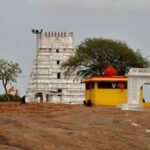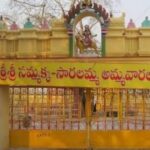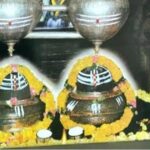
Imagine standing before all 12 Jyotirlingas, bowing at all 18 Shakti Peethas, walking through the Kurukshetra battlefield, and witnessing the celestial world of Swarga – all in a single day and at a single location. At Surendrapuri, this is not imagination. It is reality.
Tucked away near the famous Yadadri Lakshmi Narasimha Swamy Temple in Telangana, Surendrapuri is one of the most extraordinary spiritual destinations in India. It combines the depth of a mythology museum, the sanctity of a temple complex, and the visual richness of a sculptural park into an experience unlike anything else on the subcontinent.
Whether you are a devout pilgrim, a curious traveller, or a parent wanting to teach your children about Hindu heritage in the most vivid way possible, Surendrapuri delivers on every level. This guide covers everything you need to know before visiting – timings, entry fees, key attractions, travel tips, and the deep spiritual significance behind each section.
The Concept and Vision Behind Surendrapuri
The story of Surendrapuri is as inspiring as the place itself. Sri Kunda Satyanarayana, born into a humble farming family near Khammam, Telangana, carried a lifelong dream of building a space where every Hindu sacred site could be experienced under one roof.
He named the complex Surendrapuri in memory of his beloved son, Surendra Babu. Driven by grief and devotion, he began constructing this dream project at the age of 70 – an age when most men rest. Over a decade of relentless effort, he built what is now officially known as the Kunda Satyanarayana Kaladhamam – India’s first mythological museum and spiritual awareness center.
The complex was inaugurated to the public in May 2003 and formally opened by former Governor of Andhra Pradesh, Narayan Dutt Tiwari, in February 2009. Today, Surendrapuri is also associated with the Kanchi Kamakoti Peetham, lending it considerable religious authority.
Key motivations behind its creation:
- To make Hindu mythology accessible to ordinary people in a visual, immersive format
- To allow devotees who cannot travel across India to receive the blessings of multiple sacred sites
- To educate younger generations about the Puranas, epics, and the divine cosmos
- To preserve and promote India’s spiritual and sculptural heritage
Surendrapuri Temple Location
Surendrapuri is situated in the Yadadri Bhuvanagiri District of Telangana, approximately 60 kilometres from Hyderabad on the Yadagirigutta Road.
Full Address: Kunda Satyanarayana Kala Dhamam Surendrapuri, Yadadri Road, Yadadri-Bhuvanagiri District, Telangana, India – 508115
Key distances:
- 60 km from Hyderabad city centre
- 2 km from Yadagirigutta Bus Terminal
- 4 km from Yadagirigutta town
- 8 km from Raigir Railway Station
- 10 km from Bhuvanagiri Railway Station
- 88 km from Rajiv Gandhi International Airport, Hyderabad
The location is convenient for anyone visiting the nearby Yadadri temple and is increasingly becoming a spiritual corridor for pilgrims travelling through central Telangana.
Architectural Grandeur and Layout
Spread across 17 to 18 acres of land, Surendrapuri is not just a temple – it is a mythological universe rendered in stone, mortar, and sculpture. The complex features over 3,000 statues and more than 110 replicas of India’s most celebrated temples, arranged along a 3-kilometre walkway.
As you enter, the first thing that captures your attention is the iconic 60-foot double-sided Panchamukha Hanuman-Shiva statue – a remarkable structure that stands as a guardian at the entrance. One face depicts Lord Hanuman with five heads; the reverse depicts Lord Shiva. This statue is one of the tallest Panchamukhi Hanuman idols in India.
Visitors also encounter:
- A 101-foot Shivalinga known as Nagakoti, situated atop Nagadri Hill and encircled by the giant serpent Kaalasarpa
- The Panchamukha Hanumadeeswara Devasthanam temple, built strictly according to Vaastushastra and Agamashastra, with a 16-foot Panchamukha Hanuman idol carved from black stone sourced from Kanchi
- Gopuras blending North and South Indian architectural styles
- Replicas of famous temples including Tirupati Balaji, Kashi Vishwanath, Meenakshi Amman, Jagannath Puri, Shirdi Sai Baba, and the Char Dhams
You literally walk through lion’s mouths, enter giant animal structures, and pass through the seven gateways of Vishnuloka – each designed to transport you into a different mythological realm.
The 12 Jyotirlingas – A Rare Spiritual Opportunity
One of the greatest draws of Surendrapuri is the presence of replicas of all 12 Jyotirlingas – the most sacred manifestations of Lord Shiva, scattered across the length and breadth of India. Visiting all 12 in real life requires months of travel across multiple states. Here, you can offer prayers at all 12 in a single visit.
The 12 Jyotirlingas represented at Surendrapuri are:
- Somnath (Gujarat)
- Mallikarjuna (Andhra Pradesh)
- Mahakaleshwar (Madhya Pradesh)
- Omkareshwar (Madhya Pradesh)
- Kedarnath (Uttarakhand)
- Bhimashankar (Maharashtra)
- Kashi Vishwanath (Uttar Pradesh)
- Trimbakeshwar (Maharashtra)
- Vaidyanath (Jharkhand)
- Nageshwar (Gujarat)
- Rameshwaram (Tamil Nadu)
- Grishneshwar (Maharashtra)
Each replica is crafted with careful attention to the form, iconography, and spiritual atmosphere of the original shrine. For elderly pilgrims and those with health limitations, Surendrapuri offers a deeply meaningful alternative to the physical journey.
18 Shakti Peethas – The Divine Feminine Energy
The 18 Shakti Peethas are among the most revered sites in Hindu tradition, each associated with a body part of Goddess Sati that fell to earth after her self-immolation and Lord Vishnu’s Sudarshana Chakra severed her body. Visiting all 18 Shakti Peethas scattered across the Indian subcontinent is considered a lifetime spiritual achievement.
Surendrapuri brings all 18 Shakti Peethas together in one sacred space, allowing devotees to receive the blessings of the Divine Mother in her many forms – including Kalighat (Kolkata), Kamakhya (Assam), Vindhyavasini, and others.
The depiction here is not merely architectural. The sculptures carry the mythological narrative of each Peetha, helping visitors understand the deep significance of each location and the Shakti tradition rooted in the Devi Bhagavatam.
For those who revere the feminine divine, this section of Surendrapuri is particularly moving and spiritually uplifting.
Dashavatara – The Ten Incarnations of Vishnu
The Dashavatara gallery at Surendrapuri brings Lord Vishnu’s ten principal incarnations to life through extraordinarily detailed and expressive sculptures. Walking through this section is like reading the Bhagavata Purana in three dimensions.
The ten avatars depicted are:
- Matsya – The fish that saved the Vedas
- Kurma – The tortoise that bore Mount Mandara during the Samudra Manthan
- Varaha – The boar who rescued Earth from the cosmic ocean
- Narasimha – The half-lion, half-man form that protected Prahlada
- Vamana – The dwarf Brahmin who outwitted King Bali
- Parashurama – The warrior sage with an axe
- Rama – The prince of Ayodhya and ideal ruler
- Krishna – The divine statesman and teacher of the Bhagavad Gita
- Buddha – The compassionate enlightened teacher
- Kalki – The future avatar yet to arrive
For young visitors especially, this section functions as an interactive classroom of Dharma, making ancient scriptures vivid and relatable.
Ramayana and Mahabharata in Stone
Some of the most dramatic sections of Surendrapuri are dedicated to India’s two great epics – the Ramayana and the Mahabharata.
Ramayana Section: Visitors walk through scenes from Rama’s exile in the forest, Sita’s abduction by Ravana, Hanuman’s leap to Lanka, and the climactic battle between Rama and Ravana. The war tableau is depicted with life-sized figures of warriors, chariots, and divine weapons, bringing the epic to palpable life.
Mahabharata Section: The Chakravyuha (the spiralling military formation in which Abhimanyu was trapped) is recreated architecturally, so visitors physically enter and navigate the structure – a deeply immersive and educational experience. The Kurukshetra war scene features richly sculpted battle scenes, including Lord Krishna delivering the Bhagavad Gita to Arjuna on the battlefield.
Both sections are incredibly detailed and emotionally evocative, making them favourites among school groups, families, and mythology enthusiasts.
The Naraka (Hell) Section – A Moral Awakening
One of the most talked-about sections of Surendrapuri is its graphic and thought-provoking depiction of Naraka (Hell), drawn from the Garuda Purana. The various realms of punishment described in the Puranas – corresponding to different categories of sinful actions – are visualised through detailed sculptures showing the consequences of moral transgressions.
This section serves a powerful ethical purpose. It is not designed to frighten but to awaken. The message is clear: actions have consequences, and righteousness is the path to liberation.
Visitors often describe this section as a turning point, prompting genuine reflection on their daily choices and values. Parents frequently use it as a moral teaching moment for children.
The Swarga Section – Heaven Depicted
In contrast to the Naraka section, the Swarga (Heaven) section is a celebration of divine beauty, abundance, and cosmic order. Here, visitors encounter the celestial worlds described in Hindu scriptures:
- Brahmaloka – The realm of the Creator
- Vishnuloka – The eternal abode of Lord Vishnu
- Shivaloka – Lord Shiva’s domain on Mount Kailash
- Indraloka – The kingdom of Indra, ruler of the heavens
- Nagaloka – The serpent realm
- Yamaloka – The realm of Yama, the god of death
- Patalaloka – The netherworld
Walking through the seven gateways of Vishnuloka, flanked by the Dashavatara sculptures on both sides, is described by many visitors as one of the most spiritually stirring experiences of their lives.
Navagraha Temple
Surendrapuri houses nine individual temples dedicated to the Navagrahas – the nine celestial bodies of Hindu astrology: Sun (Surya), Moon (Chandra), Mars (Mangala), Mercury (Budha), Jupiter (Guru), Venus (Shukra), Saturn (Shani), Rahu, and Ketu.
Each planet deity is depicted alongside its divine consort and vahana (vehicle), following precise iconographic standards. Devotees can perform rituals at each shrine to seek relief from negative planetary influences (Graha Doshas) that are believed to affect health, wealth, relationships, and career.
This section is particularly meaningful for those undergoing Shani Sade Sati, Rahu-Ketu transits, or other challenging planetary periods according to their birth chart.
Spiritual Significance of Visiting Surendrapuri
Surendrapuri offers spiritual merit that goes far beyond ordinary tourism. Consider what a single visit encompasses:
- Darshan of all 12 Jyotirlingas – equivalent to sacred pilgrimage across six states
- Blessings of all 18 Shakti Peethas – honouring the Divine Mother in her complete cosmic form
- Witnessing the Char Dhams (Badrinath, Dwarka, Puri, Rameshwaram) in replica form
- Prayer at nine Navagraha shrines for astrological protection
- Immersion in the stories of Ramayana, Mahabharata, and Bhagavatam
- Visual experience of all seven cosmic worlds as described in Hindu cosmology
For the elderly, the differently abled, and anyone unable to undertake extensive travel, Surendrapuri is not a substitute – it is a profound spiritual sanctuary in its own right.
Surendrapuri Temple Timings
| Day | Morning Session | Evening Session |
| Monday to Friday | 6:30 AM to 1:00 PM | 3:00 PM to 8:00 PM |
| Saturday and Sunday | 9:00 AM to 5:00 PM | Continuous |
General visiting hours are 6:30 AM to 8:00 PM on weekdays. Weekend timings may vary slightly.
Important Notes:
- Timings may change during major Hindu festivals and public holidays
- Always verify current timings by calling the administration at 089092 22888 before visiting
- Plan to spend at least 3 to 4 hours to explore the complex adequately; a thorough visit can take a full day
Surendrapuri Temple Entry Fee
| Category | Entry Fee |
| Standard Adult | INR 350 per ticket |
| Children (5 to 10 years / 120 cm to 140 cm) | INR 300 per ticket |
| Children below 5 years (below 120 cm) | Free |
Notes on entry fee:
- The entry to the Surendrapuri outer complex is free; the ticket above covers the Kunda Satyanarayana Kaladhamam museum and attraction areas
- Weekend and weekday pricing may differ; check the official website at surendrapuri.com for the latest rates
- Group and school field trip packages are available with special pricing; contact the administration directly for bulk bookings
Best Time to Visit
The ideal time to visit Surendrapuri is October to February, when Telangana’s weather is cool and pleasant, making it comfortable to walk the 3-kilometre outdoor pathway.
Additional tips for planning your visit:
- Weekday mornings are the best time to avoid crowds and experience the complex peacefully
- Avoid peak summer afternoons (April to June) when temperatures in Telangana can exceed 40 degrees Celsius
- Festive seasons such as Maha Shivaratri, Navratri, and Dussehra see large crowds but also special decorations and cultural programmes
- Arriving at opening time allows you to complete the major sections before afternoon heat
Facilities Available
Surendrapuri is well-equipped for visitor comfort:
- Ample parking space for cars, buses, and two-wheelers
- Food stalls and canteen serving vegetarian meals and refreshments (the canteen features uniquely designed swan-shaped benches)
- Clean drinking water at multiple points throughout the complex
- Rest areas and shaded seating along the walkway
- Souvenir shops selling deity images, religious items, and memorabilia
- Restrooms and clean pathways maintained by the management
- Bilingual descriptions and directions in Telugu and English at every entry and exit point
- Guided tours may be available for educational and school groups
Travel Guide
By Road (from Hyderabad): Take NH 163 or the Warangal Highway towards Yadagirigutta. The drive takes approximately 1 to 1.5 hours from Hyderabad. Parking is available at the complex.
By Bus: TSRTC (Telangana State Road Transport Corporation) operates regular bus services from Hyderabad (Jubilee Bus Station and MGBS) to Yadagirigutta. From the Yadagirigutta Bus Terminal, Surendrapuri is just 2 kilometres away, accessible by auto-rickshaw or taxi.
By Train: The nearest railway stations are Raigir (8 km) and Bhuvanagiri (10 km). From either station, taxis and autos are available to reach Surendrapuri.
By Air: The nearest airport is Rajiv Gandhi International Airport, Hyderabad, approximately 88 kilometres away. From the airport, hire a taxi or cab for a direct journey.
Nearby Attraction: Yadadri Lakshmi Narasimha Swamy Temple is just 4 to 5 kilometres away. Combining both visits in a single day trip from Hyderabad is extremely popular and highly recommended.
Accommodation: Haritha Hotel at Yadagirigutta, operated by Telangana Tourism, is the most recommended option near Surendrapuri, offering clean rooms, a restaurant, and quality facilities at reasonable rates.
Photography and Visitor Experience
Photography is generally permitted throughout most areas of Surendrapuri and there are countless captivating spots to capture – from the towering Panchamukha Hanuman statue at the entrance to the detailed dioramas of the epics and the grandeur of the Jyotirlinga replicas.
Practical tips for an enjoyable visit:
- Wear comfortable, flat footwear – you will walk 3 or more kilometres
- Carry a refillable water bottle especially during warmer months
- Read the information plaques at each exhibit for full context; they are available in both Telugu and English
- Mobile phones should be switched off or kept on silent inside the temple areas as a mark of respect
- Vegetarian food only is recommended on the premises in keeping with the spiritual environment
- Helmets, caps, and head coverings are not permitted inside the temple sanctuaries
Why Surendrapuri Is Unique in India
No other destination in India offers what Surendrapuri does within a single complex. Consider the scale:
- Over 3,000 sculptures representing mythological narratives
- More than 110 temple replicas from across India
- All 12 Jyotirlingas under one roof
- All 18 Shakti Peethas in one sacred campus
- Char Dham replicas for those unable to complete the traditional pilgrimage
- Seven cosmic realms depicted as walkable environments
- A Navagraha temple cluster for astrological worship
- Replicas of Amarnath, Kailash, Haridwar, Varanasi, and more
Surendrapuri is classified simultaneously as a mythological museum, a spiritual theme park, and an active temple complex – a combination that exists nowhere else in India at this scale. It has rightfully earned the description: India’s first Mythological Awareness Center.
Expert Opinion – Why Every Devotee Must Visit
Travel writers, spiritual guides, and cultural historians who have visited Surendrapuri consistently highlight three things that set it apart from any other pilgrimage destination in India.
First, its accessibility. The vision of one man made India’s entire sacred geography reachable to every class of devotee – the elderly, the differently abled, the economically constrained pilgrim.
Second, its educational depth. Unlike a traditional temple where darshan is the primary purpose, Surendrapuri teaches. Every sculpture has a story, every replica carries context, and every section of the complex deepens the visitor’s understanding of Dharma, karma, and the cosmic order.
Third, its emotional impact. Visitors often report that sections like the Naraka depiction, the Chakravyuha walk-through, and the recreation of Haridwar’s Ganga steps trigger emotions they did not expect – a sense of humility, awe, and renewed spiritual commitment.
For families, school groups, NRIs reconnecting with their heritage, and devotees seeking a comprehensive spiritual experience, Surendrapuri is not merely worth visiting. It is essential.
Frequently Asked Questions (FAQs)
What is the entry fee for Surendrapuri Temple?
Adults pay INR 350 and children between 5 and 10 years pay INR 300. Children below 5 years enter free.
What are the timings of Surendrapuri Temple?
The complex is open from 6:30 AM to 8:00 PM on weekdays and 9:00 AM to 5:00 PM on weekends.
How far is Surendrapuri from Hyderabad?
Surendrapuri is approximately 60 kilometres from Hyderabad, roughly a 1 to 1.5 hour drive.
Who built Surendrapuri and why?
Sri Kunda Satyanarayana built Surendrapuri in memory of his son Surendra Babu to create India’s first mythological awareness museum.
Can we visit Surendrapuri and Yadadri Temple in one day?
Yes, both are within 4 to 5 kilometres of each other and can comfortably be combined in a single day trip from Hyderabad.
How much time is needed to visit Surendrapuri?
A thorough visit requires 3 to 4 hours at minimum; a complete exploration may take up to 6 hours.
Is Surendrapuri suitable for children and elderly visitors?
Yes, the complex is family-friendly with flat walkways, rest areas, and educational content suitable for all ages.
Is photography allowed inside Surendrapuri?
Photography is generally permitted across most areas; restrictions may apply in specific temple sanctuaries, so check at the entrance.
What is the best time of year to visit Surendrapuri?
October to February offers the most pleasant weather; weekday mornings are the least crowded time to visit.
Are all 12 Jyotirlingas present at Surendrapuri?
Yes, Surendrapuri features full replicas of all 12 Jyotirlingas, allowing devotees to perform darshan of each in a single visit.
Conclusion
Surendrapuri stands as the life’s work of one visionary man – and it has become a priceless gift to millions of devotees across India and the world. In a single visit, you can witness the grandeur of all 12 Jyotirlingas, seek the blessings of all 18 Shakti Peethas, walk through the cosmos of Hindu mythology from Naraka to Swarga, and return home with a spiritual depth that no single pilgrimage site can offer alone.
If you are planning a trip to Hyderabad or the Yadadri temple, do not leave without visiting Surendrapuri. Allocate a full day, wear comfortable shoes, carry your devotion, and prepare to be transformed.