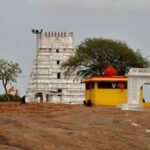
On a quiet, wind swept hill near Medchal in Telangana sits a temple that many Hyderabad residents drive past for years without noticing. Kshetragiri Venkateswara Swamy Temple, tucked into Ghanpur village in Medchal Malkajgiri district, is dedicated to Lord Venkateswara, the same form of Vishnu worshipped at Tirumala.
Unlike the crowded pilgrimage circuits of Tirupati, this hilltop shrine offers something increasingly rare: a slow, personal darshan experience. Devotees climb a narrow ghat road, feel the strong hill breeze, and stand before a Swayambhu (self manifested) deity believed to be over three centuries old.
This guide covers the temple’s history, architecture, festivals, rituals, darshan timings, travel routes, and practical tips so you can plan a meaningful visit, whether it is your first trip or a repeat pilgrimage.
Location and How to Reach
Kshetragiri Venkateswara Swamy Temple is located on Kshetragiri hill, close to Ghanpur village in Medchal Malkajgiri district, Telangana. The hill overlooks Shamirpet and offers sweeping views of the surrounding countryside, including a distant glimpse of Shamirpet Lake.
By Road: The temple is roughly 30 to 40 km from Hyderabad, depending on your starting point. Most visitors take the Outer Ring Road (ORR) and then join the Medchal road before turning onto the ghat road that leads up the hill. The final stretch is a narrow, winding uphill drive, so it is best attempted with a car or two wheeler rather than a heavy vehicle.
By Bus: Regular TSRTC buses connect Hyderabad and Secunderabad to Medchal. From Medchal town, you can hire an auto rickshaw for the short ride toward Ghanpur and the temple hill road.
By Train: Medchal Railway Station is the nearest railhead, well connected to Secunderabad. From the station, local transport or a pre booked cab covers the remaining distance to Ghanpur village.
By Air: Rajiv Gandhi International Airport, Shamshabad, is the nearest airport, roughly 60 to 70 km away, connected by cab or self drive via the ORR.
Best Travel Time
Plan your drive around daylight hours since the ghat road has sharp bends and limited lighting after dark. Early morning departures from Hyderabad, between 6 AM and 8 AM, help you avoid both traffic on the ORR and the midday heat on the exposed hilltop.
Weekday mornings are noticeably quieter than weekends, when local families often combine the temple visit with a picnic near Shamirpet. If you prefer a calmer darshan with more time to explore the cave shrine, a weekday visit is the better choice. Evenings around sunset are also rewarding, since the hill catches a cool breeze and the view turns golden.
Kshetragiri Venkateswara Swamy Temple History and Origins
Local tradition holds that the presiding deity at Kshetragiri naturally appeared as a rock formation on the hillside, a Swayambhu manifestation that needed no human hand to create it. Over generations, devotees shaped a proper sanctum around this self manifested form.
According to accounts passed down by the temple’s priests, the site became a recognised place of worship around 350 years ago. The original idols, depicting Lord Venkateswara along with his consorts, the chakra, the conch, and other deities, are carved directly into a cave, surrounded by large natural boulders.
In more recent decades, a life size idol of Sri Venkateswara Swamy was consecrated in a newly built section of the temple, an event associated with the revered spiritual leader Chinna Jeeyar Swamy. Notably, daily and festive rituals are still performed first at the original Swayambhu idols before being repeated at the newer idol, keeping the ancient cave shrine central to worship even as the temple has grown.
While no detailed inscriptions document the earliest years, the Sthala Puranam, the site’s traditional legend, is still narrated by the temple’s archakas to visiting devotees, keeping the oral history alive.
Spiritual Significance
Lord Venkateswara, known widely as Balaji, Srinivasa, and Govinda, is one of the most worshipped forms of Vishnu across South India. While Tirumala remains the principal centre of this worship, regional shrines like Kshetragiri carry deep local significance for the communities around Medchal, Ghanpur, and Shamirpet.
Devotees visit seeking:
- Protection from obstacles and misfortune
- Relief from personal and family difficulties
- Blessings for prosperity and stability
- A sense of inner peace away from city life
- Fulfilment of vows and personal prayers
Because the deity is believed to be self manifested, many devotees consider prayers offered here to carry a raw, unfiltered spiritual energy, distinct from temples built entirely by human hands.
Temple Architecture and Design
Kshetragiri Venkateswara Swamy Temple does not follow the towering gopuram style seen in larger Dravidian temples. Instead, its architecture is shaped by the natural landscape itself.
Key features include:
- Cave sanctum: The original Swayambhu idols are carved into a rock cave, encircled by massive natural boulders.
- Garbhagriha: A structured inner sanctum has been built around the self manifested form to allow formal worship.
- Hilltop setting: The temple sits atop Kshetragiri hill, giving devotees a panoramic view of the surrounding hills and Shamirpet Lake in the distance.
- Newer shrine complex: A more recently built section houses the life size idol, alongside subsidiary shrines.
- Subsidiary shrines: Separate small temples dedicated to Sri Anjaneya Swamy and Sri Veerabhadra Swamy stand within the complex, along with a Goshala (cow shelter).
The overall design favours simplicity and a close connection with nature over ornamentation, which many visitors find refreshing compared to larger, more commercialised temple complexes.
Deity and Worship
The temple’s primary deity is Lord Venkateswara, worshipped here in his Swayambhu form. The cave carvings depict the Lord alongside his consorts, his chakra (discus) and conch, and other associated deities, all carved into the natural rock.
Alongside the ancient cave idols, the newer life size idol of Sri Venkateswara Swamy receives daily worship in the expanded temple structure. Devotees typically pay respects at both forms during a single visit, since rituals are conducted at the original Swayambhu idols first and then repeated at the newer consecrated idol.
The presence of Anjaneya Swamy and Veerabhadra Swamy shrines nearby reflects a common pattern in Telangana’s regional temples, where a primary Vaishnava deity is worshipped alongside protector and guardian deities respected by the local community.
Daily Rituals and Poojas
Daily worship at Kshetragiri follows a rhythm shaped by its small, close knit priestly tradition rather than a large temple bureaucracy. Typical daily rituals include:
- Early morning temple opening and cleaning of the sanctum
- Abhishekam (ritual bathing) of the deity on designated days
- Morning archana and naivedyam (food offering)
- Afternoon closure during the hottest hours
- Evening reopening for darshan
- Evening aarti before the temple closes for the night
Because rituals are performed first at the ancient Swayambhu idols and then extended to the newer idol, visitors witnessing the full sequence get a rare look at how ancient and contemporary worship coexist within the same temple complex.
Festivals Celebrated at the Temple
Festivals bring the temple’s quiet hilltop setting to life with music, processions, and large gatherings of devotees from surrounding villages.
- Kanuma Jatara: One of the most eagerly awaited annual events at Kshetragiri, this jatara (festival fair) draws devotees from Medchal, Ghanpur, and neighbouring villages for special pujas and community celebrations.
- Kalyana Utsavam: The symbolic divine wedding ceremony of Lord Venkateswara, performed with traditional rituals, music, and offerings, similar in spirit to the Kalyanotsavam performed at larger Venkateswara temples.
- Vaikunta Ekadasi: Considered highly auspicious at Vaishnava temples across India, this day sees devotees offering special prayers believed to carry heightened spiritual merit.
On these occasions, the temple sees a noticeable rise in footfall, so devotees who prefer a peaceful, less crowded darshan may want to plan a separate visit outside festival dates.
Kshetragiri Venkateswara Swamy Temple Darshan & Temple Timings
Kshetragiri is a small, community managed temple rather than a large trust run institution, so it does not maintain a centralised online booking system like Tirumala’s TTD portal. Based on the general pattern followed by similar hill temples in the region, darshan is typically available:
- Morning session: Approximately 6:00 AM to 12:00 PM
- Evening session: Approximately 4:00 PM to 8:00 PM
Timings can shift slightly depending on the season, festival calendar, and priest availability, so it is wise to start your journey in the morning and, where possible, confirm current hours with local devotees or the temple caretakers before undertaking a long trip, especially during major festivals.
Entry is free, and no advance ticket or booking is required for regular darshan.
Devotee Experiences & Reviews
Visitors often describe Kshetragiri as a hidden gem rather than a typical tourist temple. Common themes include:
- The ghat road journey feels like a mini adventure, surrounded by greenery.
- The hilltop wind is strong enough that visitors keep small children close.
- The distant view of Shamirpet Lake from the courtyard is a frequent highlight.
- Priests personally narrating the Sthala Puranam adds context a signboard never could.
- Compared to Tirumala’s crowds, the unhurried pace allows longer, quieter prayer time.
The appeal clearly lies as much in the overall experience, the drive, the view, the oral history, as in the darshan itself.
Dress Code & Temple Etiquette
As with most Hindu temples in Telangana, modest and respectful clothing is expected.
- Wear traditional or modest attire; avoid shorts or sleeveless tops.
- Remove footwear before entering the sanctum area.
- Maintain silence or speak softly near the sanctum.
- Check with priests before photographing near the deity.
- Carry drinking water, since the hilltop gets warm and windy in summer.
- Wear sturdy footwear for the uneven, rocky path near the cave shrine.
Since shade is limited on the hill, elderly visitors and small children should plan breaks during the climb.
Best Time to Visit
The most comfortable months to visit Kshetragiri Venkateswara Swamy Temple are between October and February, when Telangana’s weather is cooler and more pleasant for a hilltop visit. Summer months, from March to June, can be intensely hot on the exposed hill, so an early morning visit is strongly recommended if travelling during that period.
For a more festive experience, plan your trip around Kanuma Jatara or Vaikunta Ekadasi, when the temple hosts special rituals and larger community gatherings. If you prefer a calm, contemplative visit instead, avoid these peak festival dates and choose an ordinary weekday morning.
Nearby Attractions
A trip to Kshetragiri pairs naturally with a few other spots nearby:
- Keesaragutta Temple: An ancient hilltop Shiva temple known for its scenic surroundings.
- Ratnalayam Temple: A regionally popular shrine often visited together with Kshetragiri.
- Shamirpet Lake: A relaxed break after darshan, visible in the distance from the hill.
- Katta Maisamma Temple: A serene local shrine reflecting Telangana’s village deity traditions.
Combining two or three of these stops makes for a satisfying half day trip from Hyderabad.
FAQ’s
Where is Kshetragiri Venkateswara Swamy Temple located?
The temple sits on Kshetragiri hill near Ghanpur village in Medchal Malkajgiri district, Telangana, roughly 30 to 40 km from Hyderabad.
Who is the main deity at the temple?
The presiding deity is Lord Venkateswara, also called Balaji or Srinivasa, worshipped here in a self manifested (Swayambhu) form.
How old is Kshetragiri Venkateswara Swamy Temple?
Local tradition and priestly accounts place the site’s recognition as a pilgrimage centre at around 350 years, though the Swayambhu legend is considered older.
What are the temple’s darshan timings?
Darshan is generally available from about 6 AM to 12 PM and 4 PM to 8 PM, though it is best to confirm locally since there is no centralised online timing portal.
Is there an entry fee for darshan?
No, entry and regular darshan at Kshetragiri Venkateswara Swamy Temple are free of cost.
What is the best time of year to visit?
October to February offers the most comfortable weather for visiting this hilltop temple.
How do I reach the temple from Hyderabad?
Take the Outer Ring Road toward Medchal, then follow the local ghat road up to Ghanpur village and the temple hill; buses and trains to Medchal are also available with a short auto ride onward.
What festivals are celebrated here?
Kanuma Jatara, Kalyana Utsavam, and Vaikunta Ekadasi are the temple’s most significant annual celebrations.
Are there other shrines within the temple complex?
Yes, the complex includes smaller shrines for Sri Anjaneya Swamy and Sri Veerabhadra Swamy, along with a Goshala.
Is the temple suitable for elderly visitors or children?
Yes, but the hilltop climb, strong winds, and limited shade mean elderly visitors and young children should pace themselves and carry water.
Final Thoughts
Kshetragiri Venkateswara Swamy Temple is not built to impress with scale or grandeur. Its value lies elsewhere, in a Swayambhu legend carved into a hillside cave, in priests who still narrate its Sthala Puranam by word of mouth, and in a hilltop breeze that visitors remember long after their prayers are done.
For anyone near Hyderabad looking for a short pilgrimage that combines devotion with a scenic drive, this Medchal hill temple offers a genuinely peaceful alternative to the bigger, busier Venkateswara shrines of South India. Plan your visit on a cool morning, take in the view of Shamirpet Lake from the hill, and let the temple’s quieter, older rhythm set the pace for your day.