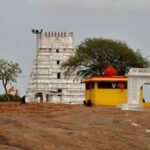
Nestled on the northern banks of the holy Godavari River in the Bhadradri Kothagudem district of Telangana, the Sri Sita Ramachandra Swamy Temple at Bhadrachalam stands as one of the most revered Rama temples in all of India. Devotees lovingly call it “Dakshina Ayodhya” – the Ayodhya of the South – a title that speaks volumes about the spiritual weight this shrine carries.
Whether you are a first-time pilgrim or a returning devotee, Bhadrachalam offers more than just a darshan. The gentle sound of temple bells, the rhythmic chanting of Vedic hymns, and the calm flow of the Godavari create an atmosphere that touches the soul. From the legendary tale of Bhakta Ramadasu to the grand celebrations of Sri Rama Navami, every element of this temple tells a story worth experiencing.
This complete guide covers everything you need to know: history, mythological significance, temple timings, sevas, darshan tickets, travel tips, and online booking details.
Bhadrachalam Temple Distance
Planning your trip starts with knowing how far Bhadrachalam is from major cities:
- Hyderabad to Bhadrachalam: Approximately 310 to 325 km via NH65
- Vijayawada to Bhadrachalam: Around 182 to 220 km by road
- Khammam to Bhadrachalam: About 115 to 120 km
- Warangal to Bhadrachalam: Approximately 180 km
- Rajahmundry to Bhadrachalam: Around 178 km
- Visakhapatnam to Bhadrachalam: Approximately 350 km
- Kothagudem (nearest railway station) to Bhadrachalam: 39 to 40 km
The town sits within the lush Eastern Ghats, making the road journey scenic and refreshing, especially during winter months.
Mythological Significance of Bhadrachalam
The roots of Bhadrachalam go deep into the age of the Ramayana. According to ancient scriptures, a sage named Bhadra – the blessed son of Meru and Menaka – performed intense penance on the banks of the Godavari River in the Dandakaranya forest. His devotion to Lord Rama was so pure and unwavering that Lord Vishnu himself appeared before him in the form of Vaikunta Rama, accompanied by Sita and Lakshmana, to grant him moksha.
This divine event gave the region its name: Bhadra’s hill, or Bhadrachalam.
Additionally, this area holds direct Ramayana connections. Lord Rama, Goddess Sita, and Lakshmana are believed to have spent time at Parnasala, located just 35 km from Bhadrachalam, during their 14 years of exile. It is also considered the very spot from where Sita was abducted by the demon king Ravana. Nearby Yetapaka marks where the divine eagle Jatayu valiantly fought Ravana to protect Sita.
Another beloved legend involves Pokala Dhammaka, a tribal woman devotee of Rama. Lord Rama appeared in her dream and directed her to the hilltop where sacred idols were hidden inside an anthill. Her prayerful discovery paved the way for what would later become the magnificent temple we see today.
Bhadrachalam Temple History
The temple as it stands today was built in the 17th century CE by Kancharla Gopanna, famously known as Bhakta Ramadasu. Gopanna served as the Tahasildar (revenue officer) of Bhadrachalam under the Golconda Sultanate. Consumed by his devotion to Rama, he used government treasury funds to construct this sacred shrine – a decision that would change his life forever.
The Golconda Nawab Abul Hassan Taneshah, upon learning of this, had Gopanna imprisoned in Golconda Fort for 12 years for misappropriating state revenue. Undeterred in his faith, Gopanna composed hundreds of emotionally charged devotional songs from inside his prison cell, pleading with Lord Rama for release.
Legend holds that Lord Rama and Lakshmana themselves appeared before the Nawab disguised as servants of Gopanna, carrying gold coins to repay every last varaha spent on the temple. Astonished by this divine intervention, the Sultan released Gopanna and is even said to have become a devotee himself, offering pearls to the deity.
The temple was completed at a cost of nearly six lakh varahas and has been a center of Rama worship ever since. It is managed today by the Sree Seethaaramachandra Swamy Vaari Devasthanam under the Telangana Endowments Department.
Architectural Features of Bhadrachalam Temple
The Bhadrachalam Temple is a fine example of Dravidian temple architecture, enriched with intricate carvings and sacred symbolism. A few highlights include:
- The temple complex has four main entrances and is divided into three distinct sections
- The first section is dedicated to the head of Bhadra Maharshi
- The temple sits atop Chitrakoota Hill, accessible via 50 steps from the Godavari Ghat
- The main sanctum houses the presiding deities in exquisitely carved black stone
- The prayer system follows the Vaishnava Pancharatra Agama tradition, modeled after the Sri Ranganathaswamy Temple in Srirangam
- A museum adjacent to the Lakshmi Thayar Temple houses historical artifacts, including Rama Mada coins and the original jewelry crafted by Gopanna for the deities
The Sudarshana Chakra at the temple’s crest has its own legend. While Gopanna was struggling to fix it, Lord Rama appeared in a dream and instructed him to take a holy dip in the Godavari. The very next morning, Gopanna found the chakra in the river without difficulty.
Presiding Deities
The main deity is Lord Sri Rama enshrined as Sri Sita Ramachandra Swamy in a unique and rare form:
- Lord Rama is seated in the “Vaikunta” posture, holding a Dhanush (bow), Shanku (conch), and Sudarshana Chakra, representing him as Mukti Rama – the bestower of salvation
- Goddess Sita sits lovingly on Lord Rama’s lap, holding a lotus in her hand in the Tribhanga posture
- Lord Lakshmana stands beside them in a guardian pose
This seated form of Rama with Sita on his lap is extremely rare among Rama temples in India, making Bhadrachalam uniquely special for devotees.
Bhadrachalam Temple Timings
The temple generally follows this daily schedule (timings may vary on festival days and special occasions):
| Session | Timings |
| Morning Opening | 4:00 AM (Sundays) / 4:30 AM (Mon–Sat) |
| Morning Darshan | 4:00 AM to 1:00 PM |
| Afternoon Break | 1:00 PM to 3:00 PM |
| Evening Darshan | 3:00 PM to 9:00 PM |
Devotees are advised to arrive 30 to 45 minutes early for sevas and at least an hour early during festival seasons. Morning darshan, especially Suprabhata Seva, is considered highly auspicious but also attracts the heaviest crowds.
Darshan Types & Ticket System
The temple offers multiple darshan options to accommodate all types of pilgrims:
- Free Darshan (General Queue): Open to all devotees at no charge, though wait times can be long on weekends and festivals
- Seegra Darshan (Special Darshan): Paid ticket for a faster, closer darshan experience
- Arjitha Sevas: Paid ritual participation with priority darshan included
Special darshan tickets help manage crowd flow and provide a more peaceful spiritual experience. During major festivals like Rama Navami and Vaikunta Ekadashi, advance booking is strongly recommended as demand is very high.
Sevas & Poojas at Bhadrachalam
The temple follows a rich daily ritual schedule rooted in Agama Shastra. Here are the key Arjitha Sevas available:
| Seva Name | Approximate Timing | Price |
| Suprabhatham | 4:30 AM (Mon–Sat) / 4:00 AM (Sun) | Rs. 200 |
| Abhishekam at Bhadruni Kovela | 7:00 AM | Rs. 100 |
| Antaralaya Archana | 7:30 AM – 8:00 PM | Rs. 300 |
| Sahasra Namarchana | 8:30 AM | Rs. 200 |
| Nithya Kalyanam | As scheduled | Varies |
| Ekantha Seva (Pavalimpu) | Late evening | Varies |
All sevas are conducted according to traditional Vaishnava customs. Daily rituals begin with Suprabhata Seva and conclude with the Pavalimpu Seva (Ekantha Aarti) before the temple closes for the night. Each pooja not only preserves centuries-old temple customs but also gives devotees an intimate moment with the divine.
Sri Rama Navami: The Grand Festival
No guide to Bhadrachalam is complete without mentioning Sri Rama Navami – the most celebrated festival at this temple and one of the biggest religious events in all of Telangana.
Held on Chaitra Shuddha Navami (the ninth day of the bright fortnight of Chaitra month, falling in March or April), this festival marks the divine wedding of Lord Rama and Goddess Sita. The highlight is the Kalyanotsavam (Celestial Wedding Ceremony), conducted in a grand pavilion richly engraved with Ramayana scenes.
Priests chant sacred hymns as the divine couple is adorned with royal attire and ornaments. The sacred Talambralu (a shower of rice mixed with turmeric) is performed exactly at noon. Lakhs of devotees from across India gather to witness this divine union, making the town come alive with devotional fervor, cultural programs, and spiritual energy.
The Telangana government officially sends wedding invitation cards to the President, Prime Minister, and Chief Minister of India every year as a tradition started during the time of Bhakta Ramadasu – a practice that continues to this day.
Vaikunta Ekadashi at Bhadrachalam
Celebrated in December or January during Dhanur Masam, Vaikunta Ekadashi draws hundreds of thousands of devotees from across India. The festival includes a 10-day program of Adhyayanotsavams and Dasavatara Mahotsavams (celebrating the 10 incarnations of Lord Vishnu).
The most visually captivating event is the Teppotsavam (Boat Festival), held on Ekadashi evening. The beautifully decorated idols of Lord Rama and Sita are placed on an adorned swan-shaped boat and gently sailed along the sacred Godavari River, accompanied by Vedic chanting and spectacular fireworks. Devotees line the riverbanks in thousands to catch a divine glimpse.
Role of Bhakta Ramadasu
The story of Bhakta Ramadasu (Kancherla Gopanna) is inseparable from Bhadrachalam. Born in Nelakondapalli village in the 17th century, Gopanna was a deeply devout soul who transformed from a government official into one of the greatest Rama devotees in Telugu history.
His 12 years of imprisonment in Golconda Fort produced a body of keertanas (devotional compositions) in Telugu that became treasures of Carnatic music. Songs like “Paluke Bangaramayena” and “O Rama Ninne Namminanu” are sung by devotees to this day.
His story teaches a powerful message: genuine devotion to God transcends worldly power, injustice, and suffering. The temple of Bhadrachalam is, in many ways, a living monument to the faith of one extraordinary man who sacrificed everything for his Lord.
Dress Code & Devotee Guidelines
To maintain the sanctity of this sacred space, the temple follows a respectful dress code:
- Men: Traditional Indian attire such as dhoti or lungi is preferred. Men performing poojas must wear a white dhoti
- Women: Indian attire such as sarees, salwar kameez, or churidar is required. Western clothing is not permitted inside the sanctum
- Footwear: Must be removed outside the temple premises
- Photography: Not allowed inside the sanctum sanctorum
- Mobile phones: Should be kept on silent mode
- Carry a valid government-issued ID proof, especially during festivals and special sevas
Devotees are encouraged to take a holy dip at the Godavari Ghat before entering the temple for a complete spiritual experience.
Accommodation at Bhadrachalam
Bhadrachalam offers a range of stay options to suit different budgets:
- Haritha Resort (Telangana Tourism): A government-run resort offering clean and comfortable rooms near the river
- Temple-run guest houses and cottages: Affordable options managed by the Devasthanam for pilgrims
- Private hotels and lodges: Several budget to mid-range hotels are available in the town
- Dharmashala (free rest houses): Available for pilgrims with basic amenities
It is advisable to book accommodation well in advance, especially during Rama Navami and Vaikunta Ekadashi when the town sees a massive influx of visitors.
How to Reach Bhadrachalam Temple
By Road: Bhadrachalam is well-connected by road to major cities. TSRTC and APSRTC buses run regularly from Hyderabad, Vijayawada, Warangal, Khammam, Rajahmundry, and Kakinada. Private taxis and cabs are also readily available from all nearby towns.
By Rail: The nearest railway station is Bhadrachalam Road (Kothagudem), about 39 to 40 km from the temple. Trains connect from Hyderabad, Kazipet, Dornakal, Manuguru, and Sirpur. From Kothagudem, taxis are available for approximately Rs. 500 to Rs. 600.
By Air:
- Rajahmundry Airport: Nearest domestic airport, approximately 178 to 185 km away
- Vijayawada International Airport: Around 182 to 210 km away
- Rajiv Gandhi International Airport, Hyderabad: Approximately 325 km away and well-connected internationally
By Boat: During the post-monsoon season, boat services operate between Bhadrachalam and Rajahmundry via the Godavari River, offering a scenic alternative mode of travel.
Best Time to Visit Bhadrachalam
The ideal time to visit Bhadrachalam is between October and March when the weather is cool, pleasant, and perfect for pilgrimage.
- October to February: Comfortable temperatures, less crowded, ideal for a peaceful darshan
- March to April (Rama Navami season): Spiritually most significant but extremely crowded
- December to January (Vaikunta Ekadashi): Festive atmosphere, large crowds, divine river festival
- June to September (Monsoon): The Godavari may flood; travel can be difficult and some areas may be inaccessible
If you seek a peaceful experience, plan your visit on weekdays in the October to February window. If you want to witness the grandeur of celebrations, Rama Navami season is unmatched.
Bhadrachalam Temple Official Website
The official website of the temple is managed by the Telangana Endowments Department:
Official Website: bhadradritemple.telangana.gov.in
Through this portal, devotees can access:
- Online seva and darshan booking
- Festival schedules and announcements
- Arjitha seva details and pricing
- Devotee guidelines and contact information
Always refer to the official portal for the most current and accurate information.
Spiritual Importance of Godavari at Bhadrachalam
The Godavari River is not just a backdrop to Bhadrachalam – it is an integral part of the spiritual experience. Known as the “Ganga of the South,” the Godavari is considered sacred in Hindu tradition, and taking a dip in its waters before darshan is believed to cleanse one of sins and bestow blessings.
The river flows gracefully on the southern side of the main temple, and the Godavari Ghat serves as the starting point of every devotee’s pilgrimage to this sacred town. During Teppotsavam, the river becomes the very stage of divine celebration, with Lord Rama’s idol sailing on its holy waters.
Bhadrachalam: More Than a Temple
Bhadrachalam is an experience that extends far beyond temple walls. The surrounding region is home to several sacred spots from the Ramayana:
- Parnasala (35 km): Where Rama built a hermitage and Sita was abducted by Ravana
- Ushnagundam (Hot Springs at Gundala, 5 km): Believed to be a bathing spot of the divine Trinity
- Yetapaka: Where Jatayu is said to have fought Ravana
- Chitrakoot Hill: The hilltop upon which the main temple stands
- Dummugudem: Where Rama is worshipped as Atmarama; said to be where he defeated 14,000 demons
Together, these sites form a living Ramayana trail that pilgrims can explore as part of a spiritually complete visit to Bhadrachalam.
Bhadrachalam Temple Sevas Online Booking
The temple now offers a convenient online booking system for all Arjitha Sevas and special darshan, eliminating the need for long on-site queues, especially during busy festival periods.
Step-by-step guide to book Bhadrachalam temple sevas online:
- Visit the official Telangana Endowments portal: bhadradritemple.telangana.gov.in
- Click on the “Online Booking” section from the main menu
- Select “Seethaaramachandra Swamy Vaari Temple” from the temple list
- Choose your preferred seva type (Arjitha Seva, Vehicle Pooja, etc.)
- Select your visit date and preferred time slot
- Enter devotee details as per your valid government ID
- Complete payment via UPI, debit card, credit card, or net banking
- Save your e-ticket (received via SMS or email)
- Present the e-ticket at the temple seva counter on your visit day
Booking in advance guarantees your slot and saves you from uncertainty, especially during weekends and major festivals.
Bhadrachalam Temple Special Darshan Tickets
The temple offers special darshan tickets designed for pilgrims who want a closer, quicker, and more comfortable experience of the presiding deities without spending hours in the general queue.
Key points about special darshan tickets:
- Seegra Darshan Ticket: Provides faster entry and closer darshan for a nominal fee
- Festival periods: Advance booking through the official portal is highly recommended
- Pricing: Varies depending on the seva or darshan type and season
- Availability: Both online and at the temple counter (subject to availability)
- Documentation: Carry a valid ID proof to match booking details at the counter
For festivals like Rama Navami and Vaikunta Ekadashi, tickets often sell out early. Booking a week or two in advance is the smartest approach.
Frequently Asked Questions
What is Bhadrachalam temple famous for?
Bhadrachalam is famous as one of India’s most important Rama temples, celebrated for its connection to the Ramayana, the legend of Bhakta Ramadasu, and the grand Sri Rama Navami Kalyanotsavam celebrated here every year.
What are the Bhadrachalam temple timings?
The temple is generally open from 4:00 AM to 1:00 PM and again from 3:00 PM to 9:00 PM. Timings may change during festivals and special occasions.
How far is Bhadrachalam from Hyderabad?
Bhadrachalam is approximately 310 to 325 km from Hyderabad by road via NH65.
What is the nearest railway station to Bhadrachalam?
The nearest railway station is Bhadrachalam Road (Kothagudem), located about 39 to 40 km from the temple town.
Can I book Bhadrachalam temple sevas online?
Yes, sevas and special darshan can be booked online through the official portal at bhadradritemple.telangana.gov.in.
What is the best time to visit Bhadrachalam?
October to March is the best time for a pleasant visit. Rama Navami (March–April) is the most spiritually significant but also the most crowded period.
What is the dress code for Bhadrachalam temple?
Men should wear traditional Indian attire (dhoti preferred); women must wear sarees or Indian ethnic wear. Western clothing is not permitted inside the temple.
Is Bhadrachalam the same as Dakshina Ayodhya?
Yes, Bhadrachalam is reverently called “Dakshina Ayodhya” (Ayodhya of the South) because of its deep Ramayana connections and its status as one of the holiest Rama shrines in South India.
Who built the Bhadrachalam temple?
The temple was built by Kancherla Gopanna, popularly known as Bhakta Ramadasu, in the 17th century CE during his tenure as Tahasildar of Bhadrachalam under the Golconda Sultanate.
What happens during Vaikunta Ekadashi at Bhadrachalam?
Vaikunta Ekadashi features a 10-day festival with Adhyayanotsavams and the spectacular Teppotsavam (boat festival), where the divine idols of Rama and Sita are sailed along the Godavari River in a decorated boat.
Conclusion
The Bhadrachalam Sri Sita Ramachandra Swamy Temple is not just a place of worship – it is a living chapter of the Ramayana, a monument to unwavering devotion, and a sanctuary where millions find peace, purpose, and divine connection. From the heart-stirring tale of Bhakta Ramadasu to the majestic Kalyanotsavam on Rama Navami, every aspect of this sacred temple carries a story that resonates deeply with the soul.
Whether you come seeking blessings, spiritual renewal, or simply to witness one of India’s most beloved cultural traditions, Bhadrachalam will not disappoint. Plan your visit carefully, book your sevas in advance, respect the temple customs, and let the divine grace of Lord Sri Rama and Goddess Sita fill your heart with joy and peace.
Jai Sita Ram.