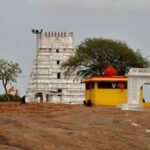
Perched on a quiet hillock in Keesara village of the Medchal Malkajgiri district, Keesaragutta Temple is one of the oldest and most spiritually charged Shiva shrines near Hyderabad. Locally known as Sri Ramalingeshwara Swamy Temple, this hilltop abode is tied directly to the Ramayana, archaeological finds spanning nearly 1,500 years, and hundreds of scattered Shiva lingams that dot the hillside.
For residents of Hyderabad and Secunderabad, Keesaragutta offers a rare mix of devotion, history, and scenery within a short drive from the city. Devotees come here to seek blessings from Lord Shiva and Lord Hanuman, historians visit for its Vishnukundin era ruins, and travelers stop by simply to enjoy the panoramic hilltop views.
This guide covers everything a first time visitor or a curious reader needs to know, from the mythological roots of the temple to practical details like timings, distance, entry tickets, architecture, and the deities enshrined here. Whether you are planning a Shivaratri visit or simply researching Telangana’s temple heritage, this article answers it all in one place.
History & Legends of Keesaragutta Temple
Mythological Origins
The story of Keesaragutta begins after the Ramayana war. According to tradition, Lord Rama defeated Ravana, who despite being a demon king was born a Brahmin. Killing a Brahmin, even in a righteous war, was considered a grave sin (Brahmahatya Dosha). To atone for this, Rama chose to install a Shiva lingam in a serene valley surrounded by hills and greenery, exactly where the temple stands today.
Rama sent Hanuman to Varanasi (Kashi) to fetch a sacred lingam for the installation. As the auspicious muhurtham drew closer and Hanuman had not returned, Lord Shiva himself appeared before Rama and offered a self manifested lingam, known as a Swayambhu Linga. Rama installed it right away.
When Hanuman finally arrived carrying 101 lingams from Kashi, he was disheartened to find that the installation had already taken place without him. In frustration, he flung the lingams across the hillside. Even today, visitors can spot numerous Shiva lingams scattered across the slopes of Keesaragutta, a living reminder of this legend.
To console Hanuman, Rama declared that he would always be worshipped first at this temple, ahead of Shiva himself. Rama also named the hill Kesarigiri, meaning the hill of Kesari’s son, since Hanuman is the son of Kesari. Over generations, the name softened into Keesara, and the hill became known as Keesaragutta.
Because the lingam was believed to have appeared on its own, the presiding deity came to be known as Sri Ramalingeshwara Swamy, literally the Shiva lingam established by Rama.
Historical Background
Beyond mythology, Keesaragutta carries genuine archaeological weight. The surrounding hill was once part of the territory ruled by the Vishnukundin dynasty between the 4th and 7th century CE, and historians believe Keesara may be among the oldest continuously inhabited settlements near present day Hyderabad.
Excavations conducted by the archaeological department, largely in the late 1970s and early 1980s, uncovered brick structures, fortification walls, a Yagasala, and prayer halls to the north of the temple and near a nearby water body. These remains have been linked to both the Vishnukundin and later Chalukyan periods.
One especially significant discovery is a rock-cut inscription reading “Thalachuvanru” found on a cave near the temple. Based on paleographic study, this inscription dates back to roughly the 4th or 5th century CE, making it one of the earliest known inscriptions containing Telugu words found anywhere in the Telangana region.
In October 2014, twelve idols of Jain Tirthankaras dating to the 4th or 5th century CE were unearthed near the temple steps at a shallow depth. This finding indicates that Jainism coexisted alongside Hinduism at Keesaragutta during the Vishnukundin period, and rock-cut cisterns found on the hill suggest Buddhist influence in the area as well.
Some historical accounts also mention that eleven Ashwamedha Yagnas, along with Vedic ceremonies such as Rajasuya and Sarvamedha, were performed at this site during the 5th and 6th centuries under Vishnukundin rule. Later records suggest the temple underwent renovation phases over the centuries, including work attributed to local rulers and, subsequently, the Nizams of Hyderabad, reflecting the site’s continued religious importance through changing dynasties.
Significance of Keesaragutta Temple
Spiritual Significance
Keesaragutta is regarded by devotees as a powerful center of spiritual energy. Sages, most notably Agastya Maharshi, are believed to have performed penance and worshipped Shiva on this very hill. Locals also hold a popular belief that the main Shiva lingam in the sanctum continues to grow slightly larger over time, a claim that adds to the temple’s mystique.
The presence of hundreds of Shiva lingams scattered across the hillside, remnants of Hanuman’s legendary frustration, makes Keesaragutta feel less like a single temple and more like an entire sacred landscape. Devotees often walk the hill paths to view these scattered lingams before entering the main sanctum.
Cultural Significance
Keesaragutta forms an important part of Telangana’s spiritual tourism circuit, mentioned in the same breath as Yadadri, Chilkur Balaji, and Bhongir Fort. The temple complex also houses a Veda Pathshala, where students are trained in Vedic chanting, rituals, and scriptures, keeping ancient traditions alive for newer generations.
The annual Brahmotsavam celebrated here brings together religious ceremonies, cultural processions, and community participation, reinforcing the temple’s role not just as a place of worship but as a living cultural institution for the villages around Keesara.
Keesaragutta Temple Timings
Keesaragutta Temple is open every day of the week, though the exact schedule can shift slightly depending on the season and festival calendar. The generally followed timing pattern is as follows:
- Morning darshan: 6:00 AM to 12:30 PM (sometimes extended to 12:45 PM)
- Afternoon break: Temple remains closed between 1:00 PM and 3:00 PM
- Evening darshan: 3:00 PM to 7:30 PM (occasionally till 8:00 PM)
A typical daily ritual schedule looks like this:
- Suprabhata Seva: around 6:00 AM to 6:30 AM
- Mahanyasa Poorvaka Rudrabhishekam: 6:30 AM to 7:30 AM
- Maha Aarti: approximately 7:45 AM
- Abhishekam and general darshan: 8:00 AM to 12:45 PM
- Evening darshan and Abhishekam: 3:00 PM to 7:00 PM
- Final Aarti and Mantra Pushpam: 7:00 PM to 7:30 PM
During Maha Shivaratri, Karthika Masam, and Sravana Masam, the temple management usually extends darshan hours to accommodate the surge of devotees. It is advisable to check locally or call the temple office before planning a visit on these occasions, since festival day timings can vary from year to year.
Keesaragutta Temple Distance
Keesaragutta Temple is one of the more accessible pilgrimage spots close to Hyderabad, which is exactly why it works well as a half day or weekend trip.
- From Hyderabad city center, the temple is approximately 30 to 35 kilometers away, with a travel time of roughly 1 to 1.5 hours depending on traffic.
- From ECIL, the distance is only about 10 to 12 kilometers.
- The route generally passes through Alwal, Bolarum, and Keesaragutta Road, connecting via NH163.
- The nearest railway station is Bolarum Junction, around 18 kilometers away, though some travelers also use Secunderabad Railway Station, roughly 30 kilometers from the temple.
- Rajiv Gandhi International Airport is the nearest airport, situated at a distance that varies between roughly 42 and 68 kilometers depending on the exact route taken.
Regular TSRTC buses run from Secunderabad, Imliban Bus Station, and Jubilee Bus Station, making public transport a convenient option alongside taxis and self-driven vehicles.
Keesaragutta Temple to Yadagirigutta Distance
Many pilgrims like to combine a visit to Keesaragutta with a trip to the famous Yadadri Lakshmi Narasimha Swamy Temple at Yadagirigutta. The distance between the two temples is approximately 45 to 50 kilometers, and the drive typically takes around 1.5 to 2 hours, depending on road and traffic conditions. This makes it possible to plan both temples in a single day trip if you start early in the morning.
Keesaragutta Temple Tickets
Keesaragutta Temple generally does not charge a mandatory entry fee for regular darshan, and devotees are welcome to visit and offer prayers free of cost. However, the temple does offer certain paid sevas and special darshan options for those who want a more personalized ritual experience:
- Special darshan tickets are usually priced at a nominal cost, often as low as Rs. 10 per person, meant to help manage crowd flow during peak hours.
- Abhishekam seva is available at a nominal fee, generally around Rs. 1,000 for two devotees, though this amount can change over time.
- Additional sevas such as Sri Satyanarayana Vratham, Special Archana, and Navagraha Pooja are also offered at modest prices.
Since seva charges and special darshan rates are periodically revised by temple management, it is best to confirm current rates either at the temple counter or through the official Devasthanam contact details before your visit. Donations toward temple maintenance are also welcomed and appreciated.
Temple Architecture & Archaeology of Keesaragutta
Keesaragutta’s architecture reflects a blend of traditional South Indian and Dravidian temple design elements, shaped by centuries of renovation. Visitors typically climb around 20 to 30 stone steps up the hill to reach the main temple complex, where a multi-tiered gopuram marks the entrance.
The sanctum sanctorum, or garbhagriha, houses the main Shiva lingam and is constructed largely in granite, a material choice that has helped the structure withstand centuries of weathering on an exposed hilltop. Intricately carved stone pillars line sections of the temple, showcasing artistic techniques associated with earlier South Indian temple building traditions.
What sets Keesaragutta apart from many other hill temples is the archaeological layer beneath and around the religious structure. Excavations have revealed:
- Ruins of brick structures dated to the Vishnukundin and Chalukyan periods
- Remains of fortification walls, a Yagasala, and prayer halls
- Rock-cut cisterns believed to have supported both Jain and Buddhist practices in earlier centuries
- A rock-cut cave inscription in early Telugu script, among the oldest of its kind discovered in Telangana
- Twelve Jain Tirthankara idols recovered near the temple steps in 2014
A sacred tank near the temple complex is considered an important part of the site’s rituals, with many devotees believing its waters carry purifying properties. Taken together, these findings mean Keesaragutta functions simultaneously as an active place of worship and a protected window into Telangana’s religious and architectural past.
Main Deities & Shiva Lingams at Keesaragutta
Sri Ramalingeshwara Swamy (Main Deity)
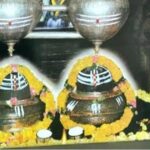
The presiding deity of the temple is Sri Ramalingeshwara Swamy, a Swayambhu (self-manifested) Shiva lingam that, according to legend, Lord Shiva himself presented to Rama for installation. Housed within the main sanctum, this lingam is the spiritual centerpiece of the entire temple complex and the primary reason devotees travel here for Abhishekam and Rudrabhishekam rituals.
Lord Hanuman (Anjaneya Swamy)
A striking, tall idol of Hanuman stands close to the main shrine. In keeping with the legend of the scattered lingams, Rama decreed that Hanuman would receive worship before Shiva at this temple, a tradition that continues in the daily ritual sequence even today. Some regional accounts describe this Hanuman statue as among the most prominent in the state.
Goddess Parvati (Shakti Mata)
Lord Shiva’s consort is worshipped here in the form of Bhavani and Siva Durga, representing Goddess Parvati’s shakti aspect. Her separate shrine within the temple complex allows devotees to offer prayers to the divine feminine energy alongside their worship of Shiva.
Subshrines and Other Deities
Beyond the primary deities, the temple grounds include additional shrines dedicated to Lord Lakshmi Narasimha Swamy and to Lord Rama along with Mother Sita, reflecting the site’s dual Shiva-Vishnu character. A Navagraha shrine is also present for devotees seeking blessings related to planetary influences, and the on-site Veda Pathshala adds a living, educational dimension to the temple’s spiritual atmosphere.
Frequently Asked Questions
What is Keesaragutta Temple famous for?
Keesaragutta Temple is famous for its connection to Lord Rama, its Swayambhu Shiva lingam, and the hundreds of Shiva lingams scattered across its hillside.
What are the Keesaragutta Temple timings?
The temple is generally open from 6:00 AM to 12:30 PM and again from 3:00 PM to 7:30 PM, with slight variations during festivals.
How far is Keesaragutta Temple from Hyderabad?
Keesaragutta Temple is approximately 30 to 35 kilometers from Hyderabad city center, roughly a 1 to 1.5 hour drive.
Is there an entry fee at Keesaragutta Temple?
Regular darshan is free, though the temple offers optional paid sevas like special darshan tickets and Abhishekam at nominal rates.
What is the best time to visit Keesaragutta Temple?
Maha Shivaratri and Karthika Masam are the most spiritually significant times, while November to March offers the most comfortable weather.
How do I reach Keesaragutta Temple from Hyderabad?
You can reach by road via NH163 through Alwal and Bolarum, or by TSRTC buses from Secunderabad, Imliban, and Jubilee Bus Stations.
What is the legend behind Keesaragutta Temple?
Lord Rama installed a Shiva lingam here to atone for killing Ravana, and Hanuman later scattered 101 lingams across the hill in disappointment.
Is photography allowed inside Keesaragutta Temple?
Photography is generally restricted inside the main sanctum, so it is best to check current rules with temple staff on arrival.
What is the Keesaragutta Temple to Yadagirigutta distance?
The distance between Keesaragutta and Yadagirigutta is approximately 45 to 50 kilometers, taking about 1.5 to 2 hours by road.
Which festivals are celebrated at Keesaragutta Temple?
Maha Shivaratri is the grandest celebration, along with Karthika Masam, Sravana Masam sevas, and the annual Brahmotsavam.
Final Thoughts
Keesaragutta Temple is far more than a quick weekend detour from Hyderabad. It is a living record of devotion that stretches from the age of the Ramayana through the Vishnukundin dynasty, the coexistence of Jainism and Buddhism, and centuries of continued worship right up to the present day. Few temples near a major Indian city offer this rare combination of active spiritual practice, verified archaeological history, and genuinely scenic hilltop surroundings.
Whether you are drawn by faith in Sri Ramalingeshwara Swamy, curiosity about the scattered lingams left behind by Hanuman, or an interest in Telangana’s ancient inscriptions and temple architecture, Keesaragutta rewards a visit on every level. Plan around the early morning or evening hours for a peaceful darshan, keep festival crowd surges in mind, and consider pairing your trip with a visit to Yadagirigutta if you have a full day to spare.
For anyone building a spiritual itinerary around Hyderabad, Keesaragutta Temple deserves a firm place on the list, not just as a Shiva shrine, but as a genuine piece of Telangana’s living history.