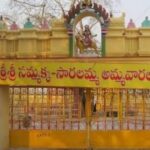
Tucked away in the Yadadri Bhuvanagiri district of Telangana, Kolanupaka Temple is one of South India’s oldest and most revered Jain pilgrimage sites. Known locally as Kulpakji, this ancient shrine has stood for more than two thousand years, welcoming devotees, historians, and curious travelers who want to witness a living piece of India’s spiritual past.
What makes Kolanupaka special isn’t just its age, but the rare blend of Jain and Shaiva heritage found within a few hundred metres of each other. The temple town sits quietly off the Hyderabad Warangal highway, yet holds enough history, art, and devotion to fill an entire day trip. Here’s everything you need to know, from its origins to practical travel details.
Kolanupaka Temple History
The story of Kolanupaka Temple stretches back over two millennia, making it one of the oldest continuously worshipped Jain sites in the Deccan region. According to Shwetambara Jain tradition, the original shrine is believed to have been built by Emperor Bharata, son of King Dushyanta and Queen Shakuntala, marking its legendary origin in the Lunar dynasty of Kshatriya lineage.
Historical inscriptions confirm that Jainism flourished in this region well before the 4th century CE, and Kolanupaka grew into one of its most prominent centres in South India. By the 9th century, the Kalachuri ruler Shankaragana had donated twelve villages to support the temple’s upkeep, a gesture recorded in inscriptions found at nearby Akunur.
The town flourished during the Rashtrakuta and later Western Chalukya periods. Rulers of the Kalyani Chalukya dynasty were generous patrons of Jainism, contributing land, gold, and resources toward the temple’s upkeep, as documented in a 12th century Kannada inscription issued by Someshvara III.
By the 11th century, Kolanupaka had become a rare example of religious coexistence, where Jainism, Shaivism, and Vaishnavism thrived side by side, drawing scholars and monks from across India.
Jain activity in the region declined after 1276 CE, largely due to shifting political power. The temple saw a revival in 1711 CE, when the Manikyaswami shrine was restored and a boundary wall was constructed. The most significant transformation came in 1960, when philanthropist Rasiklal Manikchand Dhariwal funded a large scale renovation, bringing in more than 150 skilled artisans from Rajasthan and Gujarat to rebuild the temple while preserving the original sanctum.
The Sacred Idol of Lord Mahavira
At the heart of Kolanupaka Temple stands its most treasured possession, an exquisite idol of Lord Mahavira carved from a single piece of green stone, often described as jade like in appearance. Standing roughly 130 to 140 centimetres tall, this idol has been worshipped for centuries under two historic names, Manikyaswami and Jivantasvami.
Devotees consider this idol extraordinarily rare because of both its material and craftsmanship. Unlike most Tirthankara idols carved from marble, the green hued statue of Mahavira has a distinct lustre that pilgrims believe radiates spiritual energy. Local legend even connects the original Manikyaswami idol to Mandodari, wife of Ravana, said to have worshipped it long before the temple’s recorded history.
Alongside Mahavira, the sanctum houses two other principal deities, Lord Rishabhanatha (also called Adinath) and Lord Neminatha. Rishabhanatha’s idol, also carved from green stone, is regarded as the presiding deity and is popularly known as Manikya Deva.
Architectural Beauty of Kolanupaka Temple
Kolanupaka Temple is a striking example of medieval South Indian temple architecture, built predominantly using red sandstone for the exterior and white marble for the interior pillars and flooring. This combination gives the temple a warm, layered visual contrast that photographs beautifully in both morning and evening light.
The original garbhagriha, or inner sanctum, has been carefully preserved through every renovation. During the 1960 restoration, a completely new structure was built around this ancient core, so visitors today are effectively walking through centuries of layered history in a single building.
Some architectural highlights worth noticing include:
- Intricately carved walls depicting Tirthankaras and mythological scenes
- A lion motif beneath the Mahavira idol, symbolising strength and dharma
- A bull carved on the pedestal of the Rishabhanatha idol
- A multi hooded cobra sculpted as a canopy above the Parshvanath idol
- Detailed white marble pillars supporting the mandapa
The complex spans about one acre out of a larger 20 acre property, with the remaining land occupied by dharamshalas and guest houses for visiting pilgrims.
Other Deities in the Temple Complex
While Lord Mahavira draws the most attention, Kolanupaka Temple is dedicated to three Tirthankaras together, Rishabhanatha, Neminatha, and Mahavira. Flanking these central idols are eight additional Tirthankara statues placed symmetrically on either side of the main sanctum, each carved in a distinct traditional style.
A short walk from the Jain temple stands the Someswara Temple, a separate Shiva shrine built around the 12th century under Kakatiya patronage. It is home to a striking monolithic Nandi carved from black basalt, along with a Sahasralinga chamber known as Veyi Lingala Gudi, meaning the temple of a thousand lingas. Many statues recovered during village excavations were relocated to a small museum here, offering a glimpse into Kolanupaka’s layered religious history beyond Jainism.
Religious Importance of Kolanupaka
Kolanupaka holds a rare distinction in India’s religious landscape. It isn’t just a Jain pilgrimage centre, it’s a symbol of interfaith coexistence that has endured for over a thousand years, once serving as a hub where Jain monks, Shaiva priests, and Vaishnava scholars worshipped within close proximity of one another.
For Shwetambara Jains, Kulpakji ranks among the most important tirthas in South India, often mentioned alongside major pilgrimage centres in Gujarat and Rajasthan. The 14th century text Vividha Tirtha Kalpa by Jinaprabhasuri specifically references Kolanupaka’s spiritual stature as Kollapakamanikyadeva Tirthakalpa.
The Someswara Temple holds equal weight among Veerashaiva Lingayat communities, who travel from Telangana, Andhra Pradesh, Karnataka, and Maharashtra to celebrate Renukacharya Jayanti here every year. Kolanupaka is also counted among the three temples forming the legendary Trilinga Desam, the group of Shiva shrines believed to have given the region its name, Telangana.
Festivals Celebrated at Kolanupaka Temple
The temple calendar at Kolanupaka is packed with celebrations that bring the entire village to life. Some of the most significant festivals include:
- Mahavir Jayanti (March or April): The biggest celebration at the Jain temple, marking Lord Mahavira’s birth with processions, special abhishekams, and community feasts.
- Paryushana (August or September): An eight day period of fasting and meditation, considered the most sacred time of the Jain calendar.
- Kartik Purnima (November): Draws pilgrims from across South India for special prayers.
- Deepavali: Marked with unique Jain rituals commemorating Lord Mahavira’s nirvana.
- Mahashivaratri (February or March): The grandest event at the neighbouring Someswara Temple.
- Renukacharya Jayanti: An annual gathering organised by Veerashaiva communities honouring the saint’s legacy.
If your travel dates align with any of these festivals, expect larger crowds, vibrant decorations, and a noticeably heightened spiritual atmosphere throughout the village.
Kolanupaka Temple Timings
Both temples in Kolanupaka follow fairly consistent daily hours, though it’s always wise to confirm before travelling, especially around festival periods.
Kulpakji Jain Temple:
- Morning darshan: 6:00 AM to 12:00 PM
- Evening darshan: 4:00 PM to 7:30 PM
- Morning aarti: 6:30 AM to 7:30 AM
- Evening aarti: 6:30 PM to 7:00 PM
Someswara Temple:
- Open daily from 6:00 AM to 7:00 PM, including holidays
Non-Jain visitors are welcome at Kulpakji but are expected to follow temple etiquette, such as removing footwear, dressing modestly, and maintaining silence near the sanctum. Prasad offered at the temple is strictly vegetarian, in line with Jain dietary customs.
Best Time to Visit Kolanupaka Temple
The ideal window to visit Kolanupaka is between October and March, when Telangana’s weather turns pleasant and comfortable for walking around the temple complex and nearby village. Summers, particularly April through June, can get uncomfortably hot for extended outdoor exploration.
If you enjoy festive energy, plan your trip around Mahavir Jayanti or Mahashivaratri. Both events transform the quiet temple town into a hub of processions, music, and community feasting. For travellers who prefer a calm, contemplative experience, weekday mornings outside festival season offer the most peaceful darshan.
How to Reach Kolanupaka Temple
Kolanupaka enjoys a convenient location on the Hyderabad Warangal Highway (NH 163), making it an easy day trip from Hyderabad.
By Road: The temple is approximately 77 to 82 kilometres from Hyderabad, and the drive typically takes around two hours depending on traffic. Visitors need to take a diversion at Aleru town, located between Hyderabad and Warangal, and continue about 6 kilometres to reach the village. The Jain temple itself is roughly half a kilometre from the Kolanupaka bus stand.
By Rail: Aleru is the nearest railway station, about 6 to 8 kilometres from the temple, with local transport and taxis readily available from there.
By Air: Rajiv Gandhi International Airport, Hyderabad, is the nearest airport, around 82 to 85 kilometres away. Pre booked cabs or rental cars are the most convenient option from the airport.
By Bus: Regular TSRTC buses connect Hyderabad and Warangal, passing near Aleru, from where local transport covers the remaining distance to the temple.
Nearby Attractions
A trip to Kolanupaka can easily be extended to include a few other notable sites in the region:
- Someswara Temple: Within the same village, this Chalukyan era Shiva temple with its Sahasralinga chamber is a must visit alongside the Jain temple.
- Yadagirigutta Temple: One of Telangana’s most visited pilgrimage sites, dedicated to Lord Narasimha, a reasonable driving distance away.
- Warangal Fort and Thousand Pillar Temple: For travellers continuing toward Warangal, these Kakatiya era monuments make a rich historical extension of the trip.
- Aleru Town: A convenient stop for food and shopping before or after your temple visit.
Visitor Facilities
Kolanupaka is well equipped to host pilgrims, particularly during festival season. The temple complex includes dharamshalas and guest houses spread across the surrounding 20 acre property, offering budget friendly accommodation for out of town visitors. Basic amenities such as drinking water, restrooms, and parking are available near both temples.
A small museum attached to the Someswara Temple displays statues and artefacts recovered from the village, giving visitors extra historical context beyond what’s visible in the main shrines. Photography inside the inner sanctum is often restricted, so it’s best to check with temple staff before capturing any images of the idols.
Spiritual Experience at Kolanupaka
There’s a distinct calm that settles over Kolanupaka once you step past the outer gates. The scent of incense, the soft chants during aarti, and the sight of centuries old carvings create an atmosphere that feels far removed from the busy highway just outside the village.
Many visitors describe the darshan of the green stone Mahavira idol as deeply moving, partly due to its rarity and partly the sheer weight of history behind it. Walking between the Jain temple and the Someswara Temple, separated by just a short stretch of village road, offers a rare chance to witness two faith traditions that have coexisted peacefully for over a thousand years. For quiet reflection, early morning visits before the daily crowds arrive tend to offer the most serene experience.
Preservation of Heritage
Protecting Kolanupaka’s historical legacy has been an ongoing effort spanning decades. The 1960 renovation, led by artisans from Rajasthan and Gujarat, restored the temple structure while carefully preserving the original sanctum beneath the new construction.
More recent discoveries continue to add to the site’s value. In April 2022, renovation work near the Someswara Temple uncovered two large sculptures believed to represent the sacred footprints of a Jain Tirthankara, each measuring about 4 by 1.4 feet, proving that much of Kolanupaka’s history is still being uncovered today.
Local authorities and heritage groups continue documenting inscriptions dating from the 9th through 13th centuries, ensuring the temple’s contribution to South Indian Jain and Shaiva history stays recorded for future generations.
FAQ’s
Where is Kolanupaka Temple located?
Kolanupaka Temple is located in Kolanupaka village, Yadadri Bhuvanagiri district, Telangana, about 77 to 82 kilometres from Hyderabad on the Hyderabad Warangal Highway.
How old is Kolanupaka Temple?
The temple is believed to be more than 2,000 years old, though its present structure dates back roughly 800 to 900 years following multiple historical renovations.
What is Kolanupaka Temple famous for?
It is famous for its rare green stone idol of Lord Mahavira, known as Manikyaswami, and for being one of the most important Shwetambara Jain pilgrimage centres in South India.
What are the temple timings at Kolanupaka?
The Jain temple is generally open from 6:00 AM to 12:00 PM and 4:00 PM to 7:30 PM daily, while the Someswara Temple remains open from 6:00 AM to 7:00 PM.
How far is Kolanupaka Temple from Hyderabad?
Kolanupaka is approximately 77 to 82 kilometres from Hyderabad, and the drive usually takes around two hours by road.
Which deities are worshipped at Kolanupaka?
The Jain temple houses Lord Rishabhanatha, Lord Neminatha, and Lord Mahavira, while the nearby Someswara Temple is dedicated to Lord Shiva and Goddess Chandika.
Is Kolanupaka Temple open to non-Jain visitors?
Yes, non-Jain visitors are welcome, but they are expected to follow temple customs such as removing footwear and maintaining silence near the sanctum.
What is the best time to visit Kolanupaka Temple?
The best time to visit is between October and March, when the weather is cool and comfortable for exploring the temple complex.
Final Thoughts
Kolanupaka Temple is far more than a stop on a pilgrimage circuit. It’s a living archive of South India’s religious history, where Jain and Shaiva traditions have quietly coexisted for over a thousand years. From the rare green stone idol of Lord Mahavira to the thousand linga chamber at the Someswara Temple, every corner of this village carries a story worth discovering.
Whether you’re drawn here for spiritual reasons, historical curiosity, or a peaceful day trip from Hyderabad, Kolanupaka offers an experience that stays with you long after you leave. Plan your visit during the cooler months, arrive early for a quieter darshan, and take time to explore both temples fully. Few places in Telangana pack this much history into such a small, welcoming village.

Theodore Henry is the founder and administrator of TravelsHexa.com, where he shares reliable travel guides, destination insights, and practical tips to help travelers plan memorable journeys. Passionate about exploring new places, Theodore focuses on providing well-researched, accurate, and easy-to-follow travel content that inspires readers to travel smarter and with confidence.