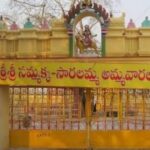
Nestled inside a dense forest where seven sacred streams converge, the Edupayalu Vana Durga Bhavani Temple stands as one of the most powerful Shakti shrines in Telangana. Located in Medak district, this ancient cave temple draws over 30 lakh pilgrims every year from Telangana, Andhra Pradesh, Karnataka, and Maharashtra.
What makes Edupayalu truly extraordinary is not just its divine energy but also its natural surroundings. The Manjeera River splits into seven narrow streams that flow directly to the feet of Goddess Vana Durga Bhavani, creating a setting unlike any other temple in India. Whether you are a devoted pilgrim or a curious traveler, visiting Edupayalu is an experience that touches both the soul and the senses.
Edupayalu Location and Natural Setting
The temple is situated near Nagasanpally village in the Papannapet Mandal of Medak district, Telangana. It lies approximately:
- 110 km from Hyderabad
- 19 km from Medak Bus Station
- 3.5 km from Nagasanpally town
The temple occupies a dramatic natural setting inside a forest-covered hillside. The Manjeera River, a tributary of the Godavari, flows in seven distinct streams around the temple premises. During the monsoon season, floodwaters rise and actually touch the feet of the goddess idol, a breathtaking sight that draws thousands of devotees every year.
The surrounding dense forest gives the shrine its name “Vana” (meaning forest), and the entire atmosphere radiates wild, primal spiritual energy that is deeply rooted in Telangana’s tribal and folk traditions of goddess worship.
Presiding Deity – Vana Durga Bhavani
The presiding deity of the temple is Goddess Vana Durga Bhavani, a fierce forest form of Adi Shakti, the supreme divine mother. She is revered as an incarnation of Goddess Durga and worshipped with deep devotion across the Deccan region.
The idol of the goddess is carved from a single stone and depicted with multiple arms, each holding a weapon or divine symbol associated with Hindu mythology. Three of the seven streams flow in front of her idol and four flow behind it, placing her literally at the center of these sacred waters.
Devotees believe that Vana Durga Bhavani fulfills wishes and removes the following:
- Fear and enemies
- Illness and evil effects
- Childlessness and family troubles
- Curses and negative energies
She is also honored as a Swayambhu (self-manifested) form, meaning her presence at this spot is believed to be divine and eternal, not man-made.
History of Edupayalu Temple
The Edupayalu Vana Durga Bhavani Temple was constructed in the 12th century and follows the Hindu hill temple architectural tradition. However, its spiritual roots go much deeper, tracing back to events described in the Mahabharata.
According to historical accounts, the goddess Durga in her Vana form first manifested at the outskirts of Nagsanpalli in Papannapet Mandal. Over the centuries, the temple grew in prominence as word spread about the miraculous nature of the site, particularly the seven-stream convergence and the sacred association with the Sarpa Yagna legend.
The temple management was initially overseen by hereditary trustees, with Peddalachannagai Durga Reddy serving as the first chairman of the temple’s board of directors. Today, the temple is managed by a formal trust committee that organizes festivals, manages infrastructure, and ensures the smooth conduct of darshan and rituals throughout the year.
Mythological and Spiritual Significance
The legend of Edupayalu is deeply tied to the Mahabharata. King Janamejaya, grandson of Arjuna and son of Maharaja Parikshit, performed the Sarpa Yagna (snake sacrifice) at Nagsanpalli to avenge his father’s death from a snakebite.
The Sarpa Yagna was a powerful ritual intended to destroy the entire serpent race. As the yagna raged, the terrified serpents prayed to Ganga Devi to save them by extinguishing the sacred fire. Responding to their plea, Ganga Devi split the Manjeera River into seven narrow streams. These streams flowed forward and touched the feet of Goddess Vana Durga Bhavani inside her sanctum, thus quenching the yagna fire and saving the serpents.
The seven streams are named after the Sapta Rishis (seven sages):
- Jamadagni
- Vishwamitra
- Vasishta
- Atri
- Kashyapa
- Bharadwaja
- Gautama
This mythological event is why the place is called Edupayala – “Edu” meaning seven and “Payalu” meaning streams in Telugu. The entire site is considered a sacred tirtha where divine water energy and goddess energy combine.
Temple Architecture and Layout
The Edupayalu Temple is a fine example of 12th-century Hindu hill temple architecture. The temple is built into a natural cave surrounded by rocks and forest, giving it a raw and organic appearance that contrasts with the ornate urban shrines of South India.
Key architectural highlights include:
- Carved stone steps leading to the sanctum sanctorum
- A central sanctum housing the Swayambhu stone idol of Vana Durga Bhavani
- Surrounding mandapams (halls) for rituals and gatherings
- The Garuda Ganga (also called Pedda Gutta Soramgam), the elevated hillock on which the temple is positioned
- Open ghats along the riverbank for holy bathing
The temple complex covers a vast area and includes multiple enclosures for different rituals, a large open area for festival gatherings, and steps descending to the Manjeera riverbank. In recent years, a newly developed sanctum sanctorum has been added to reduce overcrowding and allow the temple doors to be closed at night, ensuring the safety of the deity’s gold ornaments.
Rituals and Worship Practices
Daily worship at Edupayalu follows the traditional Shakti puja customs of Telangana. Rituals performed here include:
- Kumkuma Archana – offering of vermillion to the goddess
- Coconut Breaking – a vow fulfillment ritual widely practiced by devotees
- Lemon Offering – performed for protection from evil eye and negative energy
- Saree Offering – the hereditary trustee formally offers a saree to the goddess to inaugurate major festivals
- Special Abhishekam on Fridays, Amavasya (new moon), and Pournami (full moon)
During the rainy season, when the Manjeera River rises and its waters touch the feet of the goddess, priests perform special worship to mark this sacred event, which is considered one of the most auspicious moments at the temple.
Edupayalu Temple Timings
Knowing the temple timings before planning your visit helps ensure a smooth darshan experience.
| Day | Opening Time | Closing Time |
| Monday to Saturday | 5:30 AM | 6:30 PM |
| Sunday | 5:00 AM | 7:00 PM |
| Festival Days | Extended hours | As announced |
On Fridays and major festival days, the temple usually remains open for extended hours. During the Shivaratri Jatara, the temple operates almost round the clock for three days to accommodate the massive influx of pilgrims.
Best Days to Visit Edupayalu Temple
The most auspicious and popular days to visit Edupayalu are:
- Fridays – considered the most sacred day for Shakti worship
- Sundays – highest footfall from Hyderabad and surrounding districts
- Amavasya (new moon day) – special rituals and vow fulfillment
- Pournami (full moon day) – night pujas and special darshan
- Shivaratri – the grandest occasion at the temple, coinciding with the Jatara
- Navratri – nine nights of intense goddess worship
- Magha Amavasya – a particularly sacred new moon in the month of Magha
The best overall season to visit is October to March, when the weather is comfortable and the temple surroundings are lush and green. If you want to witness the river waters touching the goddess’s feet, plan a visit during July to September (monsoon season).
Major Festivals Celebrated
Three major festivals mark the temple calendar each year:
- Edupayalu Jatara (Shivaratri) – The most important festival, held annually in February during Maha Shivaratri. A three-day grand affair that draws over 5 lakh pilgrims.
- Navarathri Utsavalu – Nine days of goddess worship celebrated with music, dance, special abhishekams, and cultural programs. Devotees from across the region participate.
- Magha Amavasya – A sacred new moon day in the month of Magha (January-February), when devotees perform ancestral rites and seek the goddess’s blessings.
Beliefs and Miracles
Devotees who visit Edupayalu carry deep personal faith. Several widely held beliefs surround this temple:
- The goddess is believed to protect her devotees from snakebite, in direct connection with the Sarpa Yagna legend.
- Women who worship here with sincere devotion are believed to be blessed with children.
- Breaking a coconut at the goddess’s feet while making a vow is said to bring swift fulfillment of the wish.
- The sacred waters of the seven Manjeera streams are believed to cleanse sins and remove curses when devotees take a holy dip.
- Tying a cradle in the temple premises is a popular custom for couples seeking the blessings of motherhood.
Dress Code and Devotee Guidelines
To maintain the sanctity of the temple, visitors are expected to follow certain guidelines:
- Traditional attire is preferred. Men should wear dhoti or pyjama-kurta. Women should wear saree, salwar kameez, or any traditional dress.
- Avoid western clothing such as shorts, sleeveless tops, and jeans inside the inner sanctum.
- Remove footwear before entering the temple premises.
- Maintain silence and avoid mobile phone usage inside the sanctum.
- No leather items (belts, wallets) should be carried into the inner sanctum.
- Follow all queue protocols during peak hours and festival days.
How to Reach Edupayalu Temple
By Air: The nearest airport is Rajiv Gandhi International Airport, Hyderabad, located approximately 146 km away. Taxis and cabs are available from the airport.
By Train: The nearest railway station is Akkannapet (approximately 19 km from the temple). Kamareddy railway station (around 60 km) also connects to major cities like Hyderabad, Bengaluru, and Chennai. From either station, taxis and local transport are available.
By Road: This is the most popular and convenient option.
- From Hyderabad: Take the Balanagar X Roads route to Narsapur X Roads, then follow the Narsapur–Medak road. An arch marking the temple entry is visible on the main road.
- TSRTC buses operate from MGBS (Imliban) and Jubilee Bus Stand (Secunderabad) to Medak. Frequent local buses run from Medak town to the Edupayalu Temple.
- The total drive from Hyderabad takes approximately 2 to 2.5 hours by private vehicle.
Edupayala Jatara
The Edupayala Jatara is one of the most celebrated religious fairs in Telangana. Held every year during Maha Shivaratri in February, this three-day state festival is recognized as the second largest congregation of devotees in Telangana, after the Sammakka-Saralamma Jatara at Medaram.
The Jatara officially begins when the hereditary trustee and the Medak legislator offer a ceremonial saree to Goddess Vana Durga Bhavani. The three-day program follows a structured sequence:
- Day 1 – Shivaratri: Festival inauguration, special pujas, holy dip in the Manjeera River.
- Day 2 – Bandi Utsavam: Hundreds of beautifully decorated bullock carts from 32 surrounding villages circle the temple in a grand procession.
- Day 3 – Rathotsavam: The grand chariot festival, which is the most visually spectacular event of the Jatara.
During the Jatara, the entire area transforms into a vast pilgrimage camp. Hundreds of devotees pitch makeshift tents around the temple. Stalls selling bangles, sweets, coconuts, cassettes, and devotional merchandise line every available space. TSRTC runs special buses to handle the massive crowds. Cultural programs featuring Bonalu dances, Potharajulu, and Shiva Shakti performers add to the festive atmosphere.
The Jatara has been given State Festival status by the Telangana government, reflecting its cultural and religious importance to the region.
Edupayalu Temple Route Map
The following route details are helpful for first-time visitors traveling from key locations:
From Hyderabad (110 km): Hyderabad > Balanagar X Roads > Narsapur X Roads > Medak > Nagasanpally > Edupayalu Temple
From Medak (19 km): Medak Bus Depot > Narsapur Road > Nagasanpally > Edupayalu Temple
From Warangal (156 km): Warangal > Hyderabad Bypass > Medak Road > Nagasanpally > Temple
From Kamareddy (57 km): Kamareddy > Medak Town > Nagasanpally > Edupayalu Temple
The road to the temple passes through scenic forest patches and green farmland. Signboards are well placed along the Medak-Narsapur road. During Jatara season, the Telangana police set up assistance booths and manage traffic diversion.
Nearby attractions worth combining on the same trip include:
- Medak Cathedral
- Pocharam Wildlife Sanctuary
- Medak Fort
Frequently Asked Questions
Where is Edupayalu Temple located?
Edupayalu Vana Durga Bhavani Temple is located near Nagasanpally village, Medak district, Telangana, about 110 km from Hyderabad.
What are the Edupayalu Temple timings?
The temple opens at 5:30 AM and closes at 6:30 PM on weekdays, and from 5:00 AM to 7:00 PM on Sundays.
What is the meaning of Edupayala?
“Edu” means seven and “Payalu” means streams in Telugu. The name refers to the seven streams of the Manjeera River that merge near the temple.
When is the Edupayala Jatara held?
The Jatara is held annually during Maha Shivaratri, typically in February, and lasts for three days.
Which day is best to visit Edupayalu Temple?
Fridays are considered most auspicious for Shakti worship. Sundays attract the largest crowds from Hyderabad.
Is there accommodation near Edupayalu Temple?
Budget hotels and guesthouses are available in Medak town, about 19 km away. During the Jatara, temporary facilities are set up near the temple.
How many devotees visit Edupayalu each year?
Over 30 lakh pilgrims visit the temple annually, with more than 5 lakh attending during the three-day Jatara alone.
What is the nearest railway station to Edupayalu?
Akkannapet railway station is the nearest, at approximately 19 km from the temple.
Final Thoughts
The Edupayalu Vana Durga Bhavani Temple is not just a place of worship. It is a living testimony to Telangana’s ancient traditions of Shakti worship, riverine spirituality, and tribal folk devotion. The convergence of seven sacred streams, the cave setting inside a forest, the Mahabharata connection, and the thunderous energy of the annual Jatara all combine to make this one of the most unique pilgrimage destinations in South India.
Whether you visit for the monsoon spectacle of river waters touching the goddess’s feet, the electric atmosphere of the Shivaratri Jatara, or simply for a quiet moment of darshan, Edupayalu delivers an experience that stays with you long after you leave. Plan your visit during October to March for comfortable weather, or head there during Shivaratri if you wish to witness the full grandeur of this sacred tradition.
Jai Vana Durga Bhavani!

Theodore Henry is the founder and administrator of TravelsHexa.com, where he shares reliable travel guides, destination insights, and practical tips to help travelers plan memorable journeys. Passionate about exploring new places, Theodore focuses on providing well-researched, accurate, and easy-to-follow travel content that inspires readers to travel smarter and with confidence.