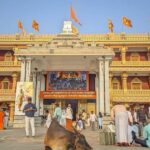
Tucked in the heart of southern Hyderabad, the Karmanghat Hanuman Temple is far more than a place of worship. It is a living monument of faith, courage, and divine protection that has stood strong for over 800 years. Dedicated to Lord Hanuman in a rare seated, meditative form known as Dhyana Anjaneya Swamy, this ancient temple carries a spiritual energy that devotees from across Telangana and beyond come to experience.
Every Tuesday and Saturday, thousands of worshippers line up before sunrise, clutching garlands and coconuts, eager to seek the blessings of the Lord. The air fills with the resonant chant of the Hanuman Chalisa, the warm fragrance of camphor and jasmine, and a deep sense of collective devotion. Whether you are a regular pilgrim or a first-time visitor, this comprehensive guide covers everything you need to know about the temple’s history, timings, how to reach it, and what to expect during darshan.
The Legendary Origin of Karmanghat Hanuman Temple
The story of this sacred shrine begins around 1198 CE, during the reign of the powerful Kakatiya dynasty. King Prola II (also referred to as Prataparudra in some accounts) set out on a hunting expedition through a dense forest, the same land where Hyderabad’s bustling Karmanghat locality now stands.
Exhausted from the journey, the king rested beneath a large tree. As he sat in silence, he began hearing a faint but steady chant: “Rama… Rama… Rama…” resonating from deep within the forest. Curious and captivated, he followed the sound until he reached a clearing where a stone idol of Lord Hanuman sat in deep meditation, the divine chant seemingly emanating from the idol itself.
The king bowed before the Swayambhu (self-manifested) idol in reverence and returned to his capital. That night, Lord Hanuman appeared in the king’s dream and commanded him to build a temple at that very spot. True to the divine instruction, the king ordered the construction of a magnificent shrine, and the Karmanghat Hanuman Temple was thus born.
The Legend of Aurangzeb and the Divine Voice
How a Mughal Emperor Gave This Temple Its Name
Among all the legends associated with this temple, none is more powerful or widely told than the story involving the Mughal emperor Aurangzeb. Approximately 400 years after the temple’s founding, Aurangzeb launched a campaign across the Deccan, ordering his armies to demolish Hindu temples in the region.
When his forces reached the Karmanghat temple, something extraordinary happened. His soldiers could not step past the compound wall. An invisible, divine force repelled them entirely. Baffled by this, the general reported the incident to Aurangzeb himself.
Furious and disbelieving, the emperor arrived at the temple in person, carrying a crowbar to demolish it with his own hands. As he crossed the threshold, a deafening roar like thunder shook the ground. The crowbar fell from his trembling hands. Then, a thundering voice echoed from the heavens:
“Mandir todna hai raja, to Kar Man Ghat” (“If you wish to destroy this temple, O King, harden your heart first.”)
Aurangzeb stood frozen. He withdrew his army and left the temple untouched. From that divine utterance, the area got its name: Karmanghat, derived from “Kar Man Ghat,” meaning “make your heart strong.” To this day, the idol of Lord Hanuman sits in the same meditative posture, silently blessing his devotees.
Architecture and Temple Layout
A Rare Meditative Form of Hanuman
What sets this temple apart from most Hanuman temples in India is the unique posture of the main deity. Lord Hanuman here is worshipped as Dhyana Anjaneya Swamy, seated in Padmasana (lotus position), holding a gada (mace) in one hand and a japa mala (rosary) in the other. This rare meditative form symbolizes the perfect union of strength and spiritual wisdom.
The temple’s architecture reflects the robust stone masonry style of the Kakatiya period, featuring:
- Intricately carved stone pillars
- A modest Shikhara (tower) that has been restored and renovated over centuries
- A spacious sanctum sanctorum housing the self-manifested idol
- A granite idol carved from a single rock, believed to be Swayambhu
Other Shrines Within the Temple Complex
The temple complex is home to several other deities, making it a complete pilgrimage destination in a single visit:
- Lord Rama
- Lord Shiva (Spatika Lingeshwara)
- Goddess Durga
- Goddess Saraswati
- Goddess Santoshi Mata
- Lord Venugopala Swamy (Lord Krishna)
- Lord Jagannath
- Lord Vigneshwara (Ganesha)
- Navagrahas (Nine Planetary Deities)
Spiritual Significance and Beliefs
Why Devotees Hold This Temple Sacred
The Karmanghat Hanuman Temple is considered one of the most powerful Hanuman temples in Telangana. Devotees firmly believe that Lord Hanuman here is especially responsive to prayers for:
- Protection from danger and evil forces
- Relief from the malefic effects of Saturn (Shani dosha)
- Mental strength, clarity, and inner peace
- Fulfilment of sincere wishes and vows
- Removal of obstacles in career and personal life
The meditative form of Lord Hanuman here is said to radiate a calm yet immensely powerful divine energy. Unlike temples where Hanuman is depicted in a fierce, warrior stance, Dhyana Anjaneya Swamy invites introspection and inner transformation.
The temple management also provides Annadanam (free meals) daily to the poor and needy. On Tuesdays and Saturdays, Annadanam is offered to all visiting devotees, reflecting the spirit of selfless service deeply embedded in the temple’s culture.
Major Festivals and Celebrations
A Temple That Comes Alive During Every Occasion
The Karmanghat Hanuman Temple observes all major Hindu festivals with great enthusiasm and devotion. The most important celebrations include:
- Hanuman Jayanti – The biggest festival at the temple. Lakhs of devotees visit to offer special poojas. A grand procession carries the idol of Lord Hanuman through the surrounding streets.
- Sri Rama Navami – Celebrated with deep reverence, given the strong bond between Lord Rama and Lord Hanuman.
- Ugadi (Telugu New Year) – Marked with special prayers and rituals.
- Maha Shivaratri – Observed with overnight vigil and abhishekam to Lord Shiva in the temple complex.
- Krishna Janmashtami – Celebrated with devotional programs at the Venugopala Swamy shrine.
- Dussehra – Observed with special poojas and cultural events.
Every Tuesday and Saturday throughout the year, the temple witnesses large footfall as these days are considered especially auspicious for worshipping Lord Hanuman.
Karmanghat Hanuman Temple Timings and Entry Details
Plan Your Darshan Without Missing a Slot
Understanding the temple timings in advance ensures a smooth and fulfilling visit.
Regular Days (Monday, Wednesday, Thursday, Friday, Sunday):
| Session | Timings |
| Morning | 6:00 AM to 12:30 PM |
| Evening | 4:00 PM to 8:30 PM |
Tuesdays and Saturdays (Extended Hours):
| Session | Timings |
| Morning | 5:30 AM to 1:00 PM |
| Evening | 4:30 PM to 9:00 PM |
Note: Darshan is not available between 12:30 PM and 4:00 PM (the afternoon break). Plan your visit accordingly.
Entry Fee and Darshan Options
- General Darshan: Completely free for all visitors
- VIP Darshan / Special Poojas: Available through booking poojas in the range of Rs. 500 to Rs. 2,000
Daily Rituals and Poojas
Devotees can participate in or witness the following rituals daily:
- Abhishekam (sacred bathing of the idol)
- Archana (floral offering with chanting of names)
- Harati (waving of lamps)
- Hanuman Chalisa recitation
How to Reach Karmanghat Hanuman Temple
Complete Route Map and Transport Guide
Temple Address: 8-2-61, Inner Ring Road, Padma Nagar Colony, Champapet, near Santoshnagar, Saroornagar, Ranga Reddy District, Hyderabad, Telangana 500079.
The temple is located on the Inner Ring Road (Nagarjuna Sagar Ring Road), easily accessible from most parts of Hyderabad.
By Metro: The nearest metro station is LB Nagar Metro Station on the Red Line. From there, take an auto-rickshaw or cab for approximately 4 to 5 km to reach the temple.
By Bus: Several TSRTC (Telangana State Road Transport Corporation) buses ply to the Karmanghat area. The nearest major bus stop is IS Sadan. You can board buses from Dilsukhnagar, Mehdipatnam, or Koti.
By Auto or Cab: Auto-rickshaws and app-based cabs (Ola, Uber, Rapido) are widely available from all parts of Hyderabad. Simply enter “Karmanghat Hanuman Temple” as your destination.
By Train: The nearest railway station is Secunderabad Railway Station, approximately 16 km away (28 minutes by road). From the station, take a cab or auto.
By Air: Rajiv Gandhi International Airport is around 21 km from the temple (approximately 30 to 35 minutes by road depending on traffic). Taxis and cabs are available right outside the terminal.
Distances at a Glance:
- From Mahatma Gandhi Bus Station (MGBS): 10.2 km (about 17 minutes)
- From Secunderabad Railway Station: 16.4 km (about 28 minutes)
- From Rajiv Gandhi International Airport: 21 km (about 32 minutes)
Visitor Tips and Experience
Make the Most of Your Temple Visit
Visiting a temple like Karmanghat is as much about the experience as it is about the darshan. Here are some practical tips to ensure your visit is meaningful and hassle-free:
- Best time to visit: Early mornings on weekdays offer a calmer, less crowded experience. Arrive by 6:30 AM for a peaceful darshan.
- Tuesdays and Saturdays: These are the busiest days. If you plan to visit on these days, reach before 7:00 AM or plan for the evening session after 4:30 PM.
- Dress code: There is no strict dress code, but modest, traditional attire is highly recommended out of respect for the temple’s sanctity.
- Photography: Photography is strictly prohibited inside the main sanctum sanctorum. You may take photos in the outer courtyard and near the gopuram.
- Footwear: Remove footwear before entering the temple premises. Shoe storage facilities are available outside.
- Mobile phones: Keep your phone on silent mode inside the temple.
- Parking: Dedicated parking space is available for two-wheelers and four-wheelers, but it can get crowded on auspicious days.
- Prasad and flowers: Shops near the temple entrance sell flowers, coconuts, and temple prasad. Purchasing offerings from these shops supports local vendors.
FAQ’s
What is the Karmanghat Hanuman Temple famous for?
The temple is famous for housing a rare Swayambhu idol of Lord Hanuman in the Dhyana Anjaneya (meditative) form and for the powerful legend involving Emperor Aurangzeb, after which the area got its name.
What are the timings of Karmanghat Hanuman Temple?
On regular days, the temple is open from 6:00 AM to 12:30 PM and 4:00 PM to 8:30 PM. On Tuesdays and Saturdays, it opens from 5:30 AM to 1:00 PM and 4:30 PM to 9:00 PM.
Is there any entry fee for Karmanghat Temple?
No, general darshan is completely free for all visitors. Special poojas and VIP darshan may involve nominal charges.
Which metro station is nearest to Karmanghat Hanuman Temple?
LB Nagar Metro Station on the Red Line is the nearest, from where the temple is approximately 4 to 5 km by auto or cab.
Can I book darshan online at Karmanghat Temple?
Yes, online booking for special sevas and poojas is available at the official temple website: karmanghattemple.telangana.gov.in.
What is the significance of Tuesdays and Saturdays at this temple?
Tuesdays and Saturdays are considered the most auspicious days to worship Lord Hanuman, attracting the highest number of devotees and extended temple hours.
Is photography allowed inside Karmanghat Hanuman Temple?
Photography is strictly prohibited inside the main sanctum sanctorum but is permitted in the outer courtyard and near the gopuram.
What other deities are present in the temple complex?
Apart from Lord Hanuman, the complex houses shrines for Lord Rama, Lord Shiva, Goddess Durga, Goddess Saraswati, Goddess Santoshi Mata, Lord Jagannath, Lord Venugopala Swamy, and the Navagrahas.
Conclusion
The Karmanghat Hanuman Temple is not just one of the oldest temples in Hyderabad; it is a timeless sanctuary where history, legend, and living faith converge. From the tranquil meditative idol of Dhyana Anjaneya Swamy to the awe-inspiring story of how a Mughal emperor was humbled at its gates, every aspect of this temple speaks of a power that transcends time.
Whether you visit on a quiet weekday morning seeking inner stillness or on a vibrant Saturday soaked in collective devotion, the experience leaves a lasting impression. Plan your visit with this guide, arrive with an open heart, and let the divine energy of Karmanghat do the rest.
Jai Bajrang Bali!

Theodore Henry is the founder and administrator of TravelsHexa.com, where he shares reliable travel guides, destination insights, and practical tips to help travelers plan memorable journeys. Passionate about exploring new places, Theodore focuses on providing well-researched, accurate, and easy-to-follow travel content that inspires readers to travel smarter and with confidence.