Few skylines announce a city the way Baku’s does. Rising above the Caspian Sea on a hillside south of the Old City, the Flame Towers have become the single image most travelers associate with Azerbaijan’s capital.
If you’re planning a trip and want to know exactly where to stand, when to go, and what else to see once your camera roll is full, this guide covers it all.
Photograph the Flame Towers
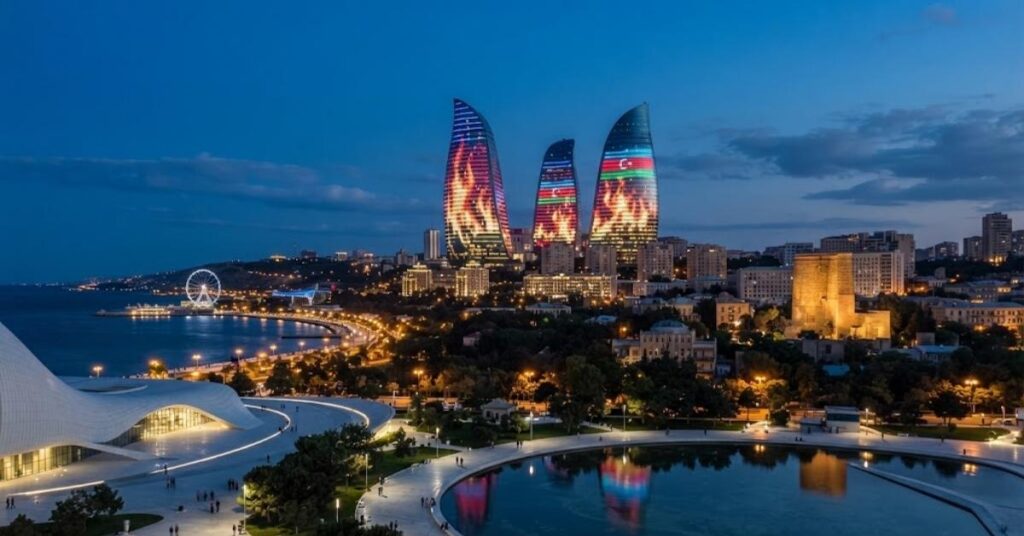
The Flame Towers aren’t just a backdrop, they’re the main event. Three curved, blue glass skyscrapers twist upward from Baku’s highest ridge, and at night thousands of LED panels turn them into a moving canvas of fire, water, and the Azerbaijani flag. Getting a great shot is less about expensive gear and more about timing and position.
A few practical tips for photographers:
- Shoot at blue hour. The 20 to 30 minutes after sunset, when the sky still holds some color but the LED display is fully lit, produces the most balanced exposures.
- Use a tripod or a steady ledge. Long exposures at night reward stability, especially if you want the light patterns to read clearly.
- Bring a wide lens for close range. The towers are enormous at close quarters, so a wide angle keeps the full silhouette in frame.
- Bring a zoom for distance shots. From across Baku Bay, a longer lens compresses the skyline and makes the towers look even more dramatic against the water.
The Iconic Flame Towers
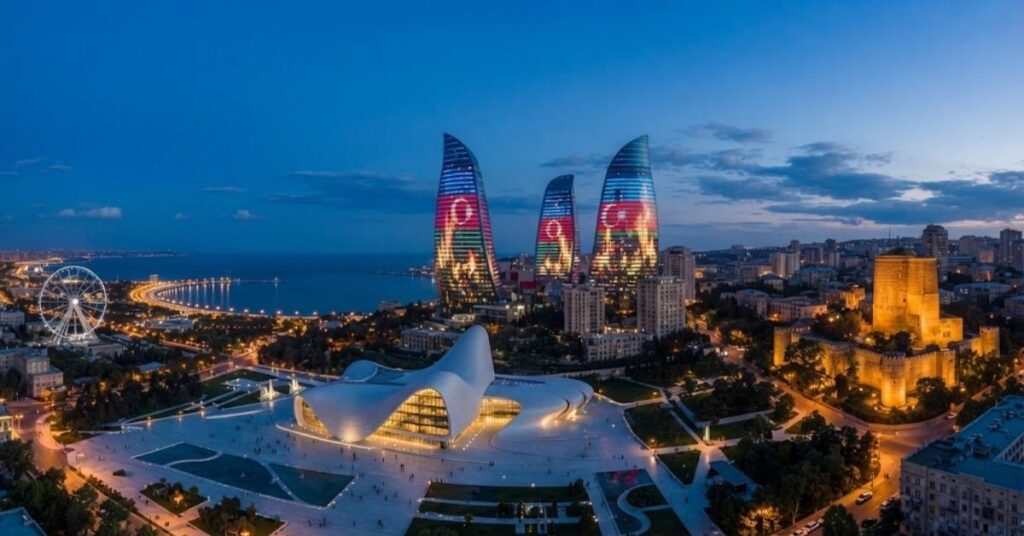
Completed in 2012 after several years of construction, the Flame Towers sit on a hill overlooking Baku Bay and dominate the skyline from almost every part of the city. The tallest of the trio reaches roughly 182 meters, with the other two standing a little shorter, together spanning 28 to 39 floors depending on the tower. One building houses the Fairmont Baku hotel, with panoramic views over the bay, while the other two combine residential apartments and office space.
The design is deliberate. The flame shape refers to Azerbaijan’s ancient identity as a “land of fire,” tied to natural gas seeps that have burned for centuries and to the country’s pre-Islamic history of fire worship linked to Zoroastrianism. After dark, roughly 10,000 LED lights animate the facades, cycling through flickering flame effects, a shimmering water pattern, and Azerbaijan’s national colors, making the towers one of the most recognizable pieces of contemporary architecture in the Caucasus region.
Snap a Photo of the Flame Towers
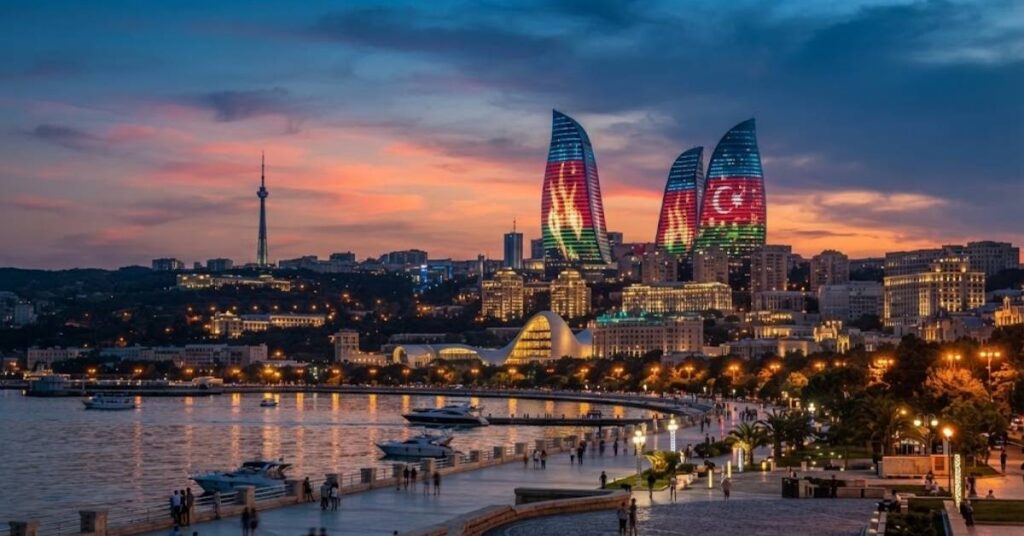
For the classic, most “Instagrammable” angle, head to two spots in particular:
- Seaside Boulevard. From the promenade along Baku Bay, you get the towers reflected in the water with the whole skyline stretched behind them, ideal for wide shots at dusk.
- Highland Park. Sitting almost directly beneath the towers, Highland Park (also called Şəhidlər Xiyabanı or Martyrs’ Lane) offers a dramatic upward angle and is a short walk or funicular ride from the city center.
- Near the Bahram Gur statue and funicular base station. This spot gives a clean, uncluttered line of sight and is popular with both locals and photographers because of the easy access.
Because the towers sit on elevated ground, you’ll also catch glimpses of them from the Old City walls, from a boat on the Caspian, and from many rooftop bars across town, so keep your camera ready even when you’re not actively “tower hunting.”
Weather and Season
Baku’s weather can shift quickly thanks to its coastal, semi arid climate and near constant breeze off the Caspian, which is exactly why the city earned the nickname “the city of winds.” Check conditions before you head out for golden hour photos.
Air Temperature
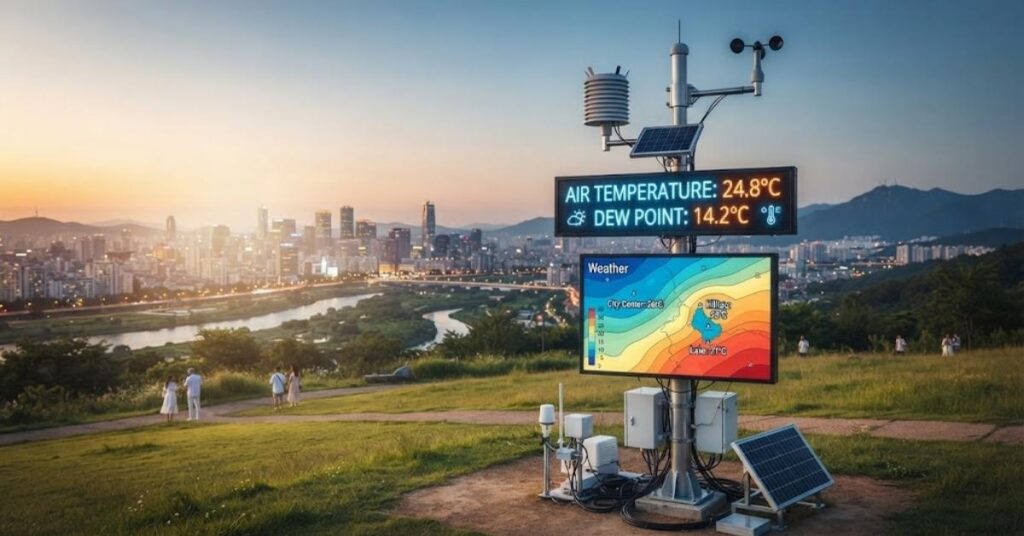
Average daytime temperatures in Baku typically range from the low 50s to the high 50s Fahrenheit (around 11 to 15°C) during the shoulder seasons, climbing into the 80s and 90s°F (28 to 35°C) at the height of summer and dropping closer to freezing in the depths of winter.
Feel Temperature
The “feels like” temperature usually runs a few degrees cooler than the air temperature, largely because of the wind chill. On a breezy day, expect the real feel to sit several degrees below the thermometer reading, so pack a light jacket even in spring and autumn.
Wind
Wind is a defining feature of Baku’s climate. Gusts of 15 to 20 km/h are common, and the strong northerly Khazri wind can occasionally reach much higher speeds. For photography, this matters: a breezy evening on Seaside Boulevard can feel notably colder than the daytime temperature suggests, and it can also add movement to flags, water, and clothing in your shots, which isn’t always a bad thing.
When to Go
- Peak season: Spring, summer, and autumn (roughly April through October) offer the most comfortable temperatures and the clearest evening skies for photography.
- Spring (April to June): Mild days, blooming parks, and fewer crowds than summer.
- Autumn (September to October): Similar mild conditions with warm evening light, often considered the sweet spot by frequent visitors.
- Summer (July to August): Hot and dry during the day, but long daylight hours mean a later, more relaxed blue hour for night shots.
- Winter (December to February): Cold, sometimes damp, with shorter days, but the illuminated towers stand out even more sharply against the dark winter sky.
See the Location on the Map
The Flame Towers sit at approximately 40°21′35″ N, 49°49′36″ E, on a hill above the Icherisheher (Old City) and Baku Boulevard, at the southern edge of Highland Park. They’re reachable on foot from the city center in around 20 to 30 minutes uphill, by the Baku funicular from Neftchilar Avenue, or by taxi in a few minutes from most central hotels. Because they sit on the highest point in the area, they also work as a natural landmark for orienting yourself as you explore the rest of the city.
Other Experiences in Baku
Photographing the Flame Towers is often just the start of a Baku itinerary. The city blends a UNESCO listed Old City, oil boom era mansions, Soviet era landmarks, and a fast growing contemporary art and dining scene, all within a compact, walkable core. Below is a curated round up of the experiences worth building into your trip.
Wander the Old City and Its Legends
- Explore Baku’s Old City (Icherisheher). Wander the maze of stone lanes inside the 12th century walls, home to the Palace of the Shirvanshahs, the Maiden Tower, and centuries of caravanserais turned into cafes and workshops.
- A walk through the city without a fixed route. Sometimes the best way to understand Baku is to skip the checklist entirely and simply follow whichever alley looks interesting.
- Echoes of the past beneath the trees. Shaded courtyards and quiet corners throughout the Old City reveal layers of history that don’t always make it into guidebooks.
- Dede Gorgud Park. Named for the legendary Turkic storyteller, this park brings ancient oral traditions to life through sculpture and green space.
- Walking tour of Baku’s oil boom architecture. The late 1800s oil rush funded ornate European style mansions throughout downtown Baku, and a self guided or guided walk connects the best of them.
- Soviet film locations walking tour. Several well known Soviet era films were shot on Baku’s streets, and fans can trace those locations on a dedicated walk.
- Ali and Nino walking tour. Follow the settings from Azerbaijan’s most famous novel through the streets that inspired it.
Parks, Views, and Green Spaces
- Highland Park. Baku’s best panoramic viewpoint, directly beneath the Flame Towers, with sweeping views over the bay.
- Stroll along the Caspian seaside boulevard. A long, landscaped promenade lined with cafes, fountains, and sea views, popular for both morning walks and evening strolls.
- Winter Park. A calmer, tree lined city park worth slowing down in, especially on a warm afternoon.
- Central Park. A classic green escape near the city center, good for a break between museum visits.
- From the Nobels’ garden to a city park. Originally developed by the Nobel family during Baku’s oil boom, this green space has evolved into a public park with a fascinating backstory.
- Chambarakand Park. A quieter, more residential park away from the main tourist routes.
- Zire Ecopark. An eco focused recreational area outside the city, good for a change of pace from downtown sightseeing.
Culture, Museums, and Architecture
- Heydar Aliyev Centre. Zaha Hadid’s flowing, wave like building is one of the most photographed structures in the country and houses rotating art and design exhibitions.
- Baku’s Carpet Museum. Shaped like a rolled carpet, this museum traces the history and technique behind Azerbaijan’s UNESCO recognized carpet weaving traditions.
- National Museum of History of Azerbaijan. A comprehensive overview of the country’s history, from ancient times through the 20th century.
- Museum of Miniature Books. One of the more unusual collections in the region, dedicated entirely to tiny printed books.
- Nobel brothers’ house museum. Explore the residence connected to the Nobel family’s oil business in Baku.
- House museum of Vagif Mustafazade. A tribute to the pianist who pioneered Azerbaijani jazz mugham fusion.
- House museum of Gara Garayev. Dedicated to one of Azerbaijan’s most influential classical composers.
- Tahir Salahov’s world of colors. A museum showcasing the work of one of Azerbaijan’s most celebrated painters.
- Galleries fueling Baku’s modern art boom. A growing gallery scene spread across the city center is putting contemporary Azerbaijani artists on the map.
- Art studio Kilimchi. A hands on space where visitors can try traditional textile and craft techniques.
- World’s first oil tanker museum. A niche but genuinely interesting stop for anyone curious about Baku’s industrial history.
- A journey into railway history. Rail enthusiasts can explore exhibits tracing the development of the South Caucasus railway network.
Fire, Land, and Coastline
- Sites of ancient fire. Ateshgah, the fire temple just outside Baku, and other natural gas seeps in the region connect directly to the symbolism behind the Flame Towers themselves.
- Discover Gobustan’s ancient rock art. A UNESCO World Heritage site featuring thousands of petroglyphs dating back millennia, alongside mud volcanoes and open landscapes.
- Explore Baku’s mud volcanoes. Azerbaijan holds one of the highest concentrations of mud volcanoes on earth, and several are an easy day trip from the city.
- Enjoy the Caspian Sea and beaches. Several beach resorts line the Absheron Peninsula, offering a swimming and sunbathing break from city sightseeing.
- Birdwatching in Absheron National Park. A quieter nature focused outing for travelers who want to see the region’s wetland bird life.
- Gala State Historical and Ethnographic Reserve. An open air museum recreating traditional Absheron village life.
Food, Shopping, and Nightlife
- Yashil Bazaar. Baku’s central produce market, worth a visit for the spices, dried fruit, and local color alone.
- Shopping at boutiques and bazaars. From Nizami Street’s international brands to the covered bazaars of the Old City, Baku covers both ends of the shopping spectrum.
- Port Baku Mall. A modern retail complex for travelers who want an air conditioned break with international fashion options.
- Take a wine bar crawl. Azerbaijan’s small but growing wine scene has spread into a handful of stylish bars around the city center.
- Gutab making masterclass. Learn to prepare this classic stuffed flatbread hands on with a local cook.
- Plant based dining on the rise. Baku’s restaurant scene now includes a growing number of vegetarian and vegan focused menus.
- AZSAFFRON. A local producer showcasing Azerbaijan’s saffron growing tradition and offering tastings.
- Experience Baku’s vibrant nightlife. Rooftop bars, live music venues, and lounges cluster around the city center and often come with a direct view of the illuminated towers.
Wellness, Sport, and Family Activities
- Relax at Baku’s traditional hammams. Historic bathhouses in the Old City offer a classic steam and scrub experience.
- Hamambath Wellness and Spa Complex. A modern spa option for travelers who want the hammam concept with contemporary comfort.
- Horse riding in Baku. Stables on the outskirts of the city offer rides through the surrounding countryside.
- Play golf in Baku. A handful of courses around the city cater to golfers looking to combine sightseeing with a round.
- Baku Shooting Center. A sporting clay and target range for a different kind of active outing.
- Baku Olympic Stadium. Home to major football matches and events, worth a visit for sports fans.
- Fun for everyone at the Baku Circus. A family friendly evening option in a striking, purpose built venue.
- Kids’ fun for a dream vacation. Between the parks, the circus, and interactive museums, Baku has more family activities than its skyline suggests.
Heritage and Memory
- Traces of a great victory. Memorials around the city commemorate Azerbaijan’s role in the Second Karabakh War and its broader military history.
- Where history preserves the memory of victory and heroism. Several dedicated sites across Baku honor this more recent chapter of the country’s history.
- Uncover Jewish traces in Baku. Historic synagogues and neighborhoods reflect the city’s long standing Jewish community.
- Polish heritage in Baku. Traces of the Polish engineers and architects who shaped the oil boom city remain visible in its buildings.
- Prominent people of Baku. Walking routes and museums throughout the city highlight the writers, musicians, and scientists who called Baku home.
- Literary history of Azerbaijan. Trace the country’s literary heritage through museums dedicated to writers such as Magsud Ibrahimbayov.
On the Water
- Take a yacht trip on the blue Caspian. Several operators, including BakuYachts, run private charters along the coastline.
- Immerse yourself in art on the Caspian shoreline. Open air installations and sculpture have started appearing along the waterfront in recent years.
- Sea Breeze Resort. A beach resort option for travelers who want to extend their stay along the coast.
Read More About Region and Route
Baku
Baku itself rewards slow exploration. Beyond the headline sights, the city’s overlapping layers, ancient Old City, oil boom mansions, Soviet blocks, and glass skyscrapers, sit within a short walk of one another, making it one of the more compact capital cities to explore on foot.
Northern Route
For travelers extending their trip beyond the capital, Azerbaijan’s northern route leads toward the Caucasus foothills, taking in mountain villages, forested valleys, and a noticeably cooler climate than the coast, a natural next stop after a few days in Baku.
Final Thoughts
The Flame Towers are the image most people picture when they think of Baku, but they’re really just the entry point into a city layered with ancient legends, oil boom grandeur, and a fast evolving modern culture.
Time your photo for blue hour, pick your angle from Seaside Boulevard or Highland Park, and then let the rest of Baku, from the Old City’s stone lanes to the Caspian shoreline, fill out the rest of your trip.
FAQs
Where is the best spot to photograph the Flame Towers?
Seaside Boulevard and Highland Park give the two most popular angles, with the area near the Bahram Gur statue and funicular base station offering a closer, unobstructed view.
What is the best time of day to photograph the Flame Towers?
Blue hour, roughly 20 to 30 minutes after sunset, balances natural light with the LED display for the most striking photos.
How tall are the Flame Towers?
The tallest of the three towers stands at approximately 182 meters, with the other two reaching around 165 and 161 meters.
When were the Flame Towers built?
Construction ran from around 2007 to 2012, with the complex officially completed in 2012.
What is the best season to visit the Flame Towers?
Spring, summer, and autumn are considered peak season thanks to mild temperatures and clear evening skies, though the towers are equally striking in winter after dark.
Can you go inside the Flame Towers?
One tower houses the Fairmont Baku hotel, which is open to guests and diners, while the other two are private residential and office buildings.
How do you get to the Flame Towers?
You can walk uphill from the city center in about 20 to 30 minutes, take the Baku funicular from Neftchilar Avenue, or reach them by taxi in a few minutes.

Theodore Henry is the founder and administrator of TravelsHexa.com, where he shares reliable travel guides, destination insights, and practical tips to help travelers plan memorable journeys. Passionate about exploring new places, Theodore focuses on providing well-researched, accurate, and easy-to-follow travel content that inspires readers to travel smarter and with confidence.