In the heart of one of Hyderabad’s most vibrant localities lies a place where thousands find peace, faith, and divine grace every single day. The Dilsukhnagar Sai Baba Temple, officially known as the Shri Shirdi Sai Baba Sansthan Trust, is far more than a place of worship. It is a living spiritual community.
Whether you are a long-time devotee of Shirdi Sai Baba or someone visiting Hyderabad for the first time, this temple offers an experience that stays with you. The fragrance of incense, the rhythmic sound of aarti bells, and the calm marble face of Sai Baba welcoming all visitors regardless of religion or background, this is what makes Dilsukhnagar Sai Baba Temple truly special.
Known across Telangana and beyond as the “Shirdi of South India,” this temple has consistently attracted lakhs of devotees every year since its establishment in 1989. In this complete guide, you will find everything you need to plan your visit, from temple history and architecture to daily timings, sevas, festivals, and travel directions.
History of Dilsukhnagar Sai Baba Temple
The Dilsukhnagar Sai Baba Temple was officially established in 1989 under the Shri Shirdi Sai Baba Sansthan Trust. From the very beginning, the temple was envisioned not just as a place of daily worship but as a full-fledged spiritual institution serving the community.
The temple is registered under the Ranga Reddy district and is managed by a dedicated group of volunteers and trust members who ensure that all rituals, sevas, and community programs run smoothly. Over the decades, the temple grew steadily in size, reputation, and devotee strength.
What began as a modest center of faith in a busy Hyderabad locality transformed into one of the most prominent Sai Baba temples in all of South India. The trust’s commitment to social welfare, including free food, medical services, and spiritual education, helped it earn deep trust among the local community and visitors from across Andhra Pradesh, Telangana, and neighboring states.
Today, the temple draws massive crowds especially on Thursdays, a day considered extremely auspicious for Sai Baba devotees worldwide.
Who Is Shirdi Sai Baba? (Spiritual Background)
Shirdi Sai Baba was a revered saint and spiritual master who lived in the small town of Shirdi, Maharashtra, during the late 19th and early 20th centuries. His exact birth details remain unknown, but his spiritual legacy has grown into a global movement of faith and compassion.
Sai Baba’s teachings are simple yet profound. He emphasized:
- Shraddha (unwavering faith in God)
- Saburi (patience and perseverance)
- Love and service to all living beings
- Equality across all religions and castes
Sai Baba drew disciples from both Hindu and Muslim communities during his lifetime. His famous saying, “Sabka Malik Ek” (One God for all), continues to inspire millions. He never endorsed one religion over another, which is why Sai temples across India attract devotees of diverse faiths.
Spiritual Significance of the Temple
The Dilsukhnagar Sai Baba Temple carries deep spiritual importance for its devotees. Many worshippers believe that sincere prayers offered at this temple bring:
- Relief from illness and health struggles
- Resolution of financial difficulties
- Healing of family and relationship problems
- Inner peace and emotional well-being
The temple’s spiritual atmosphere, powered by daily aartis performed in the authentic Shirdi tradition, creates an energy that devotees describe as calming and uplifting. The presence of the Dhuni (sacred fire) and the performance of Pallaki Seva on Thursdays mirror the original practices followed at the Shirdi Sai Baba Sansthan in Maharashtra, making this temple a true southern extension of the Shirdi experience.
Architecture and Temple Structure
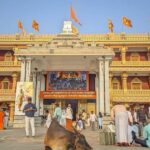
The Dilsukhnagar Sai Baba Temple is built in a modern architectural style that blends simplicity with spiritual grace. The three-tiered structure stands prominently on a busy lane in Dilsukhnagar, with iron barricades separating the temple complex from the main road. Orange flags flutter from the top floor, visible from a distance and serving as a guiding beacon for devotees.
A spacious main hall greets visitors as they enter, designed to accommodate large crowds during festivals and special puja days. The walls of the hall are adorned with paintings and photographs that narrate significant events from Sai Baba’s life, offering both visual beauty and spiritual instruction.
The temple complex includes:
- Main Sanctum Sanctorum housing the marble idol of Sai Baba
- Meditation Centre on the second floor, fully air-conditioned (open 5:00 AM to 11:00 AM and 4:00 PM to 8:00 PM)
- Yoga Centre open daily from 6:00 AM to 7:30 AM
- Spiritual Library stocked with devotional books and literature
- Pooja Store offering shawls, Dhuni coconuts, Homam items, Deeksha clothes, statues, garlands, and spiritual CDs
- Small parking area at the front for visitor convenience
Sai Baba Idol and Symbolism
The presiding deity of this temple is a beautifully crafted white marble statue of Shirdi Sai Baba seated in the traditional posture, right leg resting on the left knee, right hand raised in a blessing gesture called Abhaya Mudra, and eyes radiating warmth and compassion.
The idol is adorned with fresh flowers and traditional clothing, particularly during aarti times and festival days. A symbolic representation of both asceticism and divine grace, the statue embodies Baba’s core message: that God is accessible to everyone, regardless of status or background.
Dilsukhnagar Sai Baba Temple Timings (General)
| Day | Opening Time | Closing Time |
| Monday to Wednesday | 5:00 AM | 9:30 PM |
| Thursday | 5:00 AM | 10:30 PM |
| Friday to Sunday | 5:00 AM | 9:30 PM |
| Festive Days | 5:00 AM | 10:30 PM |
- Entry Fee: Free for all devotees
- Pooja Store Hours: 5:00 AM to 9:30 PM daily
Daily Aarti Schedule
The Dilsukhnagar Sai Baba Temple follows the traditional Shirdi aarti pattern with four daily aartis performed in the Marathi style:
- Kakada Aarti (Morning Aarti) – 5:15 AM
- Madhyana Aarti (Noon Aarti / Akhanda Aarti) – 12:00 PM
- Dhoop Aarti (Evening Aarti) – 6:00 PM
- Sheja Aarti (Night Aarti) – 9:00 PM
Each aarti is a deeply immersive devotional experience. The Marathi poojas and bhajans performed during these sessions draw large gatherings, especially in the mornings and evenings.
Nitya Anna Prasadam (Free Meal): Served daily from 12:00 PM to 2:00 PM to all visiting devotees without any charge.
Thursday Special Significance
Thursday holds exceptional importance in Sai Baba devotion. It is the day Sai Baba is believed to be most receptive to prayers, and the Dilsukhnagar temple transforms on this day.
The highlight of every Thursday is the Pallaki Seva (Palanquin Seva) held at 7:15 PM, where Sai Baba’s idol is ceremoniously placed on a decorated palanquin and carried in a procession within the temple premises, accompanied by bhajans and the blowing of conch shells.
Other Thursday highlights include:
- Extended darshan hours until 10:30 PM
- Larger gatherings of devotees for all four aartis
- Special distribution of Sai Prasadam
- Sai Vratham observance by devotees completing their 9 Thursdays vrat
Festivals Celebrated at the Temple
The Dilsukhnagar Sai Baba Temple celebrates several major festivals throughout the year with great enthusiasm and devotion:
- Sri Rama Navami – Celebrated with special poojas, bhajans, and mass prasadam distribution
- Guru Purnima – One of the most important festivals at the temple, honoring the guru-disciple tradition that Sai Baba embodied
- Vijayadashami (Dussehra) – Marked with cultural and devotional events
- Sai Baba’s Mahasamadhi Anniversary – Observed solemnly with special prayers
During all major festivals, the temple extends its darshan hours and organizes grand Nitya Annadanam events to serve thousands of devotees.
Offerings and Sevas
The temple offers a structured system of sevas that devotees can participate in:
- Archana Seva – Devotees can become a lifelong Archana Member by contributing Rs. 5,000. Archana is performed on the chosen date.
- Nitya Annadanam Seva – Donations of Rs. 11,000 and above are accepted. Annadanam is organized in the donor’s name on their preferred date.
- Prasadam Distribution – A donation of Rs. 1,000 per day (Rs. 1,500 on Thursdays and festivals) covers Sai Prasadam distribution.
- Annadanam Weight Seva – Rs. 2,500 for 50 kg and Rs. 5,000 for 100 kg.
- Pallaki Seva – Held every Thursday at 7:15 PM; open for devotee participation.
- Paduka Seva – Worship of Sai Baba’s holy sandals (padukas).
Donations can be made both online and offline. Donors are honored with a Baba Photo and shawl as acknowledgment of their contribution.
How to Reach Dilsukhnagar Sai Baba Temple
Temple Address: 46, Sai Baba Temple Road, Near Saroornagar Police Station, Anamangal Kumari Kunta, Dilsukhnagar, Hyderabad, Telangana – 500060
Phone: 040-24066566
By Metro: The closest metro station is Dilsukhnagar Metro Station (Red Line), just a short walk from the temple. This is the most convenient option for most visitors.
By Bus: The temple is very close to the Dilsukhnagar Bus Stand. Multiple TSRTC buses connect Dilsukhnagar with all major parts of Hyderabad.
By Auto or Cab: Ola and Uber cabs and local autos are readily available. Simply search “Sai Baba Temple Dilsukhnagar” on any map app.
Distance from Key Landmarks:
- Rajiv Gandhi International Airport: approximately 24.5 km
- Secunderabad Railway Station: approximately 12.2 km
- Hyderabad Railway Station (Nampally): approximately 10 km
Note: Hyderabad City Tour buses operated by APTTDC also make a dedicated stop at the Sansthan Trust, making it accessible for tourists on city tour packages.
Best Time to Visit
- Daily: Early morning (5:00 AM to 8:00 AM) and evening (5:30 PM to 8:00 PM) are ideal for a peaceful darshan experience with a devotional atmosphere during aarti.
- Thursdays: For the full Sai Baba experience, Thursday visits, especially around the 7:15 PM Pallaki Seva, are highly recommended.
- Avoid peak hours: Lunchtime from 12:30 PM to 2:00 PM sees large crowds gathering for Annadanam.
- Festive Seasons: Visit during Guru Purnima or Ram Navami for a grand, spiritually charged atmosphere, but plan for longer waiting times.
Nearby Places to Visit
After your visit to the Dilsukhnagar Sai Baba Temple, consider exploring these nearby attractions:
- Chilkur Balaji Temple – Famous as the “Visa Balaji Temple,” approximately 25 km away
- Shiva Temple, Dilsukhnagar – Located directly opposite the Sai Baba Temple
- Saroor Nagar Lake – A peaceful nature spot a few kilometers from the temple
- Hussain Sagar Lake – Iconic Hyderabad landmark approximately 12 km away
- LB Nagar Shopping District – For shopping and dining, just a short drive from Dilsukhnagar
Why Dilsukhnagar Sai Baba Temple Is Special
Several factors make this temple stand out among the hundreds of Sai Baba temples across India:
- “Shirdi of South India” Tag – The temple’s faithful replication of Shirdi rituals earns it this distinguished recognition.
- Free Community Services – A free medical centre staffed by over 20 specialists, a yoga centre, a spiritual library, and daily free meals make it a true welfare institution.
- Authentic Shirdi-Style Worship – Four daily aartis in the original Marathi tradition, the Dhuni, and the weekly Pallaki Seva maintain the spiritual authenticity of Shirdi practices.
- Inclusivity – Devotees of all faiths, castes, and backgrounds are warmly welcomed, reflecting Sai Baba’s own inclusive philosophy.
- Well-Managed Trust – The Shri Shirdi Sai Baba Sansthan Trust’s transparent management and volunteer-driven operations build genuine community trust.
- Tourist Recognition – Officially recognized as a tourist attraction in Hyderabad, it features on APTTDC city tour routes.
Frequently Asked Questions
What are the timings of Dilsukhnagar Sai Baba Temple?
The temple is open from 5:00 AM to 9:30 PM on regular days and from 5:00 AM to 10:30 PM on Thursdays and festival days.
Is there an entry fee to visit the temple?
No. Entry to the Dilsukhnagar Sai Baba Temple is completely free for all devotees.
What is the significance of Thursdays at this temple?
Thursday is considered Sai Baba’s most auspicious day. The temple holds the special Pallaki Seva (palanquin procession) at 7:15 PM every Thursday, attracting thousands of devotees.
What is the aarti schedule at Dilsukhnagar Sai Baba Temple?
Four aartis are performed daily: Kakada Aarti at 5:15 AM, Madhyana Aarti at 12:00 PM, Dhoop Aarti at 6:00 PM, and Sheja Aarti at 9:00 PM.
Is free food available at the temple?
Yes. Nitya Anna Prasadam (free meals) is distributed daily from 12:00 PM to 2:00 PM to all visiting devotees.
Which metro station is nearest to the temple?
Dilsukhnagar Metro Station on the Red Line is the closest metro stop and is just a short walk from the temple.
What festivals are celebrated at this temple?
The temple celebrates Sri Rama Navami, Guru Purnima, Vijayadashami, and Sai Baba’s Mahasamadhi Anniversary with special poojas and programs.
Can I perform seva at this temple?
Yes. The temple offers various sevas including Archana Seva, Nitya Annadanam Seva, Pallaki Seva, Paduka Seva, and Prasadam Distribution Seva.
Is there parking available near the temple?
Yes. A small parking area is available in front of the temple on Sai Baba Temple Road.
How far is the temple from Hyderabad Airport?
The temple is approximately 24.5 km from Rajiv Gandhi International Airport, Hyderabad.
Conclusion
The Dilsukhnagar Sai Baba Temple is not just a religious landmark, it is a living symbol of Sai Baba’s teachings of faith, patience, and selfless service. From its humble founding in 1989 to its current status as one of Hyderabad’s most visited spiritual destinations, the temple has consistently offered comfort, healing, and hope to every person who walks through its doors.
Whether you visit for the soul-stirring morning Kakada Aarti, the spiritually charged Thursday Pallaki Seva, or simply to sit in silence before Baba’s marble idol, every visit to this temple leaves a lasting impression.
If you are in Hyderabad or planning a trip, make the Dilsukhnagar Sai Baba Temple a priority on your itinerary. Come with an open heart, seek Baba’s blessings, and experience firsthand why millions call him “Sai”, the eternal saint who belongs to everyone.
Om Sai Ram.

Theodore Henry is the founder and administrator of TravelsHexa.com, where he shares reliable travel guides, destination insights, and practical tips to help travelers plan memorable journeys. Passionate about exploring new places, Theodore focuses on providing well-researched, accurate, and easy-to-follow travel content that inspires readers to travel smarter and with confidence.