
Tucked away in the high Himalayas of Uttarakhand, Mana Village sits just a few kilometres from the sacred town of Badrinath. Known officially as India’s last village before the Indo-Tibetan border, Mana is a place where mythology, geography, and everyday mountain life meet in a way few destinations can match.
Most pilgrims visiting Badrinath Dham add Mana to their itinerary as a short but memorable side trip. It takes barely an hour to explore, yet it leaves behind stories of the Mahabharata, the birthplace of a river considered sacred in Hindu tradition, and a tea stall that proudly calls itself the last one in India.
If you are planning a Char Dham Yatra or a Badrinath trip and wondering whether Mana Village deserves a spot on your list, this guide covers everything: its location, significance, how to reach it, the top places to see, and the best time to plan your visit.
Where is Mana Village Located
Mana Village is located in the Chamoli district of Uttarakhand, at an altitude of approximately 3,219 metres (about 10,600 feet) above sea level. It lies roughly 3 to 4 kilometres from Badrinath Temple, connected by a motorable road along National Highway 58.
The village sits on the banks of the Saraswati River, right at the base of towering Himalayan peaks. Beyond Mana, the road continues briefly toward the Indo-China (Tibet) border, which is why the village has earned the title of “the last village of India.”
Geographically, Mana falls in a high-altitude, cold desert-like zone. The terrain is rocky, the air is thin, and snow-capped mountains frame almost every view. Because of its location near the international border, certain onward routes past Mana require prior permission from local authorities.
Significance of Mana Village
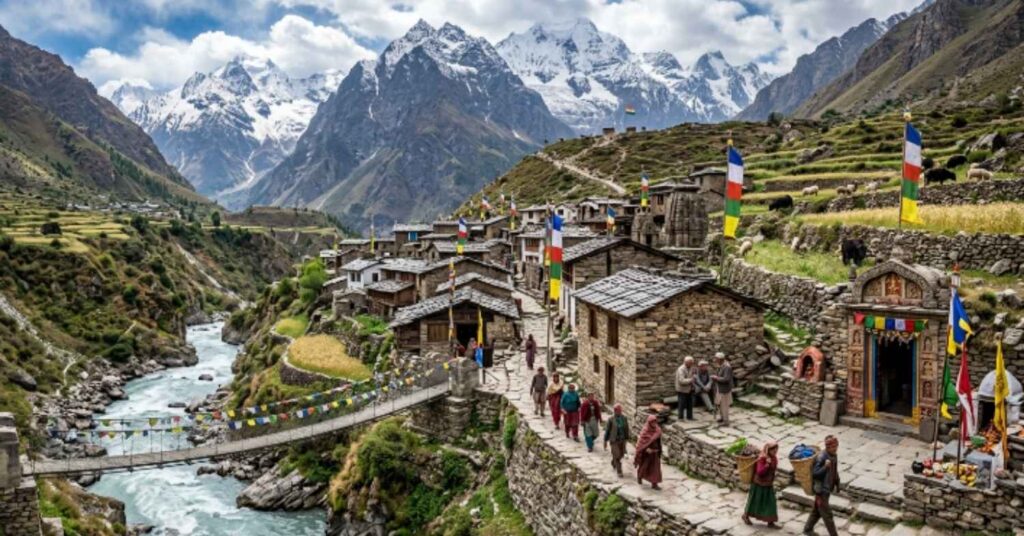
Mana Village is not just a scenic stopover. It carries deep cultural, religious, and historical importance that makes it one of the most talked-about places to visit near Badrinath.
Here is why Mana holds such significance:
- Mythological connection to the Mahabharata: Local legend says that Sage Ved Vyas composed the epic Mahabharata inside a cave here, with Lord Ganesha writing it down as he narrated it.
- Pandavas’ final journey: According to tradition, the five Pandava brothers passed through Mana on their way to Swarga (heaven), and several landmarks in the village are tied to this journey.
- Origin of the Saraswati River: Mana is one of the few places where the Saraswati River, considered mythologically significant, is visible above ground before it merges with the Alaknanda River.
- Home of the Bhotia community: The village is inhabited by the Bhotia tribe, an Indo-Mongolian community with roots in trans-Himalayan trade. They practice a semi-migratory lifestyle, moving to Chamoli during the harsh winter months.
- India’s last village: Its position near the international border adds a sense of geographical and patriotic significance for visitors.
- Traditional handicrafts: The village is known for handwoven woollen products such as shawls, carpets, and caps, made by local artisans using age-old techniques.
Together, these layers of mythology, culture, and geography give Mana a character that is very different from a typical hill station or pilgrimage stop.
How to reach Mana Village from Badrinath
Reaching Mana Village from Badrinath is straightforward, and most travellers combine both destinations in a single trip.
- By road: Mana is about 3 to 4 kilometres from Badrinath Temple, connected by a well-paved motorable road. Shared taxis, private cabs, and local buses run frequently between the two points.
- On foot: If you enjoy walking, the distance can be covered in around 45 minutes to an hour, with pleasant mountain views along the way.
- Nearest railway station: Rishikesh is the closest major railhead, located around 295 kilometres away, from where taxis and buses are easily available.
- Nearest airport: Jolly Grant Airport in Dehradun is the nearest airport, roughly 315 to 320 kilometres from Mana Village.
- Overall route: Most travellers reach Badrinath via Haridwar, Rishikesh, Rudraprayag, and Joshimath, and then continue to Mana as the final leg of the journey.
Since the road is well-connected and the distance is short, visiting Mana does not require any separate travel planning if you are already headed to Badrinath.
Places to see in Mana Village
Mana Village may be small, but it packs in a surprising number of sights, most within walking distance of each other. Here are the must-visit spots.
1. Ganesh Temple and Cave
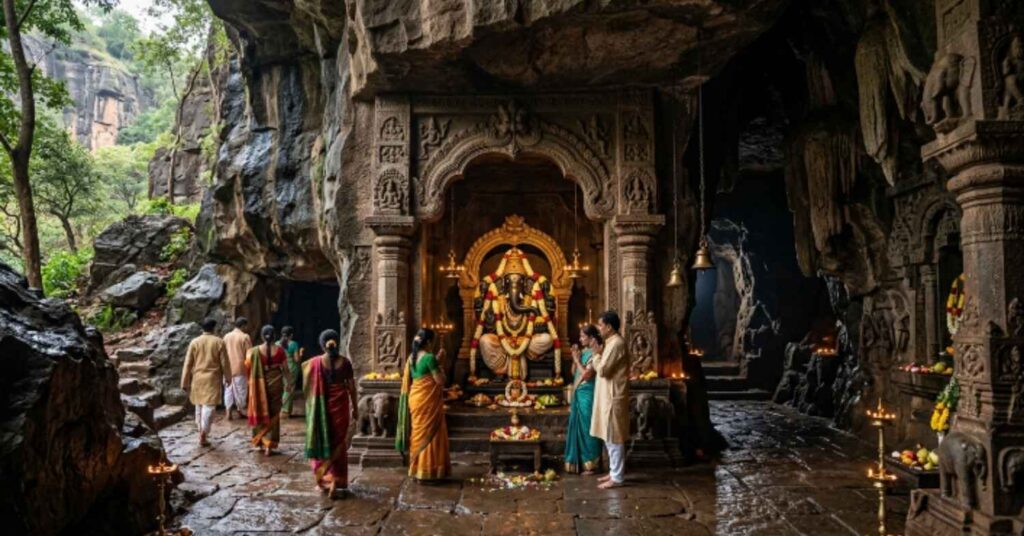
Ganesh Gufa is a small cave shrine dedicated to Lord Ganesha. As per local belief, this is the spot where Ganesha sat and wrote down the Mahabharata as Ved Vyas narrated the verses aloud. The cave has a modest idol of Ganesha and a calm, meditative atmosphere despite its small size. It is usually visited together with Ved Vyasa Cave, since the two are only a short walk apart.
2. Ved Vyasa Cave
Also known as Vyas Gufa, this cave is believed to be where Sage Ved Vyas lived and composed the Mahabharata. The cave has naturally layered rock formations resembling the pages of a giant book, which locals interpret as a symbolic connection to the epic’s creation. A small shrine inside marks the sage’s seat, and it remains a point of quiet reflection for visitors interested in Hindu scriptures and history.
3. Origin of Saraswati River
One of the most unique sights in Mana is the spot where the Saraswati River emerges visibly from beneath the mountains. Unlike most rivers with long visible courses, the Saraswati is mostly believed to flow underground for much of its mythological journey, making this rare above-ground appearance particularly significant for pilgrims. The river flows with tremendous force through a narrow rocky gorge before merging with the Alaknanda River a little further downstream at a point known as Keshav Prayag.
4. Saraswati Temple
Close to the river’s point of origin stands a small temple dedicated to Goddess Saraswati, the deity of knowledge and wisdom. It is a modest structure, but its setting, right beside the roaring river and framed by mountains, makes it one of the most photographed spots in the village. Many visitors pause here for a short prayer before continuing toward Bhima Pul.
5. Bhima Pul
Bhima Pul, or Bhim Pul, is a massive natural rock bridge that spans the Saraswati River. According to legend, Bhima, the second of the five Pandava brothers, placed this giant boulder across the river so that his wife Draupadi could cross safely during their final journey toward the Himalayas. Standing on or near this rock bridge, visitors can see the river thundering through the narrow gorge just below, which makes it one of the most dramatic and popular photo stops in Mana.
6. Swargarohini Marg
Swargarohini Marg refers to the trekking route believed to be the path the Pandavas took on their journey toward heaven. The trail begins near Mana and winds through rugged, high-altitude terrain, passing close to Vasudhara Falls and continuing toward Satopanth Lake for experienced trekkers. Even a short walk along this route offers sweeping views of the surrounding peaks and a sense of walking through a landscape steeped in legend.
7. Vasudhara Falls
Vasudhara Falls is a stunning waterfall located about 5 to 6 kilometres from Mana Village, reachable via a moderately challenging trek. Water cascades down from a height of roughly 145 metres, and on windy days, the spray drifts sideways in a way that has fascinated visitors for generations. Local folklore claims that the water does not touch impure or dishonest hearts, adding a mythical dimension to an already breathtaking natural sight. The trek typically takes around two hours one way and is best attempted in good weather with proper footwear.
8. Last Tea Stall of India
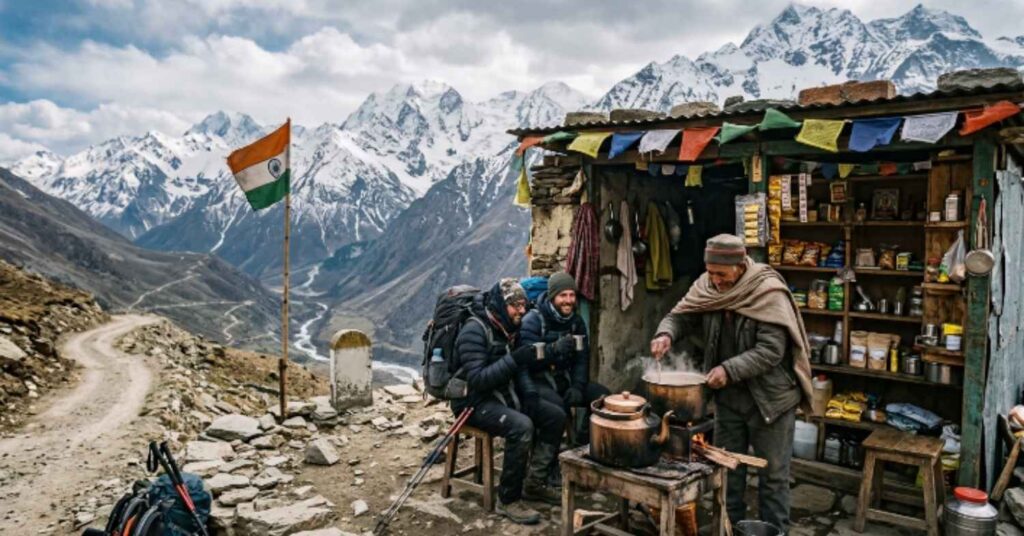
No visit to Mana feels complete without a stop at the famous “Last Tea Stall of India,” often called Hindustan Ki Aakhri Dukaan. Located right at the edge of the village, this humble shop serves hot tea, Maggi noodles, and light snacks to travellers and trekkers heading toward the border areas. Beyond the food, it is the novelty and photo opportunity of sipping chai at India’s final point of civilian access that draws almost every visitor here.
Best time to visit Mana Village
Mana Village, like Badrinath, remains accessible only for a few months each year due to heavy snowfall that cuts off the region in winter.
- May to June: Pleasant weather with clear mountain views, ideal for sightseeing and short treks. This period also sees a rush of Char Dham pilgrims.
- July to August: The monsoon season brings lush greenery, but landslides and slippery trekking trails are common, so extra caution is needed.
- September to October: Considered by many travellers to be the best window, with clear skies, fewer crowds, and comfortable daytime temperatures for both sightseeing and trekking.
- November onward: The village and the Badrinath temple close for the winter as heavy snow makes the region inaccessible until the following spring.
For most visitors, late May to mid-October offers the safest and most rewarding time to explore Mana Village and its surrounding trails.
What else to find at Mana village
Beyond its temples, caves, and waterfalls, Mana has a few other experiences worth knowing about before you visit.
- Local handicrafts market: A small stretch of shops sells handwoven woollen shawls, caps, gloves, and carpets made by the Bhotia community, a good option for authentic souvenirs.
- Traditional Bhotia homes: The village’s stone-and-wood houses, with their distinctive architecture suited to high-altitude living, are worth a quiet walk through.
- Restricted border areas: Areas beyond Mana toward the Indo-China border, including Mana Pass, require special permits and are generally off-limits to regular tourists.
- Basic food and stay options: Small dhabas and tea stalls offer simple meals, though most travellers prefer staying in Badrinath, which has more hotel and guesthouse options.
- Photography opportunities: From prayer flags fluttering against snow-capped peaks to the turquoise rush of the Saraswati River, Mana offers plenty of frames for travel photographers.
- Cultural fairs: During the temple season, the village hosts traditional gatherings connected to the Mata Murti fair, giving visitors a glimpse of local customs.
Conclusion
Mana Village offers far more than its “last village of India” tag suggests. In the space of a short visit, you can walk through caves linked to the Mahabharata, stand beside the birthplace of a river considered sacred in Hindu tradition, cross a legendary natural rock bridge, and end the day with a cup of tea at the edge of the country. For anyone travelling to Badrinath, adding Mana to the itinerary takes only a couple of extra hours but adds a layer of history, mythology, and natural beauty that makes the entire trip more memorable. Plan your visit between May and October, carry warm clothing, and give yourself enough time to soak in one of the most unique villages in the Himalayas.
FAQs
How far is Mana Village from Badrinath Temple?
Mana Village is about 3 to 4 kilometres from Badrinath Temple, roughly a 10 to 15 minute drive.
Is Mana really the last village of India?
Yes, Mana is officially recognised as the last inhabited Indian village before the Indo-Tibetan border.
Can tourists visit Mana Pass?
No, Mana Pass and areas beyond the village near the border are restricted and require special government permission.
What is the altitude of Mana Village?
Mana Village sits at an altitude of approximately 3,219 metres (around 10,600 feet) above sea level.
Is trekking to Vasudhara Falls difficult?
The trek is moderately challenging, covering about 5 to 6 kilometres one way over rocky terrain, taking roughly two hours.
When does Mana Village close for winter?
Mana Village typically closes by early November and reopens around May, in line with the Badrinath temple’s opening dates.
Is there any entry fee to visit Mana Village?
No, there is generally no entry fee to walk around Mana Village, though some individual attractions may have nominal charges.
What is the local community in Mana known for?
The Bhotia community in Mana is known for handwoven woollen products and its traditional trans-Himalayan trading culture.

Theodore Henry is the founder and administrator of TravelsHexa.com, where he shares reliable travel guides, destination insights, and practical tips to help travelers plan memorable journeys. Passionate about exploring new places, Theodore focuses on providing well-researched, accurate, and easy-to-follow travel content that inspires readers to travel smarter and with confidence.