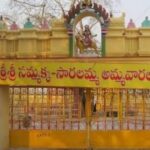
If you are planning a pilgrimage to one of Lord Shiva’s twelve Jyotirlingas, Parli Vaijnath deserves a top spot on your list. Tucked away in the Beed district of Maharashtra, this temple is unlike most Jyotirlinga shrines in one striking way: devotees are actually allowed to touch the Shiva Linga during worship. That single detail sets the tone for everything else about this temple, its healing legends, its unusual rituals, and the quiet devotion of the pilgrims who travel here from across India.
This guide covers everything you need for your 2026 visit, including updated darshan timings, the aarti and abhishekam schedule, seva ticket prices, how to book online, nearby hotels, festival dates, and the best travel routes by air, road, and train. Whether you are visiting for the first time or returning during Shravan, this article will help you plan a smooth, well-informed trip.
Parli Vaijnath Temple
Parli Vaijnath Temple is one of the twelve sacred Jyotirlingas of Lord Shiva, located in the town of Parli in Beed district, Maharashtra. It stands apart from the other four Maharashtra Jyotirlingas (Trimbakeshwar, Grishneshwar, Bhimashankar, and Aundha Nagnath) because of its unique healing identity. Here, Lord Shiva is worshipped as Vaijnath, or Vaidyanath, meaning “Lord of Physicians.”
The temple sits on a small hillock and is built almost entirely of stone, with a high boundary wall enclosing the sanctum on all sides. Locals believe that the surrounding hills, forests, and rivers are rich in medicinal herbs, which is part of why this Jyotirlinga became associated with health and healing. Devotees who are unwell, recovering from illness, or seeking relief from chronic ailments often make a special journey to Parli, believing that darshan and touch of the Linga bring physical as well as spiritual healing.
Another distinctive feature is the offering pattern. While Bilva (bel) leaves are traditionally offered to Shiva and Tulsi to Vishnu, at Parli Vaijnath this custom is reversed, tulsi leaves are offered to Shiva, and bel leaves to Vishnu. Devotees see this as a quiet symbol of the unity between Shaivism and Vaishnavism, reinforced by the belief that this is also the meeting point of Hari (Vishnu) and Hara (Shiva), a spot known as Harihara Teerth.
The temple’s brass-plated main entrance faces east, and the structure rises roughly 75 to 80 feet, dominating the small town’s skyline. For lakhs of pilgrims every year, especially during Shravan month, Parli Vaijnath is not just a stop on the Jyotirlinga circuit but a deeply personal pilgrimage tied to health, family well-being, and faith.
Parli Vaijnath Temple History
The exact date of construction of Parli Vaijnath Temple is not documented with certainty, but most historians and temple scholars trace its origins to the Yadava dynasty, sometime in the 12th or 13th century CE. Some local temple records (Sthala Purana) go further, suggesting an earlier structure may have existed here for thousands of years, with a restoration attributed to a king named Hemadri long before the temple’s more famous 18th century renovation.
The temple’s present form owes much to Punyashlok Ahilyabai Holkar, the Maratha queen renowned for rebuilding and restoring temples across India after centuries of invasions and neglect. She reconstructed Parli Vaijnath Temple in 1706, giving it the sturdy stone architecture that pilgrims see today.
The Legend of Ravana and the Jyotirlinga
The most widely told story behind Parli Vaijnath involves Ravana, the demon king of Lanka. According to legend, Ravana performed intense penance to please Lord Shiva and was eventually granted an Atmalinga to carry back to Lanka, on the condition that it never touch the ground until he reached home. Wary of the power this would give Ravana, the gods intervened, and he was tricked, some versions say by Lord Vishnu in disguise, into setting the Linga down briefly near Parli. The moment it touched the earth, it became fixed there permanently. That spot became the Parli Vaijnath Jyotirlinga.
Why “Vaidyanath” or “Lord of Physicians”
A second layer of legend connects the temple to Dhanvantari, the Hindu god of medicine, and to Amrit, the nectar of immortality. Some traditions hold that Lord Vishnu hid both within the Linga itself, which is why devotees believe touching it can bestow healing energy, a belief reinforced by the local legend that Sage Markandeya was blessed with immortality here. Together, the Ravana story, the Hari-Hara meeting point, and the Dhanvantari connection make Parli Vaijnath one of the most narratively rich Jyotirlingas in India.
Parli Vaijnath Temple Timings 2026
Parli Vaijnath Temple follows a long daily darshan window, making it relatively easier to plan a visit compared to temples with short or split timings.
| Schedule | Timing |
| Temple opens | 5:00 AM |
| Temple closes | 9:00 PM to 9:30 PM (varies by season) |
| Morning Aarti | 4:00 AM |
| Evening Aarti | 7:00 PM |
| Shravan month special hours | Extended timings, confirm locally |
Note: Sources vary slightly on the exact closing time, with some citing 9:00 PM and others 9:30 PM. Timings can also shift during festivals, Shivratri, and the auspicious Shravan month, when the temple stays open longer to accommodate the surge in devotees. It is always wise to confirm the current-day schedule with the temple trust or local guides once you arrive, especially if you are travelling during a festival period.
There is generally no entry fee for regular darshan at Parli Vaijnath Temple. However, a modest dress code is expected: men are typically asked to wear a dhoti or plain trousers with a shirt, and women are expected to wear a saree or salwar kameez. Shorts, skirts, and sleeveless clothing are discouraged, particularly if you plan to enter the inner sanctum for abhishekam.
Parli Vaijnath Pooja, Aarti & Abhishekam Schedule
The daily ritual calendar at Parli Vaijnath is built around two main aartis and a continuous flow of abhishekam through the morning and afternoon.
- Kakad Aarti (early morning): performed around 4:00 AM, this is the first ritual of the day, waking the deity and beginning the day’s worship.
- Mahabhishek: follows the morning aarti, where the Shiva Linga is bathed with milk, curd, honey, ghee, and water, a ritual many devotees try to witness or participate in.
- Madhyan Aarti (midday): performed around 12:30 PM.
- Sandhya Aarti (evening): performed around 7:00 PM, marking the close of the day’s major worship.
A unique architectural feature adds another dimension to worship here. The temple’s minaret has small carved windows known as Gwakshas. On certain days, sunlight passes directly through these openings onto the Shiva Linga, and priests mark the occasion with special prayers to Surya Dev, a rare ritual moment worth witnessing. Water for the daily Linga pooja is traditionally brought from the nearby Harihara Teertha, reinforcing the temple’s connection to the legendary meeting point of Vishnu and Shiva.
Parli Vaijnath Temple Abhishekam Timings & Online Booking 2026
Abhishekam is the ritual most pilgrims travel specifically to perform at Parli Vaijnath, largely because this is one of the few Jyotirlinga temples where devotees are permitted to personally touch and bathe the Linga themselves, rather than watching a priest perform it from a distance.
Daily Abhishekam Timings
| Session | Timing |
| Morning Abhishekam | 5:00 AM to 8:00 AM |
| Afternoon Abhishekam | 12:00 PM to 3:00 PM |
| Days available | Generally daily, with wider participation Tuesday to Sunday |
Devotees perform the abhishekam themselves using bel (bilva) leaves purchased just outside the temple precincts, along with water, milk, and other offerings provided or brought along. One important rule to know in advance: male devotees must remain bare-chested (no shirt or upper garment) while entering the sanctum for abhishekam. Planning your visit for the early morning session, between 5:00 AM and 8:00 AM, is generally a good idea, since it tends to be cooler and less crowded than the midday slot.
How to Book Abhishekam Online
Reports on the official booking process vary slightly across sources, so it is best to verify current details before you travel. In general, the process works like this:
- Visit the official temple portal or an authorized religious booking platform.
- Navigate to the Abhishekam or Seva booking section.
- Choose your preferred date and available time slot.
- Enter devotee names and details for everyone included in the booking.
- Complete the payment through the secure online gateway.
- Download and save your e-ticket or confirmation, and carry it along with a valid photo ID on the day of your visit.
If online booking is temporarily unavailable or you prefer an in-person option, abhishekam, VIP darshan, and other sevas can also be booked directly at the ticket counters on the temple premises on the day of your visit. During Shravan month, Mahashivratri, and Mondays (Somvar), demand is significantly higher, so arriving early or booking a few days in advance is strongly recommended.
Parli Vaijnath Temple Seva Ticket Prices
Parli Vaijnath keeps its seva structure fairly simple compared to many major pilgrimage temples, which makes planning your budget easier.
| Seva / Darshan Type | Approximate Price |
| General Darshan | Free (no entry fee) |
| VIP Darshan | Around ₹150 per person |
| Abhishekam | Charges apply, priest-assisted, verify current rate on arrival |
| Special Pooja (Rudrabhishek, Panchamrut Abhishekam) | Charges vary, confirm at temple counter |
Prices for special sevas and abhishekam packages can change, and different platforms quote slightly different figures, so treat the numbers above as indicative rather than final. Always confirm the exact seva cost at the official counter or booking portal before making payment.
Hotels Near Parli Vaijnath Temple
Parli is a small pilgrim town, so most accommodation is modest, clean, and built around the needs of religious travellers rather than luxury tourism.
- Budget lodges and dharamshalas close to the temple, ideal for pilgrims who want walking distance to early morning aarti or abhishekam.
- MTDC and trust-run guest houses offering simple, affordable rooms, popular with families and groups.
- Mid-range hotels in the main market area, with basic amenities such as AC rooms, hot water, and in-house dining.
- Better-equipped hotels in nearby towns, such as Latur (around 60 km away) or Ambajogai, for travellers who prefer more facilities and don’t mind a short drive back.
If you are visiting during Shravan month or Mahashivratri, book your stay well in advance, as rooms near the temple fill up fast during these peak periods.
Major Festivals Celebrated at Parli Vaijnath Temple
The temple’s festival calendar reflects both its Shaiva identity and its unique Hari-Hara connection, so celebrations here honor Shiva as well as Vishnu-linked occasions.
- Maha Shivratri: the most significant festival at the temple, drawing the largest crowds of the year, with continuous abhishekam, special aartis, and night-long worship.
- Shravan Month: every Monday through this holy month sees a sharp rise in footfall, with extended darshan hours and a steady stream of pilgrims performing abhishekam.
- Vijayadashami (Dussehra): celebrated with temple processions and special rituals.
- Chaitra Padva: marks the Hindu New Year with morning prayers and festive decorations.
- Vaikuntha Chaturdashi: notable here specifically because of the temple’s Hari-Hara connection, honoring both Vishnu and Shiva together.
- Tripuri Pournima: observed with special evening lamp offerings and aarti.
If your travel dates are flexible, visiting just before or just after a major festival, rather than exactly on the peak day, often gives you a calmer darshan experience while still letting you witness the festive decorations and atmosphere.
How to Make the Most of Your Visit
A little planning goes a long way at Parli Vaijnath, especially since the temple town is compact and pilgrim-focused rather than built for tourism.
- Arrive before 7 AM for a calmer darshan and shorter abhishekam queue.
- Carry a valid photo ID if you have booked any seva or VIP darshan online.
- Dress modestly, and male devotees should be prepared to remove their shirt for abhishekam.
- Buy bel leaves and pooja items from the shops just outside the temple rather than carrying them from home.
- Keep small change handy for donations, prasad, and local transport.
- Use the luggage room near the temple entrance if travelling with heavy bags.
- Carry a cap or umbrella, since queues can move slowly and the region gets warm outside winter.
- If combining this trip with other Maharashtra Jyotirlingas (Aundha Nagnath, Trimbakeshwar, Grishneshwar, Bhimashankar), plan your route in advance since distances between them are significant.
How to Reach Parli Vaijnath Temple
Parli is a small town, so most travellers combine more than one mode of transport to get there comfortably.
By Air
The nearest major airport is Aurangabad Airport, roughly 219 km away, well connected to Mumbai, Delhi, and other major cities. From Aurangabad, hire a taxi or take a bus to Parli. Pune and Hyderabad airports are also viable alternatives, depending on your starting city.
By Road
Parli Vaijnath has decent road connectivity to nearby towns and cities: Latur (around 60 km), Nanded (around 105 km), Aundha Nagnath (around 119 km), Aurangabad (around 219 km), and Hyderabad (around 360 km). State transport buses (MSRTC), private buses, and taxis connect Parli to most nearby cities.
By Train
Parli Vaijnath has its own railway station, well connected to major cities across Maharashtra and neighboring states, making train travel one of the most convenient options since you can reach the town directly without a long final road stretch.
Best Time to Visit Parli Vaijnath Temple
The ideal window to visit Parli Vaijnath Temple is from October to March, when the weather across this part of Maharashtra is cool and comfortable, well suited to standing in outdoor queues and walking around the temple complex.
If your travel plans allow flexibility, keep these seasonal notes in mind:
- Shravan month (usually July to August): the most spiritually significant time to visit, but also the most crowded, with extended hours and long queues.
- Maha Shivratri: an unmissable experience for devoted pilgrims, though it demands early arrival and patience due to heavy footfall.
- Summer months (April to June): best avoided if possible, since Maharashtra’s interior districts get quite hot during this period.
- Early morning hours, year-round: consistently the most peaceful time for darshan, regardless of season.
Parli Vaijnath Temple Contact Details
For the latest updates on timings, seva prices, and booking procedures, it is best to reach out directly before you travel.
- Location: Parli Vaijnath, Beed District, Maharashtra, India
- Nearest Railway Station: Parli Vaijnath Railway Station
- Nearest Airport: Aurangabad Airport (approx. 219 km)
- Recommended: Confirm current phone numbers and official booking portal details through the temple trust or Maharashtra tourism office, since contact information can change over time.
Frequently Asked Questions
What are the darshan timings at Parli Vaijnath Temple?
The temple is generally open from around 5:00 AM to between 9:00 PM and 9:30 PM daily, though exact hours can vary by season.
What time is Abhishekam performed at Parli Vaijnath?
Abhishekam is typically held in two sessions, 5:00 AM to 8:00 AM and 12:00 PM to 3:00 PM.
Is there an entry fee for Parli Vaijnath Temple darshan?
General darshan is free, though a VIP darshan option costing around ₹150 per person is available for faster access.
Can devotees touch the Shiva Linga at Parli Vaijnath?
Yes, this is one of the few Jyotirlinga temples where devotees are permitted to directly touch and perform abhishekam on the Linga themselves.
What should male devotees wear during Abhishekam?
Male devotees are required to remain bare-chested, without any upper garment, while performing abhishekam in the sanctum.
How do I book Abhishekam or VIP Darshan online?
Bookings can usually be made through the official temple portal or an authorized platform by selecting the seva, date, and time slot, then completing payment online. Offline booking at the temple counter is also available.
Which is the nearest railway station to Parli Vaijnath Temple?
Parli Vaijnath has its own dedicated railway station, making train travel a convenient option for most pilgrims.
What is the best time of year to visit Parli Vaijnath Temple?
October to March offers the most comfortable weather, while Shravan month and Maha Shivratri are the most spiritually significant, though crowded, times to visit.
Why is Parli Vaijnath also called Vaidyanath?
The name means “Lord of Physicians,” reflecting local legends that connect the Linga to Dhanvantari, the god of medicine, and to healing properties associated with the site.
Are there hotels available near the temple?
Yes, Parli offers budget lodges, dharamshalas, and mid-range hotels close to the temple, with more options available in nearby Latur if needed.
Final Thoughts
Parli Vaijnath Temple offers something a little different from the usual Jyotirlinga experience. Between its healing legends, the rare permission to touch the Linga, and its quiet symbolism of Hari-Hara unity, a visit here tends to feel personal rather than purely ceremonial. Whether you are travelling during a peaceful weekday morning or joining the crowds during Shravan, a little preparation, knowing the timings, booking your abhishekam in advance, and dressing appropriately, will help you focus on what matters most: a calm, meaningful darshan of Lord Vaidyanath.
If you’re planning to cover more than one Jyotirlinga on this trip, Parli pairs naturally with Aundha Nagnath and other nearby Maharashtra shrines, making it easy to build a longer, more complete pilgrimage circuit.

Theodore Henry is the founder and administrator of TravelsHexa.com, where he shares reliable travel guides, destination insights, and practical tips to help travelers plan memorable journeys. Passionate about exploring new places, Theodore focuses on providing well-researched, accurate, and easy-to-follow travel content that inspires readers to travel smarter and with confidence.