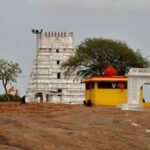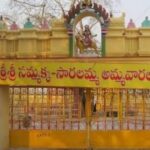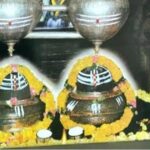
In the heart of Hyderabad, tucked inside the vibrant locality of Balkampet, stands one of Telangana’s most sacred Shakti shrines – the Balkampet Yellamma Temple. Also formally known as Sri Yellamma Pochamma Devasthanam, this ancient temple draws lakhs of devotees every year who come seeking the grace of the Divine Mother. The sacred fragrance of camphor, the rhythmic chanting of mantras, and the glow of the eternal Akhand Jyothi together create an atmosphere that stirs the soul the moment you step inside.
The Essence of Goddess Yellamma Devi
Goddess Yellamma is not just a deity – she is the living embodiment of feminine power, compassion, and cosmic energy. Worshipped as Renuka Devi, Jagadamba, and Jala Durga, she is believed to be the mother of the universe who guards every soul that approaches her with sincerity. Her very name, “Yellamma,” literally translates to “mother of all” in Telugu, capturing the all-embracing nature of her divinity.
A Spiritual Beacon in Hyderabad
Among the many temples that dot Hyderabad’s spiritual landscape, Balkampet Yellamma Temple holds a unique position. Its 15th-century origins, its one-of-a-kind idol placed 10 feet below ground level, and its miraculous holy water (Tirtham) have made it a destination that transcends religion and region. Devotees from across Andhra Pradesh, Telangana, Karnataka, and Maharashtra travel here to seek healing, fertility, protection, and divine blessings.
A Place of Faith and Healing
Many devotees share personal accounts of witnessing miracles after visiting the temple. The Goddess is believed to remove fears, cure ailments – especially skin diseases through the sacred temple water – and relieve worldly worries. This lived faith is what transforms Balkampet Yellamma Temple from a historical monument into a living, breathing spiritual experience.
The Spiritual Magnet of Hyderabad
Whether it is the thunderous celebrations of Bonalu Jathara, the grandeur of Yellamma Kalyanam, or the quiet serenity of an early morning darshan, this temple offers something profound to every visitor. It is not simply a place you visit; it is a place you feel.
History and Legends of Balkampet Yellamma Temple
The Legend of Goddess Yellamma (Renuka Devi)
The mythology behind Goddess Yellamma is deeply rooted in the Puranic tradition. According to legend, Renuka – daughter of Raja Renuka – was married to the great sage Jamadagni, son of Satyavati. Together, they had five sons, the youngest being the mighty Lord Parashurama. Renuka was known for her extraordinary purity and devotion, which gave her the supernatural ability to fetch water from the river in an unbaked clay pot.
One day, Renuka failed to complete her household duties on time. Her husband Sage Jamadagni, angered by this, banished her from their ashram. In her penance, Renuka performed prayers before a Shivalinga and fed Brahmins, which further enraged the sage. He then commanded his sons to punish her. Only Parashurama obeyed, and in a moment of supreme filial duty – and the ultimate test of obedience – he beheaded both his mother and the woman who had sheltered her. Pleased with Parashurama’s devotion, Jamadagni granted him a boon. Parashurama asked for the restoration of all lives, including his mother’s.
Renuka was thus revived and deified. Over time, she came to be worshipped as Yellamma – the mother of all creation – across South India. Her story is one of purity, sacrifice, and divine resurrection.
How the Temple Originated in Balkampet
The story of Balkampet Yellamma Temple begins with a simple discovery in the 15th century. Local accounts describe how a farmer named Ramakrishna Reddy, while digging a well on his land, struck something unusual. Beneath the earth, 10 feet deep, lay a rock bearing a beautifully sculpted image of Goddess Yellamma. When efforts were made to remove the idol, it would not budge. This was interpreted as a divine sign – the Goddess herself had chosen this spot as her eternal abode.
A temple was constructed around the idol at that very location. The idol remains in its original position to this day, deep within the earth, with natural water flowing from the head of the Goddess. This unique feature earned her the name Jala Durga (the Goddess who resides in water). The current temple structure was substantially renovated in 1919, and recent restorations have added features like the Akhand Jyothi, a flame that burns continuously 24 hours a day.
Connection to Other Yellamma Temples in South India
Balkampet is one among several significant Yellamma temples across South India. The Saundatti Yellamma Temple in Karnataka (one of the Shakti Peethas) and temples in Maharashtra and Tamil Nadu share the same theological lineage. All of them celebrate the legend of Renuka Devi and form part of the wider Shakti worship tradition prevalent in the Deccan and South India.
Historical Importance in Hyderabad’s Culture
In the mid-18th century, a military regiment stationed in Hyderabad traveled to Ujjain for a campaign under the East India Company. During their absence, a deadly plague broke out in Secunderabad and Hyderabad, claiming thousands of lives. The soldiers prayed to Maha Kalika Devi at the Mahakaleshwar Temple in Ujjain. Upon their return, grateful for their lives and the eventual end of the plague, they established Yellamma temples in Balkampet, Golconda, and other parts of the city. This is believed to be the spiritual foundation of the Bonalu festival tradition that continues to this day.
Spiritual Belief and Legacy
Over the centuries, the temple has grown from a local shrine into a major pilgrimage center. It now attracts an estimated 5,000 visitors on regular weekdays and up to 4 to 5 lakh devotees during major festival celebrations like Bonalu. Managed by the Telangana Endowments Department, the temple continues to uphold its ancient rituals while embracing modern conveniences like online booking and barcode-enabled darshan passes.
Deity and Spiritual Significance of Balkampet Yellamma Temple
Who is Goddess Yellamma?
Goddess Yellamma is a multifaceted divine presence. She is simultaneously revered as:
- Renuka Devi – the consort of Sage Jamadagni and mother of Parashurama
- Jagadamba – the mother of the entire universe
- Jala Durga – the goddess who dwells in sacred water
- Shakti – the supreme feminine cosmic energy
- An incarnation of both Goddess Parvati and Goddess Kali
- One of the Sapta Matrikas (seven divine mothers) in Shaktism
Her worship is especially prominent among the communities of Telangana, Andhra Pradesh, Karnataka, and Maharashtra, where she is seen as the ultimate protector of women and the poor.
The Idol of Goddess Yellamma at Balkampet
What makes this temple truly extraordinary is the nature of the idol itself. The image of Goddess Yellamma sits in a well, 10 feet below the ground level – a feature almost unparalleled among temples in Hyderabad. Natural water flows continuously from the head of the Goddess. The idol is a testimony to the original discovery from the 15th century, and it has never been relocated. The temple complex also houses smaller shrines dedicated to:
- Goddess Pochamma Devi – the Kshetrapalaka (guardian) of the temple
- Lord Ganesha
- Nagadevata (the serpent deity)
- Goddess Rajarajeshwari
The Holy Water (Tirtham)
The water surrounding the idol of Yellamma is regarded as sacred Tirtham by devotees. It is believed that bathing with or applying this holy water can cure skin ailments and diseases. Many devotees who have experienced recovery from long-standing skin conditions attribute their healing to this divine water. The Tirtham is one of the most sought-after blessings at this temple.
Symbolism of Yellamma Worship
Worshipping Goddess Yellamma represents the triumph of maternal grace over worldly hardship. She is the deity who balances cosmic power with compassionate love. Her festival, Bonalu, symbolizes gratitude to the Divine Mother for protecting her devotees through times of crisis, disease, and difficulty. Offering a Bonam (a decorated pot filled with rice, curd, and jaggery) is an act of communal thanksgiving.
Temple Timings and Darshan Schedule of Balkampet Yellamma Temple
Daily Temple Timings
The Balkampet Yellamma Temple is open seven days a week. The standard timings are:
| Session | Timings |
| Morning Darshan | 6:00 AM to 1:00 PM |
| Afternoon Break | 1:00 PM to 3:00 PM |
| Evening Darshan | 3:00 PM to 8:00 PM |
On auspicious days like Tuesdays, Fridays, Sundays, and during major festivals (Bonalu, Yellamma Kalyanam, Navaratri), the temple remains open beyond these regular hours to accommodate the large influx of devotees.
Morning Rituals (Suprabhata Seva and Alankarana)
The temple day begins at dawn with the Suprabhata Seva – an early morning ritual in which priests awaken the Goddess with devotional hymns, lit lamps, and recitation of sacred texts including the Devi Mahatmya and Lalitha Sahasranamam. Following the Suprabhata Seva, the Goddess is adorned with flowers, silk garments, and jewelry during the Alankarana ritual, making her radiant and ready to receive devotees for the day.
Daily Pooja Schedule
- 6:00 AM – Temple opens; Suprabhata Seva
- 6:45 AM – Abhishekam (on Tuesdays and Fridays)
- 8:30 AM to 11:30 AM – Kumkumarchana and other sevas for devotees
- 12:00 PM – Maha Nivedyam (food offering to the Goddess)
- 1:00 PM – Temple closes for afternoon break
- 3:00 PM – Temple reopens; evening darshan begins
- 6:00 PM onwards – Evening Maha Mangala Aarti
Yellamma Kalyanam (Divine Marriage Festival)
The Yellamma Kalyanam or Kalyanotsavam is the grandest event in the temple calendar, celebrated during Ashada Masam (June to July) over three days. The divine wedding of Goddess Yellamma and Lord Keshava Swamy is conducted with full Vedic rituals, processions, and community participation. The celebrations typically include:
- Day 1 – Ankurarpanam (sowing of seeds, representing new beginnings)
- Day 2 – Confrontation / Garuda Seva
- Day 3 – Kalyanam (the actual wedding ceremony) followed by a Chariot Festival (Rath Yatra)
Aarti Timings
- Morning Aarti – Shortly after the temple opens (approximately 6:30 AM)
- Noon Aarti – Around 12:00 PM before the afternoon break
- Evening Aarti (Maha Mangala Aarti) – The most spiritually charged aarti of the day, conducted with oil lamps and camphor flames, accompanied by the chant “Yellamma Talli Jai!” filling the entire temple complex
Special Sevas and Booking Information
Devotees can participate in a range of special sevas at Balkampet Yellamma Temple:
- Abhishekam – Ritual bathing of the deity with milk, honey, turmeric water, and sacred river water
- Kumkum Archana – Offering of kumkum and turmeric to the Goddess
- Pushparchana – Floral offering accompanied by chanting of the Goddess’s 108 names
- Alankaram – Special decoration of the idol with flowers, jewelry, and silk attire
- Annadanam – Community meal offering in the name of the Goddess
- Abhishekam for Yellamma Kalyanam – Special paid seva during the annual festival (ticket price approximately Rs. 1000)
Seva tickets can be booked:
- Online: Through the Telangana Endowments Department portal
- In person: At the temple ticket counter
Best Time for Darshan
- Early morning (5:30 AM to 9:00 AM) – Ideal for a calm, crowd-free darshan
- Tuesdays and Fridays – Most auspicious days; expect crowds
- Avoid peak festival days if you prefer a quieter spiritual experience
- Pournami (Full Moon days) – Special Abhishekams are conducted; highly auspicious but crowded
Major Festivals Celebrated at Balkampet Yellamma Temple
Yellamma Kalyanam – The Divine Marriage Festival
The Yellamma Kalyanam or Renuka Devi Kalyanotsavam is celebrated during Ashada Masam and is the most important event in the temple’s yearly calendar. Lakhs of devotees attend the three-day celebrations. On the final day, the Chariot Festival (Rath Yatra) sees the deity taken through the streets of Balkampet in a grand procession amidst floral decorations, traditional music, and massive crowds of devotees.
Bonalu Festival – The Spirit of Telangana
Bonalu is the heartbeat of Telangana’s cultural and religious identity, and nowhere is it celebrated with greater fervour than at Balkampet Yellamma Temple. Celebrated during Ashada Masam (June to July), the Balkampet Bonalu falls on the second Sunday of Ashada month (Balkampet Yellamma Bonalu 2026 is on July 26th).
During Bonalu:
- Women dress in traditional attire and carry decorated brass or earthen pots (Bonams) filled with rice, curd, and jaggery on their heads
- Processions include Pothuraju dancers, Dappu drummers, and female oracle priests (Matangi)
- Devotees travel barefoot to the temple and sprinkle turmeric water at the feet of the Goddess
- The Ashada Jathara runs alongside Bonalu, with special Abhishekams and poojas conducted every Tuesday and Friday throughout the month
- Animal sacrifices are offered as part of traditional vow fulfilment
Navaratri and Dasara Festival
During the nine-day Navaratri festival (September to October), the Goddess is dressed in nine different divine forms, one each day. These include:
- Mahalakshmi, Saraswati, Annapurna, Balatripurasundari, and other manifestations of Shakti
Special poojas, Alankarams, bhajans, and cultural programs are held daily. On Vijaya Dashami (the 10th day), a grand Shobha Yatra (procession) is organized through Balkampet.
Shankranti and Ugadi
The Telugu New Year, Ugadi, and the harvest festival Makar Shankranti are also celebrated at the temple with special poojas and community events. These occasions see large family gatherings and community Annadanam programs organized near the temple premises.
Pournami (Full Moon Day) Abhishekams
Every Pournami (full moon night), special Abhishekams are conducted for the Goddess. These rituals are considered extremely auspicious, particularly for devotees seeking healing, fertility blessings, and removal of obstacles.
Poojas, Sevas and Rituals at Balkampet Yellamma Temple
Daily Poojas and Rituals
The daily worship cycle at Balkampet Yellamma Temple follows a carefully structured sequence that has been maintained for centuries:
- Suprabhata Seva – Awakening the Goddess with hymns and lamps at dawn
- Abhishekam – Sacred bath with milk, honey, coconut water, and turmeric water (daily; more elaborate on Tuesdays and Fridays)
- Alankaram – Adorning the Goddess with fresh flowers, silk, and jewellery
- Kumkum Archana – Chanting 108 names of the Goddess while offering kumkum
- Pushparchana – Floral worship offered by devotees seeking personal blessings
- Maha Nivedyam – Noon food offering consisting of rice, lentils, and sweets
- Dhoop Deepa Aarti – Waving of incense and lamps before the deity
- Maha Mangala Aarti – Evening aarti that concludes the day’s worship cycle
On Tuesdays and Fridays, which are the most sacred days for Shakti worship, rituals begin earlier (Abhishekam at 6:45 AM) and devotee-specific sevas like Kumkumarchana run from 8:30 AM to 11:30 AM.
Route Map and How to Reach Balkampet Yellamma Temple
Temple Address: H.No. 7-1-277, Balkampet Village, Ameerpet Mandal, Hyderabad, Telangana – 500038
The temple is located near the Ameerpet–SR Nagar corridor, one of Hyderabad’s most well-connected areas.
By Metro: The nearest metro station is Ameerpet Metro Station on the Blue Line of Hyderabad Metro Rail, approximately 2 km from the temple. From the station, you can take an auto-rickshaw or walk to the temple.
By Bus: TSRTC (Telangana State Road Transport Corporation) buses connect the temple from all major parts of Hyderabad. The Balkampet Bus Stop is just 100 metres from the temple entrance.
By Taxi/Cab: Private cabs, Ola, and Uber are easily available from anywhere in Hyderabad. Travel time from most areas is approximately 30 to 60 minutes depending on traffic.
By Train: The nearest railway stations are:
- Nampally Railway Station – approximately 8 km away
- Secunderabad Railway Station – approximately 8 km away
From the Airport: Rajiv Gandhi International Airport is approximately 36 km from the temple. Taxi or cab is the most convenient option.
GPS Coordinates: Search “Balkampet Yellamma Temple” on Google Maps for real-time navigation.
Frequently Asked Questions
What are the Balkampet Yellamma Temple timings?
The temple is open from 6:00 AM to 1:00 PM in the morning and from 3:00 PM to 8:00 PM in the evening. Timings may be extended during festivals and auspicious days.
Is there an entry fee to visit Balkampet Yellamma Temple?
No. Entry to the Balkampet Yellamma Temple is completely free for all devotees.
Which days are most auspicious for visiting the temple?
Tuesdays and Fridays are the most sacred days for Yellamma Devi worship. Sundays also attract large crowds of family devotees.
When is the Balkampet Yellamma Temple Bonalu 2026?
The Balkampet Yellamma Temple Bonalu 2026 is scheduled for July 26, 2026 (second Sunday of Ashada month).
Can we book sevas online at Balkampet Yellamma Temple?
Yes. Special sevas like Abhishekam, Kumkum Archana, and Alankaram can be booked through the Telangana Endowments Department’s official portal or at the in-temple ticket counter.
Why is the idol at Balkampet Yellamma Temple below ground level?
The idol was discovered 10 feet underground during a well-digging exercise in the 15th century and could not be moved, so the temple was built around it at that spot. This is also why the Goddess is called Jala Durga.
Is the temple water (Tirtham) really considered holy?
Yes. The water surrounding the idol is treated as sacred Tirtham by devotees, who believe it has the power to heal skin ailments and disease.
How far is Balkampet Yellamma Temple from Ameerpet?
The temple is approximately 2 km from Ameerpet Metro Station and is reachable by auto-rickshaw or a short walk.
Final Thoughts
Balkampet Yellamma Temple is far more than a place of worship – it is a living testament to the unbroken spiritual legacy of Hyderabad. From its 15th-century origins and the miraculous discovery of the underground idol, to the thunderous festivities of Bonalu and the tender devotion of daily darshan, this temple speaks to something deep and universal in the human soul.
Whether you are a devotee seeking the Goddess’s blessings, a history enthusiast curious about South India’s temple traditions, or a first-time visitor looking to experience Hyderabad’s spiritual heart, Balkampet Yellamma Temple will leave a lasting impression. Plan your visit during the early morning hours for a peaceful darshan, or arrive during Bonalu or Yellamma Kalyanam to witness the extraordinary cultural richness of Telangana on full display. The Divine Mother awaits with open arms. May Goddess Yellamma bless every soul that walks through her sacred doors.